Date visited: July 29, 2026 (Wednesday)
Every time I visit Kyoto, I notice the same thing.
Getting around often means taking buses, not just trains.
To be honest, buses still make me a little nervous.
Am I getting on the right one?
Will I get off at the right stop?
Those small worries always come with the journey.
This time, I took a Kyoto Bus from Kokusaikaikan Station to Ohara.
On weekdays, buses run once an hour.
On weekends and holidays, twice an hour.
There are more buses from Kyoto Station, but I chose this route to avoid the crowds.
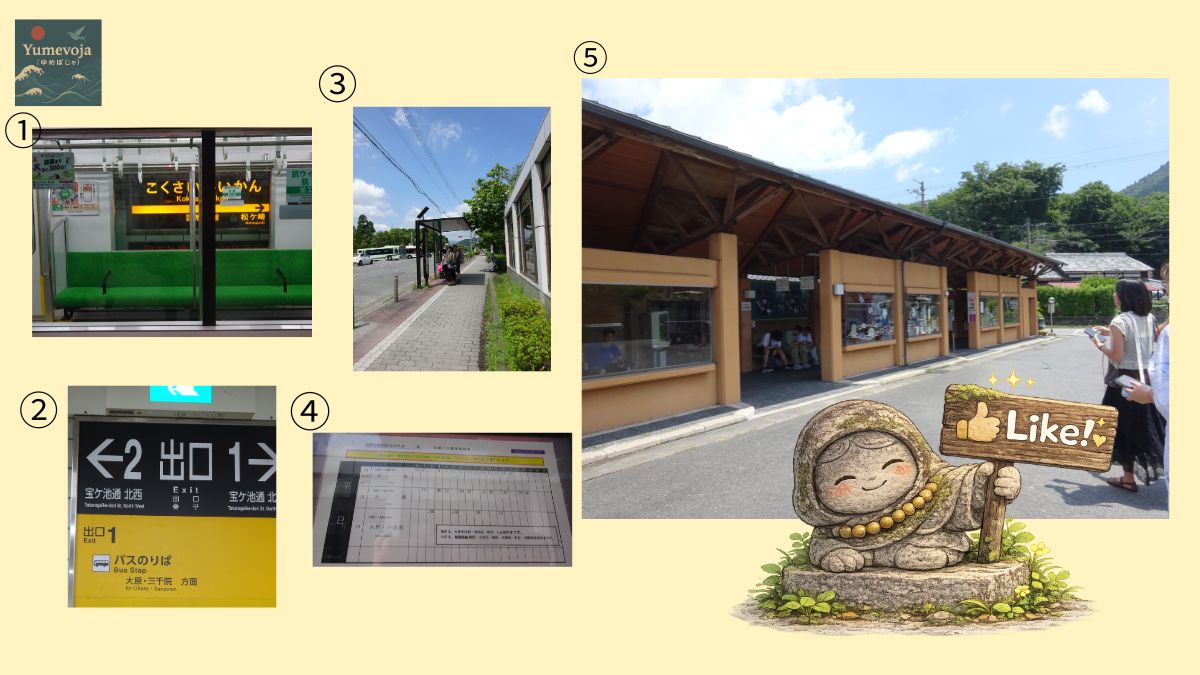
From Kyoto Station, I transferred to the subway and then the bus to Ohara.
① Kokusaikaikan Station ② Exit 1 ③ Bus stop for Ohara
④ Weekday timetable ⑤ Ohara Bus Stop
After getting off the bus, a quiet path follows a small stream.
The sound of flowing water.
The chorus of cicadas.
Fields of red shiso stretching into the distance.
It was a scene that felt unmistakably like summer in Ohara.
Because it was a weekday, several shops were closed.
Rather than a busy tourist destination, the village seemed to move at its own gentle pace.
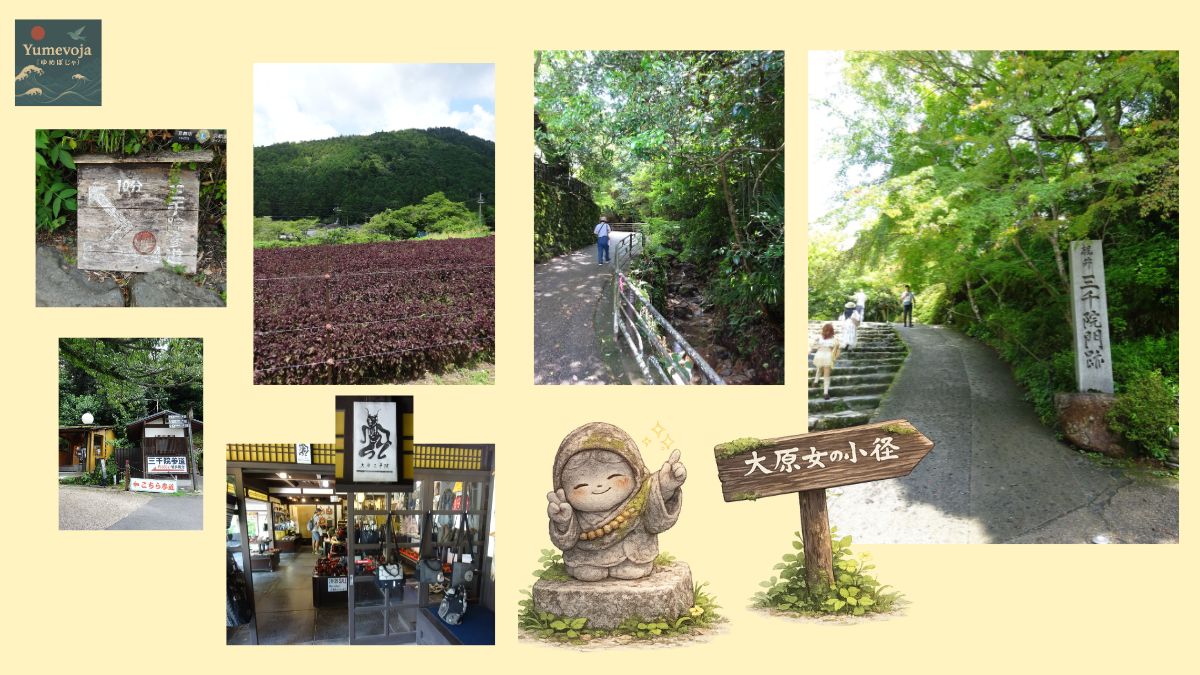
From Ohara Bus Stop to Sanzen-in.
Walking beside the stream, passing fields of red shiso and unique local shops.
Recently, I’ve found myself doing something different.
Instead of rushing straight to my destination, whenever a place catches my eye, I think,
“I’ll stop by on my way back.”
That’s exactly what I did this time.
After visiting Sanzen-in, I returned to a shop I had noticed on the way.
Perhaps the joy of travel isn’t only about reaching the destination.
My first stop was Sanzen-in Temple.
Visitors can use a free audio guide throughout the temple grounds.
I appreciated that it was free, but at first I struggled with how to use it.
I couldn’t figure out how to move on to the next audio explanation.
After trying a few things, I finally worked it out.
Then another problem appeared.
“If only I had heard this explanation earlier…”
Sometimes I noticed a highlight only after listening to the next section, so I had to walk back a little.
It’s a very helpful service, but it may take a few minutes to get used to.
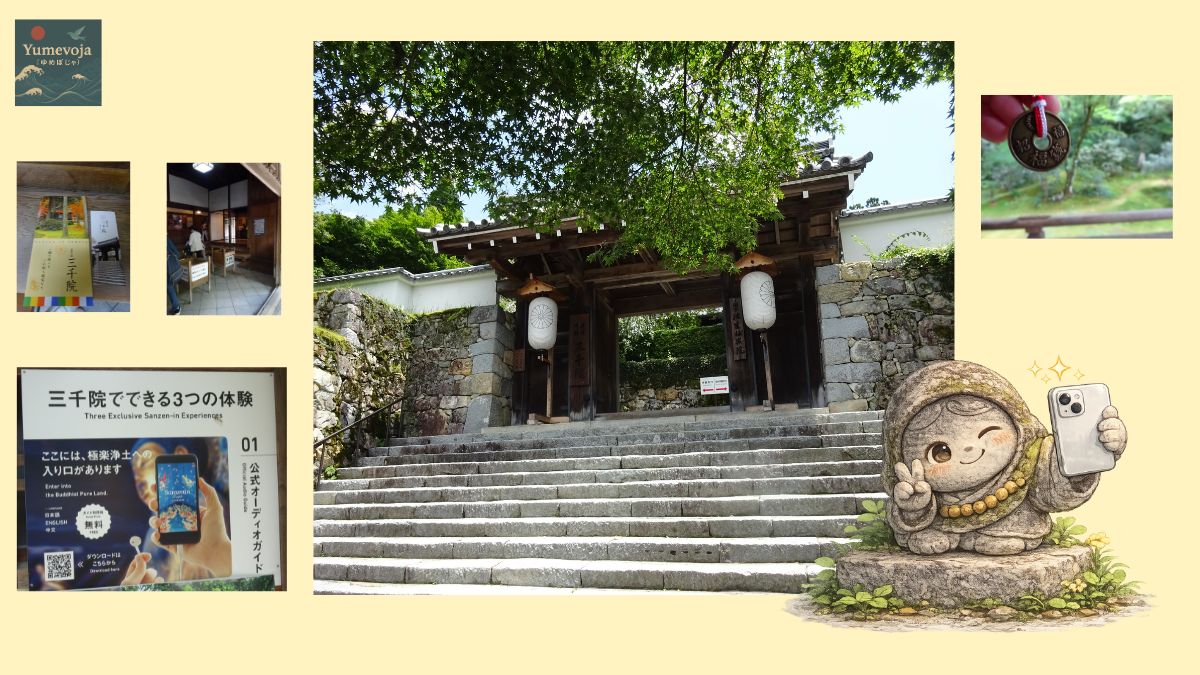
I arrived at Sanzen-in, purchased my admission ticket,
and downloaded the free audio guide.
Inside the main hall,
I received a Fukusen (blessed lucky coin) as a small souvenir for myself.
That was the beginning of a peaceful visit.
While I was struggling with my smartphone, trying to use the audio guide, an elderly woman spoke to me.
“No smartphone.“
With so many international visitors at Sanzen-in, she probably thought I was taking photos inside the hall.
“I’m listening to the audio guide,” I explained.
“Oh, I see.”
She smiled a little awkwardly and walked away.
I couldn’t help smiling myself.
As I entered the temple grounds, a beautifully maintained moss garden spread out before me.
Even under the summer sunshine, the greenery felt soft and peaceful.
With every step, I found another scene that reminded me why Kyoto is so special.
The temple buildings and gardens are impressive enough to enjoy simply by walking at your own pace.
For more detailed information about the history and highlights, please visit the official website.
🌐 Official Website: Sanzen-in Temple
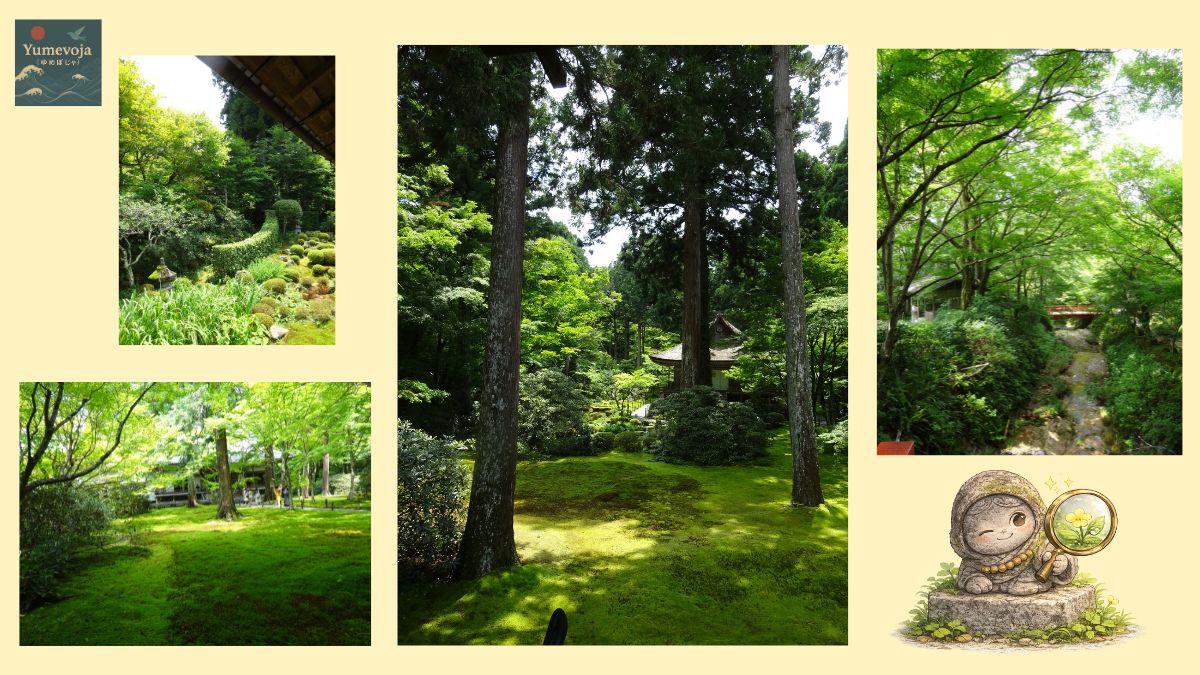
A quiet stillness fills the moss garden,
especially when there are few visitors.
It is said to represent the space between the world we live in and the Pure Land (Gokuraku Jōdo).
At the rest area, visitors can enjoy a small complimentary cup of powdered tea.
There are three flavors to choose from:
shiso, plum, or matcha.
After walking in the summer heat, it was a welcome chance to cool down in an air-conditioned room.
On my way out, I noticed that the same tea, blessed through prayer, was also available for purchase.
I chose to keep my Fukusen as a souvenir of the visit and decided to leave the tea for another time.
As I continued walking through the grounds with the audio guide, I was reminded once again of the scale of Sanzen-in.
Its beautiful gardens.
Its long history.
Its quiet dignity, shaped by generations of visitors.
To me, it almost seemed to say,
“Well… what do you think?”
Not in an arrogant way.
Rather, it was the quiet confidence of one of Kyoto’s most celebrated temples.
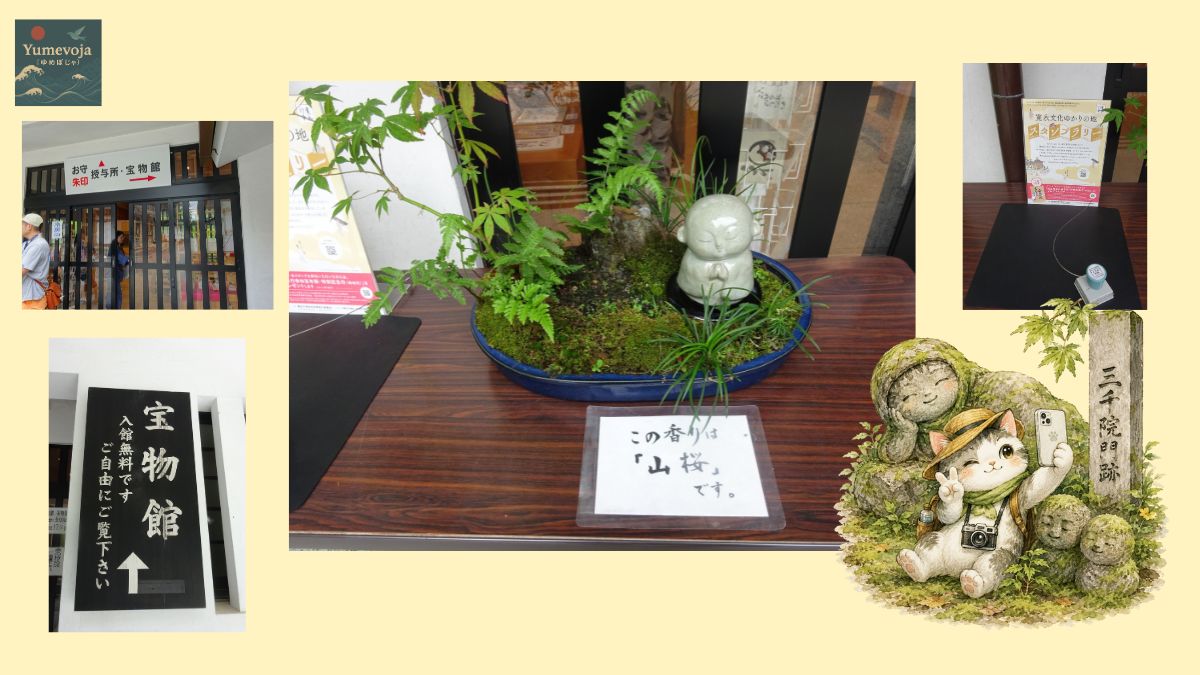
After my visit, I explored the Treasure Hall.
Visitors can also receive goshuin (temple seals)
or choose protective charms as souvenirs of their journey.
My journey wasn’t over yet.
The next temple I visited had an atmosphere completely different from Sanzen-in.
I’ll share that story in Part 2.
🍵 Related Reading | Beauty & Taste
After visiting Sanzen-in, I stopped by a shop that had caught my eye on the way there.
👉 I meant to order gyudon… but somehow ended up ordering oyakodon instead.
🍵 Beauty & Taste| Seryo Jaya | I Meant to Order Gyudon… but Chose Oyakodon Instead
👉 After my visit, I enjoyed a quiet break with a refreshing cup of yuzu juice.
🍵Beauty & Taste| Rokawa Chaya | Homemade Yuzu Juice and a Gentle Moment in Ohara
🗺️ My Map
I’ve also created a My Map showing the route I walked and the places I visited during this trip.
I hope it will be useful if you’re planning your own visit to Ohara.
👉 Related illustrations here
(Free to use)
▶︎ 🎨View illustration page
👉Choose Kyoto by mood.
▶︎☆View the Kyoto Guide
👉Next time, why not explore Osaka one station at a time?
▶︎☆View the Osaka Loop Line Guide

Today’s bonus capsule!
✨ Gateway to the Shōwa Era
―There Was Another Guide on the Bus
The Showa era (1926–1989) was a time when modern technology and ideas began to transform everyday life in Japan.
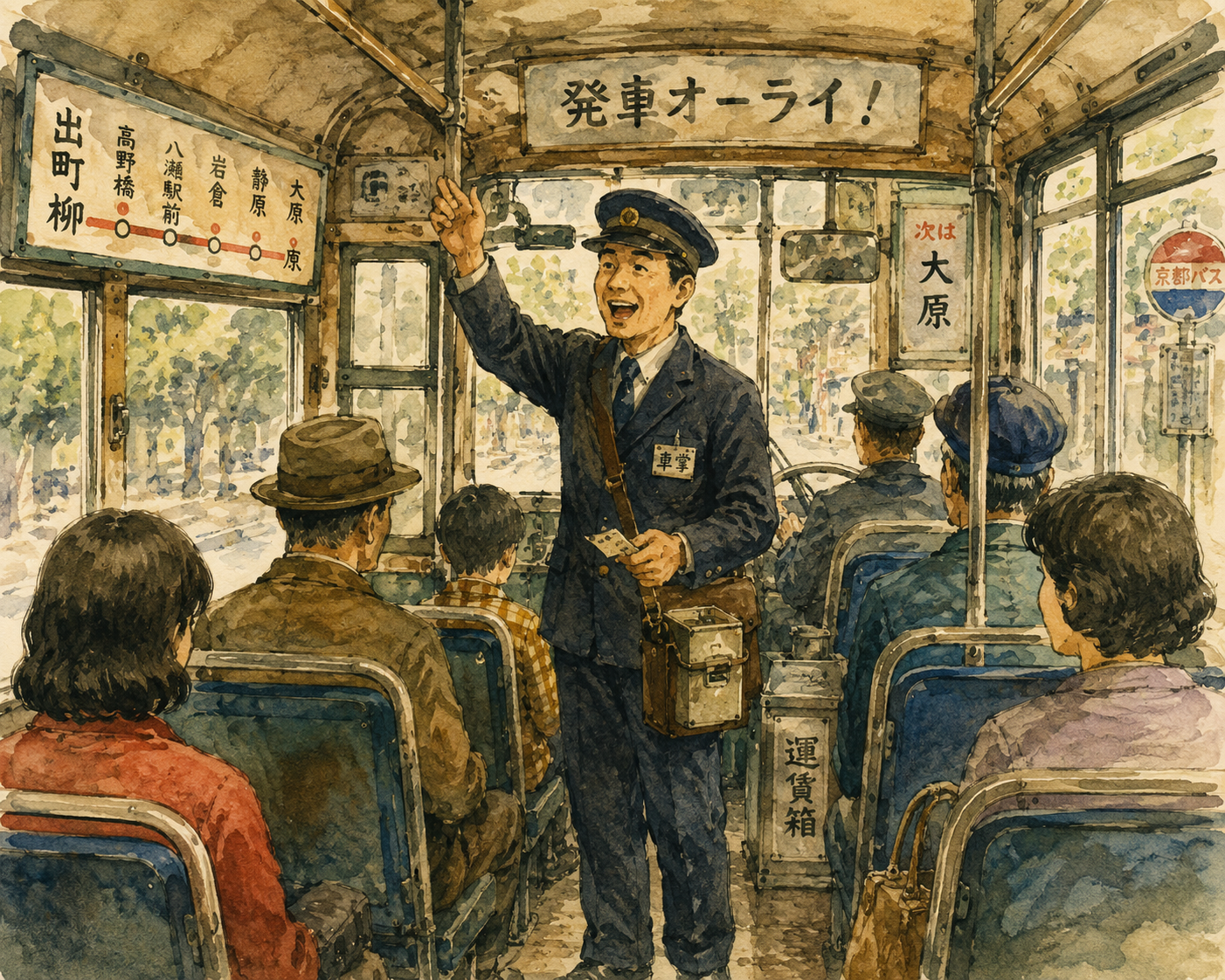
When I was a child, many buses in Japan had not only a driver but also a bus conductor.
The conductor handed out tickets, announced each stop, and kindly answered questions about routes and transfers with a smile.
This allowed the driver to focus entirely on driving.
Even when I was unsure where to go during a trip, hearing,
“If you’re going to ○○, this is the right bus.”
was incredibly reassuring.
Today, one-person-operated buses are the norm, and smartphones and AI can help us find our way.
Even so, when it comes to local knowledge, I still feel most at ease asking the people who actually live there.
As I rode the Kyoto bus, I suddenly found myself remembering the bus conductors of the Showa era.