Stage 2-2 | June 30, 2024
Here’s the previous article:
👉🕯️ YUMEVOJA Solo Shikoku Pilgrimage – Episode 2: A Day That Ignored the Lesson, and a Night to Rethink the Way Forward
🗺️ Route of This Journey
Main Stops of the Day
- Parking Area
- JR Akui Station
- JR Awa-Kawashima Station
- Kawashima Submersible Bridge
- Kawashima Castle (Honmaru Site)
- JR Awa-Kawashima Station
- Tokushima Station
- Ichinomiya Fudasho-mae Bus Stop
- Temple No.13 Dainichi-ji
- Temple No.14 Joraku-ji
- Temple No.15 Kokubun-ji
- Temple No.16 Kannon-ji
- Temple No.17 Ido-ji
- Parking Area
The Night Before
The taxi driver’s words from the previous evening would not leave my mind.
“I think the difficult section after Temple No.11 will be very tough.”
I was grateful for his help.
At the same time, I began to wonder whether a walking pilgrimage was beyond my abilities.
Even after returning to the hotel, my thoughts continued to drift back and forth.
Still, I did not want to give up.
After a long time thinking, I reached a conclusion:
“I don’t have to walk the temples in exact order.”
Temples No.11 and No.12 could wait.
For now, I would gain experience on easier sections.
That was the decision I carried into my second day.
Returning to Kawashima Bridge
My first destination that morning was not a temple.
It was Kawashima Submersible Bridge.
According to the previous day’s plan, I was supposed to cross the bridge after visiting Temple No.10 Kirihata-ji and continue toward Awa-Kawashima Station.
Instead, I lost the battle against time and ended up taking a taxi back to Itano Station.
As a result, the bridge remained unfinished business.
After leaving the hotel, I searched for parking near JR Akui Station so I could easily return later.
Finding a place to park took longer than expected, but eventually I left the car and boarded the Yoshinogawa Blue Line to Awa-Kawashima Station.
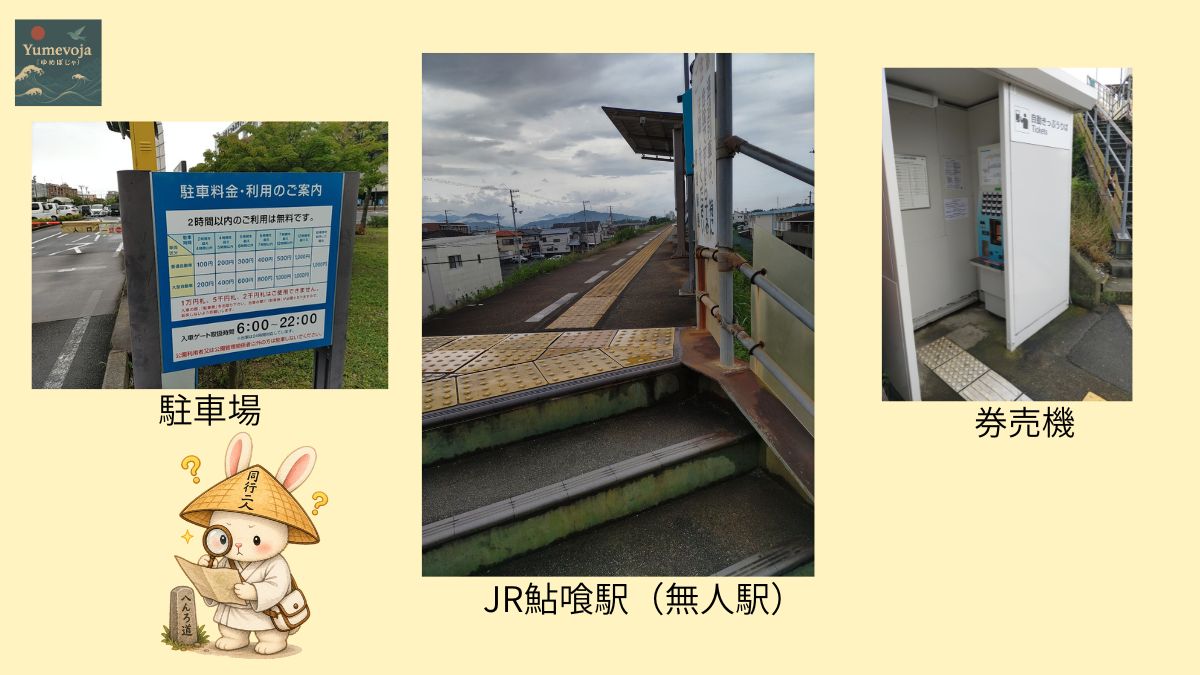
The starting point of my second day.
I left my car at Kuramoto Park Parking Area and began my walk toward Kawashima Bridge from the unmanned JR Akui Station.
The Bridge I Had to Cross
Kawashima Submersible Bridge spans the Yoshino River.
There are no guardrails.
The bridge is designed so that water can flow over it during periods of flooding.
It is narrow—just wide enough for a single vehicle.
Cars must carefully yield to one another.
For pedestrians, there are small refuge areas along the way where you can step aside when vehicles approach.
When I actually crossed it, I found it far more intimidating than I had imagined.
Without guardrails, it felt as though I was walking directly above the river itself.
Driving across it would have required more courage than I possessed.
In fact, I was glad I came on foot.
I crossed to the other side.
Then I turned around.
Then I crossed again from the opposite direction.
Since I had come all this way, I wanted to walk it until I was completely satisfied.
At last, I was able to see with my own eyes the scenery I had missed the day before.
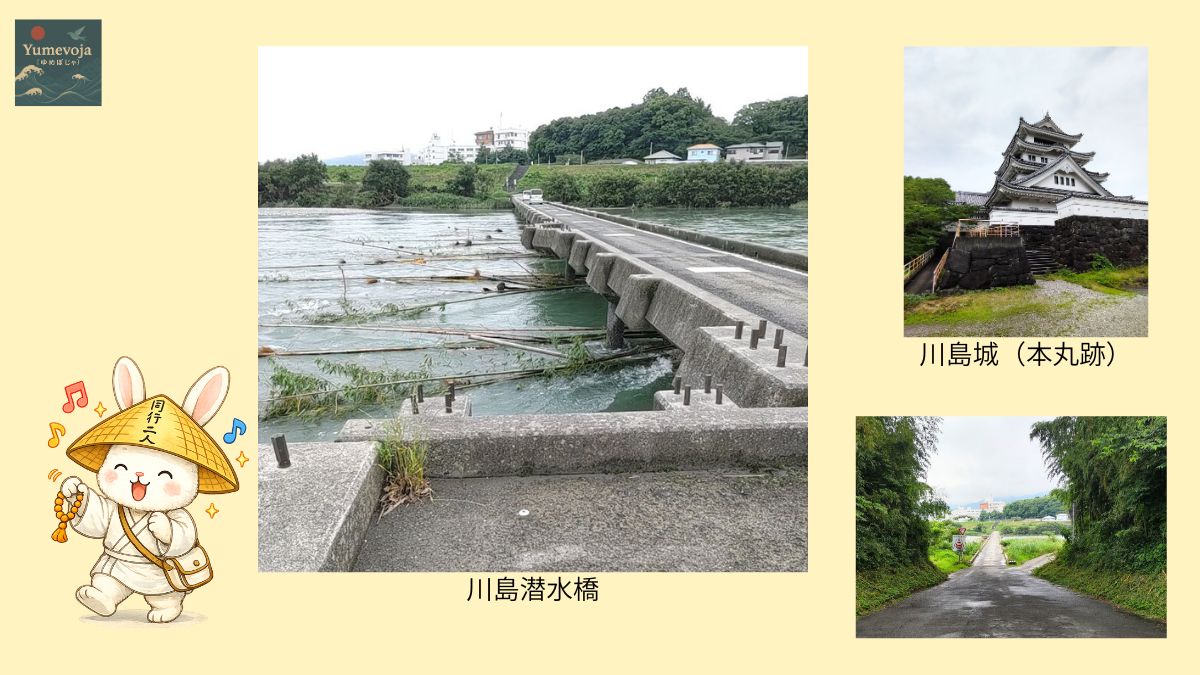
At last I reached Kawashima Submersible Bridge,
which I had failed to visit the previous day.
An unexpected stop at Kawashima Castle also became one of the memories of this journey.
An Unexpected Detour
On the way back to Awa-Kawashima Station, I found myself with a little time before the next train.
So I decided to visit Kawashima Castle.
It was not listed in my guidebook.
The site itself was small, with part of the former castle grounds now serving as a local museum.
Had everything gone according to plan the previous day, I probably would never have come here.
Travel rarely unfolds exactly as expected.
Yet sometimes the scenery we encounter exists only because our plans fall apart.
Thinking that, I returned to Awa-Kawashima Station once more.
Heading to Ichinomiya Fudasho-mae
From Awa-Kawashima Station, I traveled back to Tokushima Station.
Next came a bus ride to Ichinomiya Fudasho-mae.
I had checked the schedule beforehand, but buses were not particularly frequent.
Missing one would throw off the entire day.
Feeling slightly anxious, I was relieved when I finally boarded successfully.
Shrine and Temple
I got off at Ichinomiya Fudasho-mae.
And, as usual, I immediately started walking in the wrong direction.
A bad feeling crept in.
I checked the map.
As expected, I was heading the wrong way.
I hurriedly turned around.
Apparently, a poor sense of direction is not something a pilgrimage can easily cure.
Temple No.13 Dainichi-ji stood facing a shrine.
Shinto gods and Buddhist deities.
Both existed naturally side by side.
It felt like a distinctly Japanese landscape.
Since I was there, I decided to visit the shrine as well.
Offering prayers at a shrine during a Buddhist pilgrimage.
Perhaps that, too, is a uniquely Japanese form of pilgrimage.
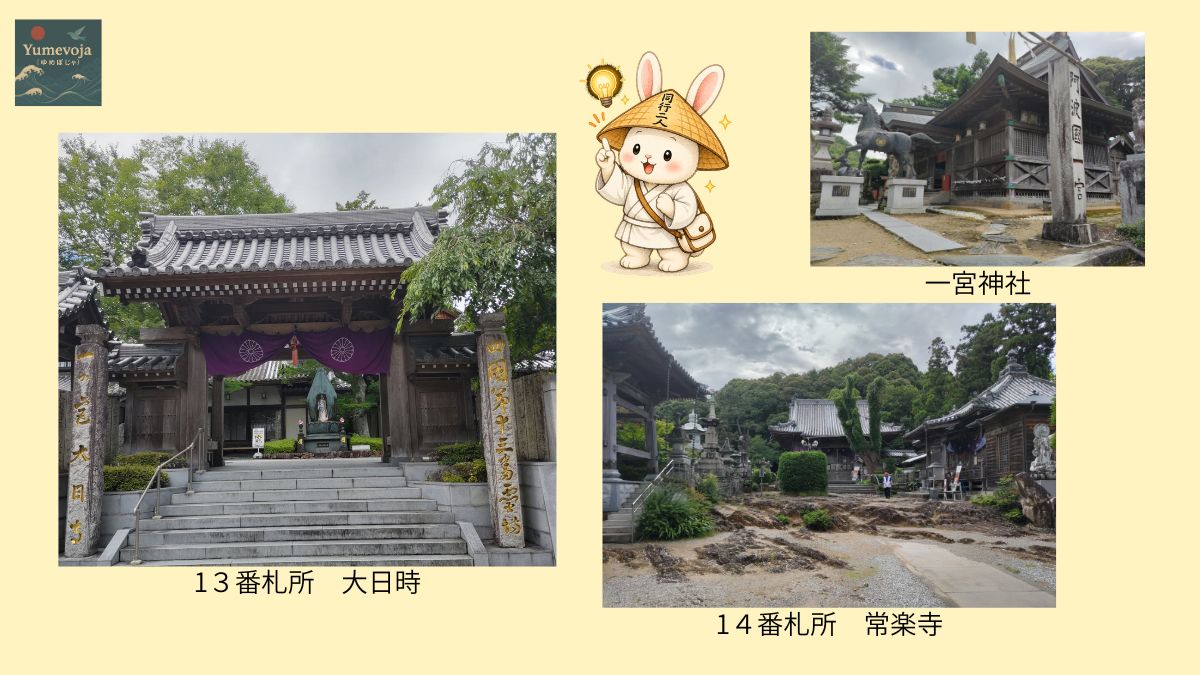
The pilgrimage resumed at Dainichi-ji,
where a shrine and temple stand facing one another.
After visiting Ichinomiya Shrine, I continued on toward Joraku-ji.
Moving Forward, One Step at a Time
Temple No.14 Joraku-ji.
Temple No.15 Kokubun-ji.
Temple No.16 Kannon-ji.
I still lost my way from time to time, but unlike the previous day, there were no major troubles.
Walk.
Pray.
Walk again.
At last, I felt as though I was beginning to understand the rhythm of the pilgrimage.
Osettai – An Unexpected Gift
By the time I was heading toward Temple No.17 Ido-ji, I had started worrying about the time.
I walked through a residential neighborhood.
Was I really on the right road?
I called out to a woman working in her garden.
“Am I going the right way?”
“Yes, you are.”
Relief washed over me.
Then she said,
“Wait a moment.”
She went back inside her house.
To be honest, I felt nervous.
The temple office closing time was on my mind.
But I waited.
A few minutes later she returned, carrying a cold bottle of water.
“Here you are.”
It was osettai—the traditional offering of kindness to pilgrims.
On a hot day of walking, that single bottle meant more than I can describe.
I thanked her and continued on my way.
Will I Make It?
I was happy.
But I was also worried.
What if I didn’t make it in time?
With those conflicting feelings, I kept walking.
I should have been exhausted.
Yet somehow, my feet kept moving.
At last, I arrived safely at Temple No.17 Ido-ji.
After offering my prayers, I made my way back to the parking area.
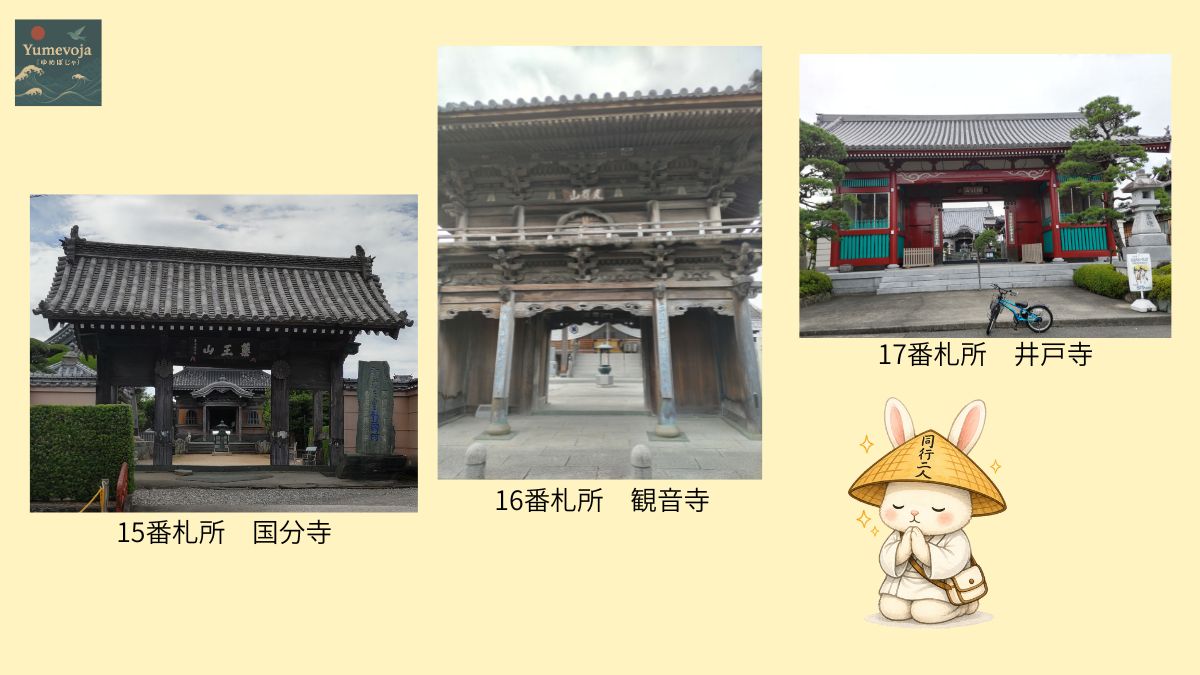
Keeping an eye on the clock,
I continued my pilgrimage through Kokubun-ji, Kannon-ji, and Ido-ji,
successfully completing the second day’s journey.
Before Returning to Everyday Life
It was hot.
I was tired.
I was happy.
I was grateful.
All of those feelings mixed together as I climbed back into my car.
The previous day, my unrealistic plans had caused trouble for many people.
Yet once again, I had been helped by so many others.
Because things had not gone according to plan, I encountered experiences I otherwise would never have found.
Tomorrow, ordinary work and daily life would begin again.
I wanted to return with gratitude.
Thinking that, I left Tokushima behind.
👉 Related illustrations here
(Free to use)
▶︎ 🎨View illustration page

Today’s bonus capsule!
✨ Gateway to the Shōwa Era―Roller Skates
The Showa era (1926–1989) was a time when modern technology and ideas began to transform everyday life in Japan.
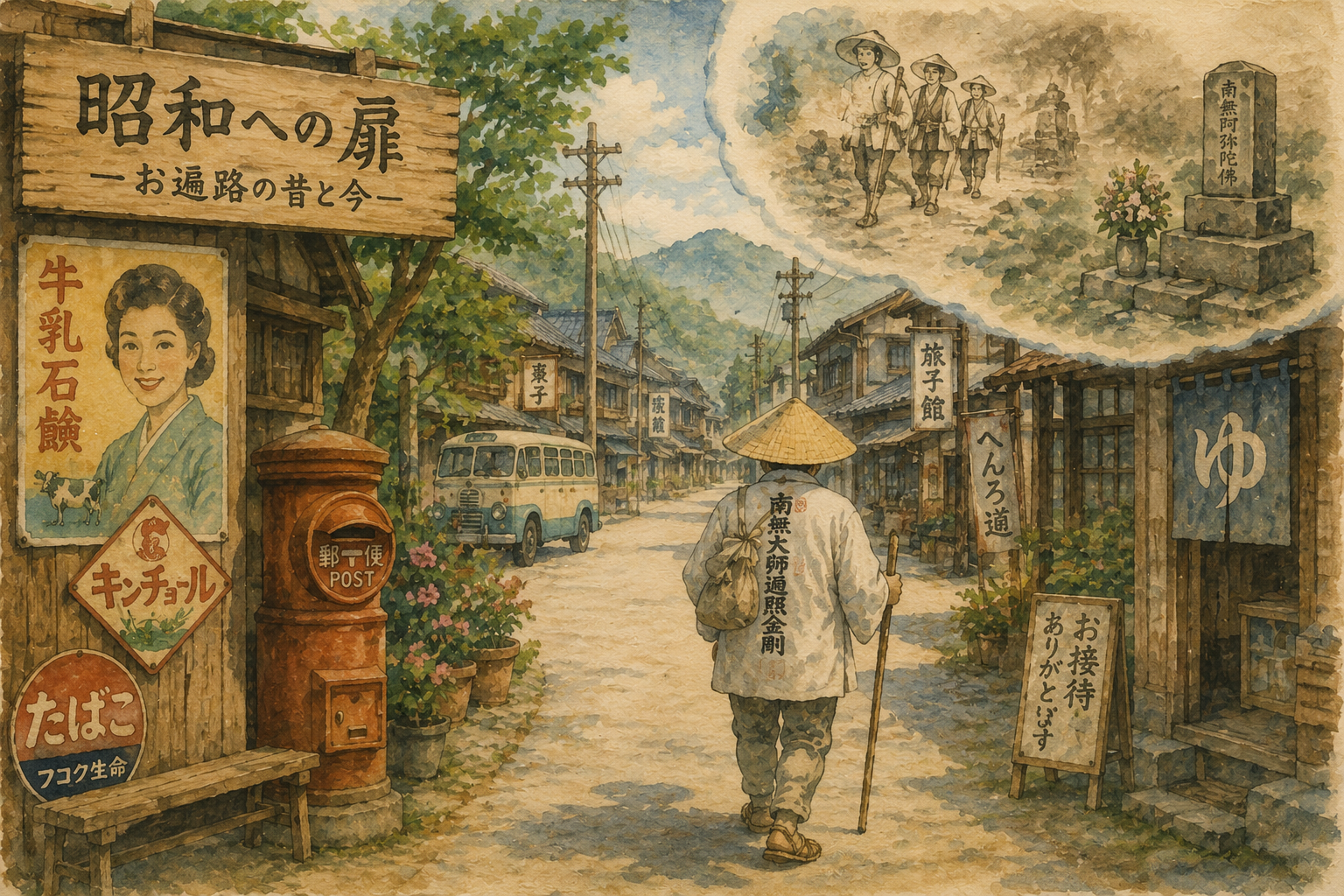
Today’s pilgrimage is quite different from the pilgrimage of the Showa era.
Back then, many people imagined the Shikoku Pilgrimage as something to undertake after retirement. People often retired at the age of 60, began receiving their pensions, and walked from temple to temple in order.
Today, however, the pension age has risen to 65, and many people continue working well beyond the age of 60.
The pilgrimage itself has also changed. More people now travel by car or bus, and fewer complete the route entirely on foot.
There is another major difference: in the Showa era, there were no smartphones.
Pilgrims relied on paper maps and local advice. If they lost their way, they had to ask someone for directions. Traveling was less convenient and often more dangerous than it is today.
While walking the pilgrimage routes, I occasionally come across unmarked graves of pilgrims who passed away during their journey.
Most of these graves date from before the Showa era, but they remind me of the long and sometimes harsh history of the pilgrimage.
The Shikoku Pilgrimage is more than a sightseeing trip.
That is why I always feel it should not be started lightly. It is a journey that deserves respect, preparation, and humility.