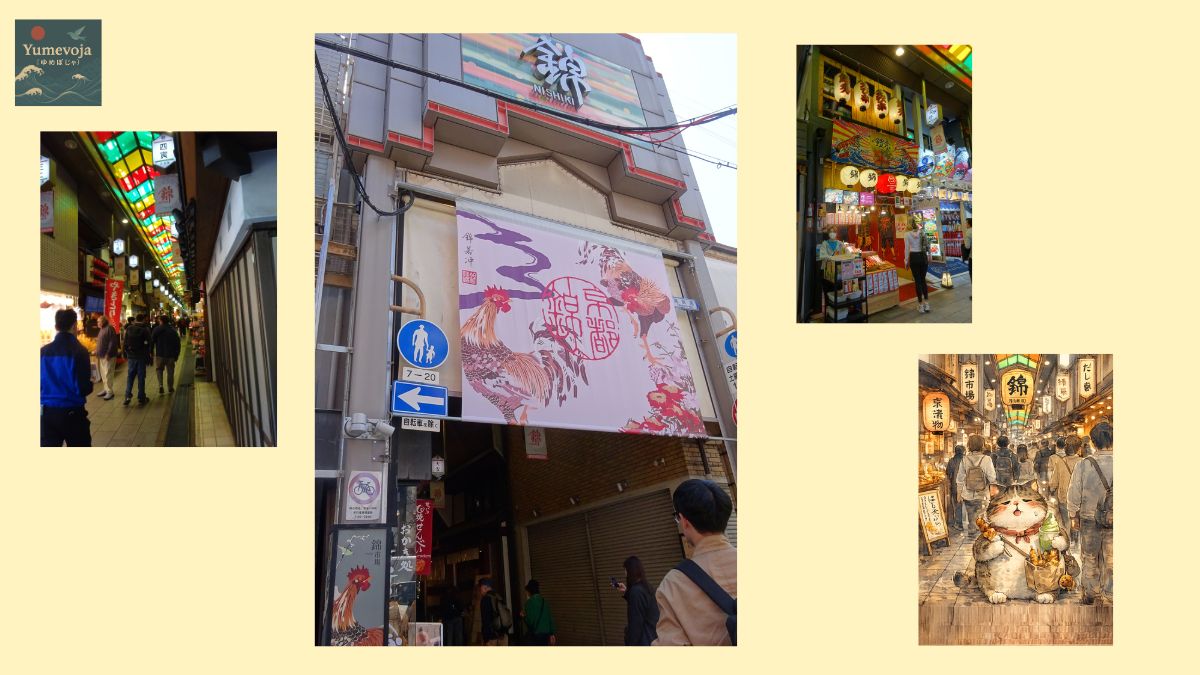
The entrance to Nishiki Market.
This is where a walk through Kyoto’s food begins.
Visit date: April 8, 2026 (Wednesday)
Shijo Kawaramachi in the morning is still quiet.
Teramachi Shopping Street is not yet open,
and feeling a little too early, I head toward Nishiki Market.
Once inside, rows of stalls line the street,
almost like a small festival.
It’s a place where the flow of people gradually forms as time passes.
The route I walked is shown on the map below.
It gives a sense of how Nishiki Market connects to the Shijo Kawaramachi area.
🧭 Basic Information – Nishiki Market
Hours: Vary by shop, generally around 10:00 AM – 5:00 PM
Closed: Depends on each shop
Access: A short walk from Hankyu “Kyoto Kawaramachi Station”
🍢 Tips for Street Food
- It’s quiet in the morning, but many shops are still preparing
- It gets crowded quickly toward midday
- Some shops have limited space for eating on the spot
⚠️ Notes
- Early hours may not be ideal for immediate eating
- Even without lines, there may be waiting time
“Mornings are quiet, but many shops are still preparing.
It may be better to watch the timing just a little.”
When I entered Nishiki Market, it was still a quiet time.
Sake from the morning—
perhaps a small pleasure only possible on a day off.
It looked like cherry blossoms in color,
though the aroma was rather subtle.
Next, I ordered grilled squid.
When I asked if it was available, they said yes.
But it took quite a while.
The shop was still in preparation,
and the heat wasn’t fully ready yet.
It’s easier to enter when it’s quiet,
but whether you can eat right away
is something to consider carefully.
A very “touristic” beginning.
The taste wasn’t bad,
but it didn’t leave a strong impression.
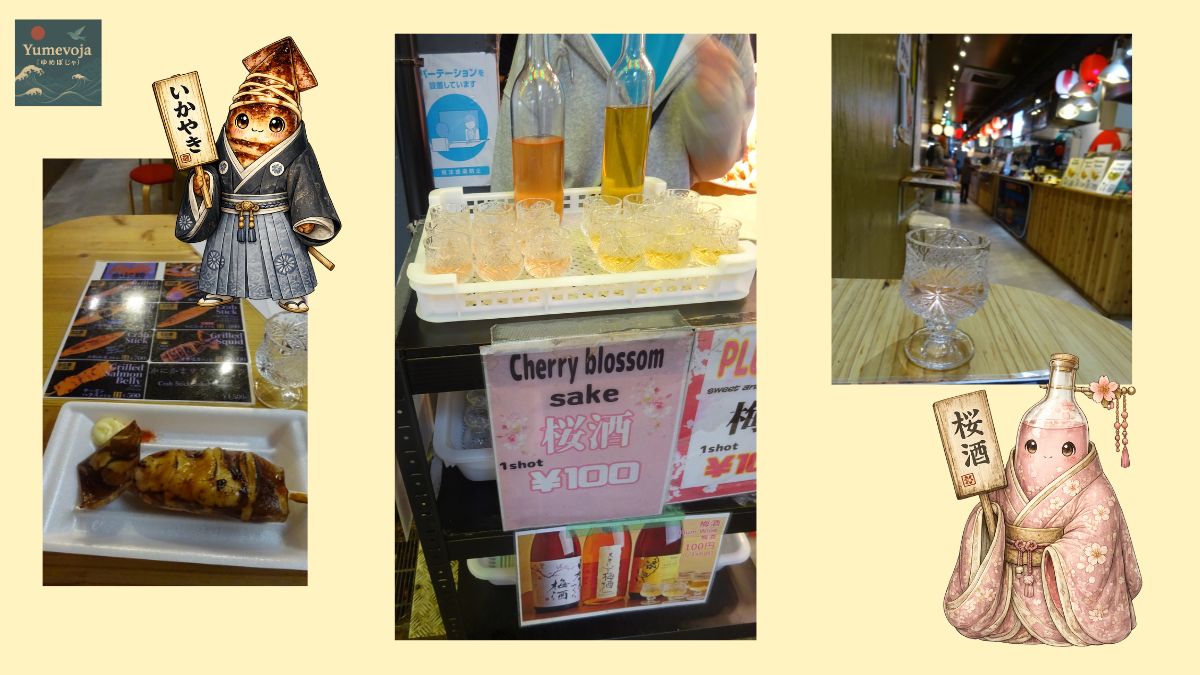
Tasting little by little.
Street food and sakura sake at Nishiki Market.
The chicken chashu roll was also a bit strong in flavor.
Still, nothing quite stood out yet.
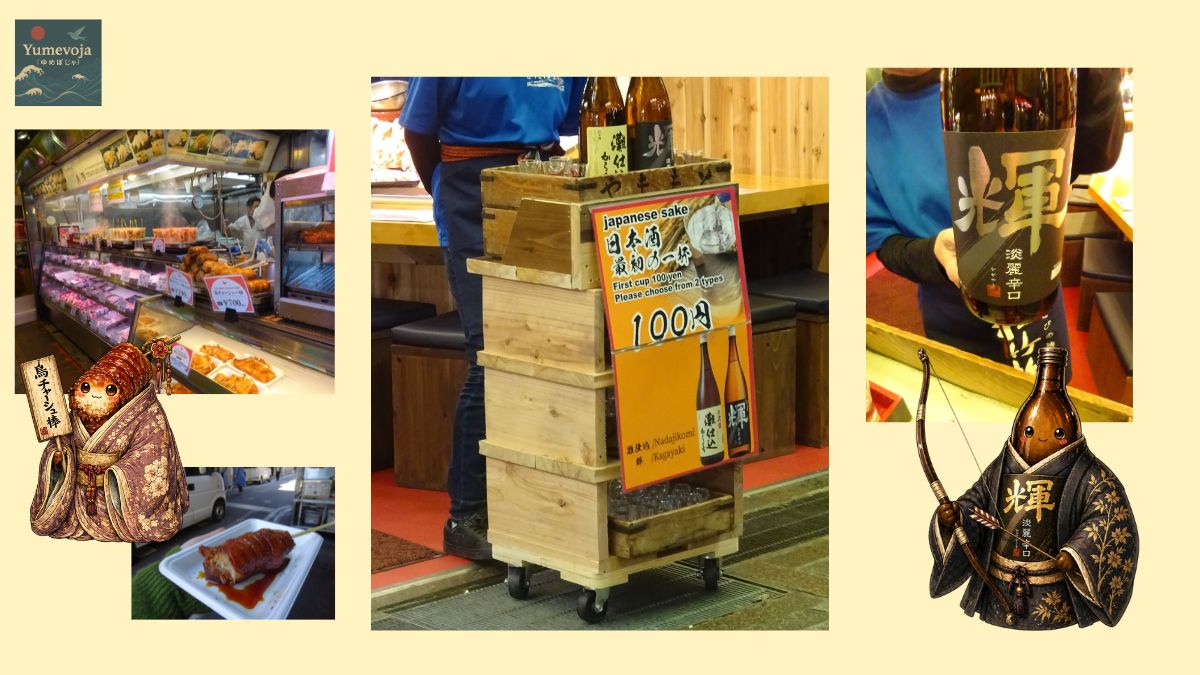
The atmosphere of a place becomes part of the taste.
Something comes back to me—
I used to come to Nishiki Market many times with my father.
Back then, the purpose was pickled vegetables.
This time, I chose to walk and eat instead.
Even in the same place,
the way it feels can change.
There’s a shop selling hair ornaments—
I’m a little surprised to see something like this here now.
Even the differences from before are part of the experience.
My hair is short now, so I only look.
As I walk further, the number of people increases.
Many visitors seem to be from overseas,
and families with children are noticeable.
A child becomes fussy,
a parent gently comforts them.
A scene that doesn’t change, no matter the country.
Deeper into the market,
the oyster shop I had been curious about begins to open.
Just after opening, there’s no line yet.
Fresh oysters for tasting comparison.
Each region has a different flavor,
and even the order of tasting is suggested.
Ponzu sauce is available,
but I choose to eat them with just lemon.
The natural flavors become clearer.
This one—was a hit.
By the time I leave the market,
the flow of people is fully formed.
The quiet morning has disappeared,
and Nishiki has become a lively tourist destination.
Even in the same place,
the atmosphere changes with time.
Among everything I ate,
the oyster tasting left the strongest impression.
I’ve written about it in a separate article.
👉 🍵Nishiki Market Oysters | Fresh Oyster Tasting in Kyoto Food Street
👉 Related illustrations here
(Free to use)
▶︎ View illustration page
👉Choose Kyoto by mood.
▶︎View the Kyoto guide

Today’s bonus capsule!
✨ Gateway to the Shōwa Era
―elevator girls
The Showa era (1926–1989) was a time when modern technology and ideas began to transform everyday life in Japan.
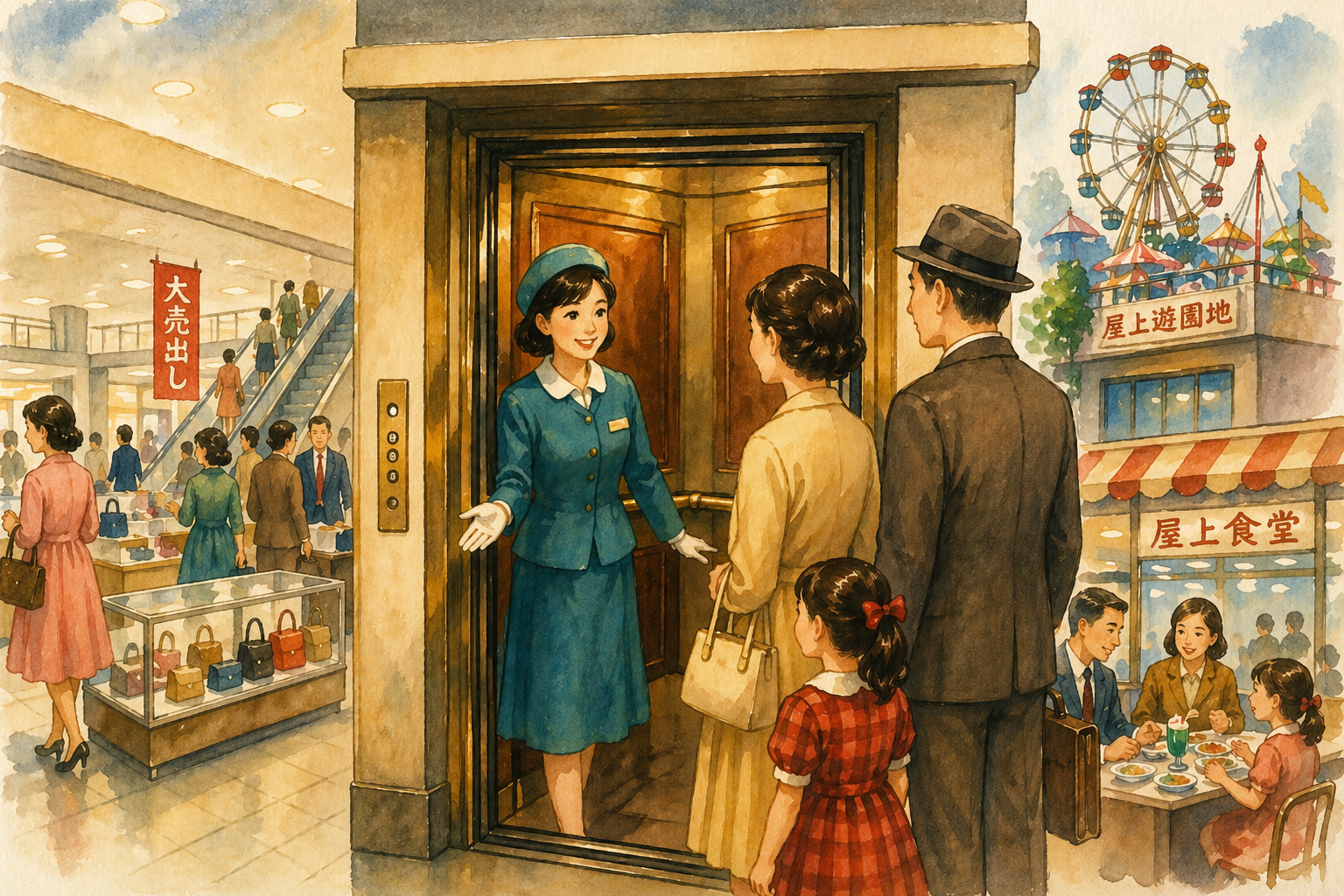
In Showa-era department stores, there were attendants known as “elevator girls.”
They politely guided customers to their desired floors and manually operated the doors.
Back then, department stores were not just places to shop,
but places that felt a little special.
People would dress up nicely to go there,
and on the rooftop, there were small amusement areas and dining spaces where families could spend the whole day.
At the center of it all stood the elevator girl.
She did more than simply move people between floors—
she guided them into a “special moment” of their day.