Visit Date: March 11, 2026 (Wednesday)
An Unexpected Beginning
I left home today thinking I had work.
But it turned out I had the day off.
I almost went back, but instead, I decided to head to Kyoto.
This kind of flow isn’t so bad.
When I arrived in Keage, the air felt slightly cold.
Kyoto is, after all, a little chilly.
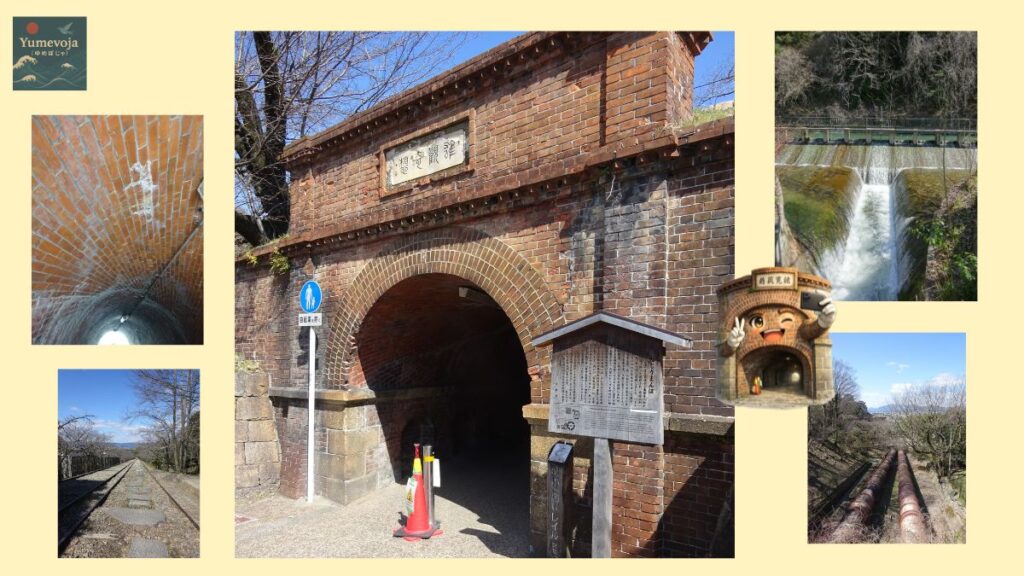
Starting from the Nejirimanpo tunnel, a small sense of curiosity.
With each step, Kyoto’s hidden flow begins to reveal itself.
I placed today’s route exactly as it was onto a map.
Following the same order, you can feel how the atmosphere gradually changes.
Perhaps I entered from a path outside the usual order.
Before I knew it, the arches were right in front of me.
👉 Read the afternoon article from this day here
▶︎ 🚉Eikando Temple Kyoto: A Maze-Like Walk Through One of Kyoto’s Most Beautiful Temples
🧭 What you’ll find in this article
- A quiet way to enter Nanzen-ji (Keage route)
- How to walk through Nejirimanpo and the canal paths
- Highlights of the Nanzen-ji aqueduct
- A different way to experience Nanzen-ji beyond typical routes
📍 Route in this article
- Nejirimanpo Tunnel
- Canal-side path
- Nanzen-ji Aqueduct
- Nanzen-ji Temple
✔ Recommended for
- Those who want to walk quietly through Kyoto
- Those who want to explore Nanzen-ji differently
- Those who value experience over just photos
✔ Estimated time
About 1–2 hours
(including walking and photography)
✔ Key points
- A route guided by the sound of water
- A less crowded entrance
- A journey that begins with “Huh?”
Starting from Nejirimanpo
After walking a short distance from the station,
a brick tunnel appears.
That is
Nejirimanpo.
Inside, the bricks twist slightly along the walls.
The structure isn’t straight, and it creates a subtle sense of unease.
Passing through it,
the path for today begins.
A Path Guided by Water
After exiting the tunnel, you’ll see a sign for the Keage Incline on your right.
Curious, I decided to go up.
Learning that it was once used to carry boats,
the way I saw this place began to change.
Even after exploring the incline, I continued in the opposite direction.
Crossing a metal bridge, I saw large water pipes and the town stretching beyond.
Just when it seemed like a dead end,
something caught my attention.
There was a narrow path continuing further.
It was a small trail along the canal.
With many trees, it felt slightly dark.
There were few people, and only the sound of water echoed loudly.
The straight flow of water collided somewhere ahead.
The sound, like a waterfall, spread quietly through the space.
“Huh?” — A Moment of Pause
At that moment, something began to appear ahead.
At first, I couldn’t quite tell what it was.
It wasn’t a temple building, nor a gate.
As I got closer,
a brick arch came into view.
“Huh?”
Why would something like this exist within a Kyoto temple?
Nanzen-ji Aqueduct
That was
the Nanzen-ji Aqueduct.
In front and behind, there were temple grounds.
And in between, a brick structure ran through.
A strange and fascinating sight.
People gathered beneath the arches.
Many were taking photos.
But few seemed to walk through all of them.
I decided to pass through as many as I could.
What You Feel Inside the Arches
From within, the rows of brick arches continue.
Small openings overlap deeper and deeper,
with light and shadow alternating.
This is neither a temple nor just a bridge.
It felt like a place where time overlaps.
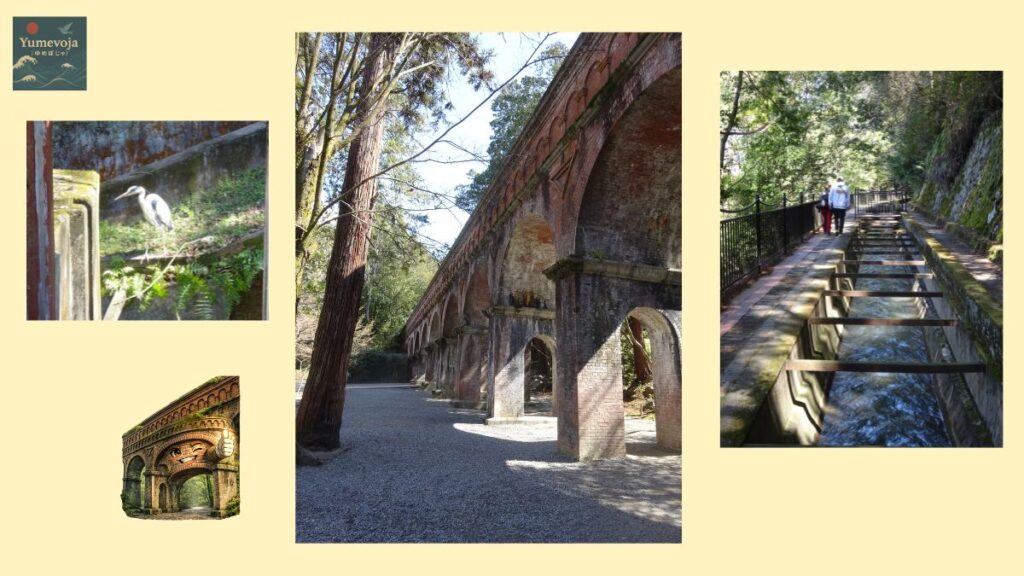
An aqueduct appears out of nowhere.
Above and below, two worlds quietly overlap.
Toward Nanzen-ji
Passing through the arches,
I returned to the temple space once again.
Ahead lies
Nanzen-ji.
Inside the grounds,
there is movement within the stillness.
Climbing the Sanmon Gate
I learned that it was possible to go up the Sanmon gate,
and began searching for the entrance.
It’s a bit difficult to find,
and many people seem to pass by without noticing.
Inside, a steep staircase with ropes continues upward.
It’s much steeper than I expected.
Step by step, carefully climbing.
At the top, the wind flows through.
Sitting there, I could feel my body slowly cooling down.
The Flow of People
After I came down, a group of elderly visitors headed toward the gate.
Their lively voices could be heard from a distance.
I wondered if they would make it safely up those stairs.
Looking at those on top,
it seemed there were more Japanese visitors there.
Time for Prayer
At that moment, a chanting service began within the temple grounds.
Suddenly, strong voices echoed.
Multiple voices layered together, changing the atmosphere.
Foreign visitors carefully pointed their cameras toward the scene.
When the Sound Fades
After the service ended,
the doors other than the front were quietly closed.
The atmosphere from before disappeared in an instant.
Then, birds began to sing on the roof above.
It felt as if the voices had been replaced.
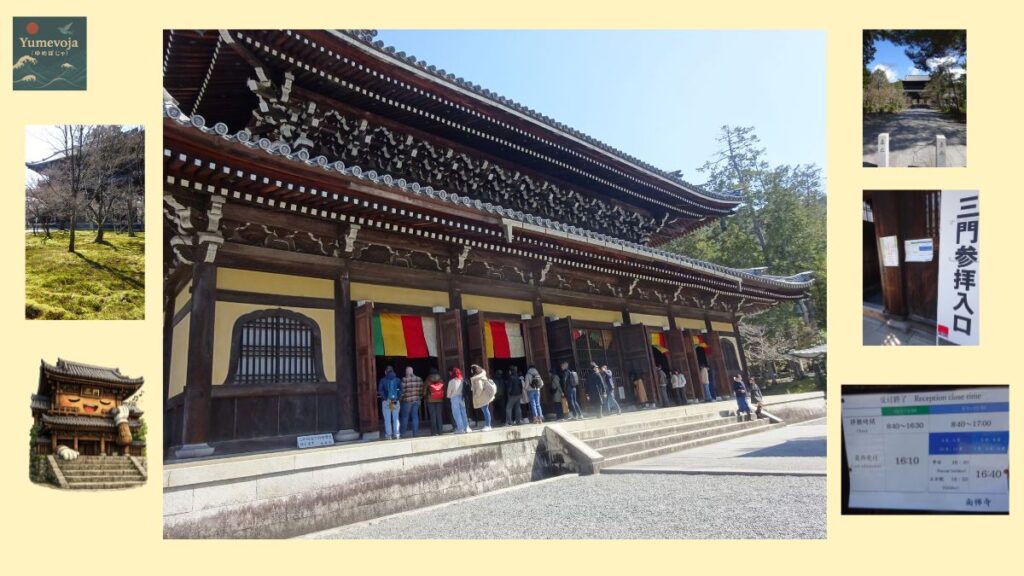
Within the quiet, people come and go.
Nanzen-ji is a place of space and stillness.
Looking for Something Warm
As I kept walking, my body began to feel cold.
Kyoto’s atmosphere is calm,
but the air is still chilly.
I started thinking about finding something warm to eat.
👉 Next, I head to a small soba restaurant I found near Eikando.
🍵 Philosophy Soba Yamagen near Eikando | A Quiet Bowl Highlighting Natural Flavors and Aroma
Choose Kyoto by mood.
👉 View the Kyoto guide

Today’s bonus capsule!
✨ Gateway to the Shōwa Era
―Disposable Cameras
The Showa era (1926–1989) was a time when modern technology and ideas began to transform everyday life in Japan.
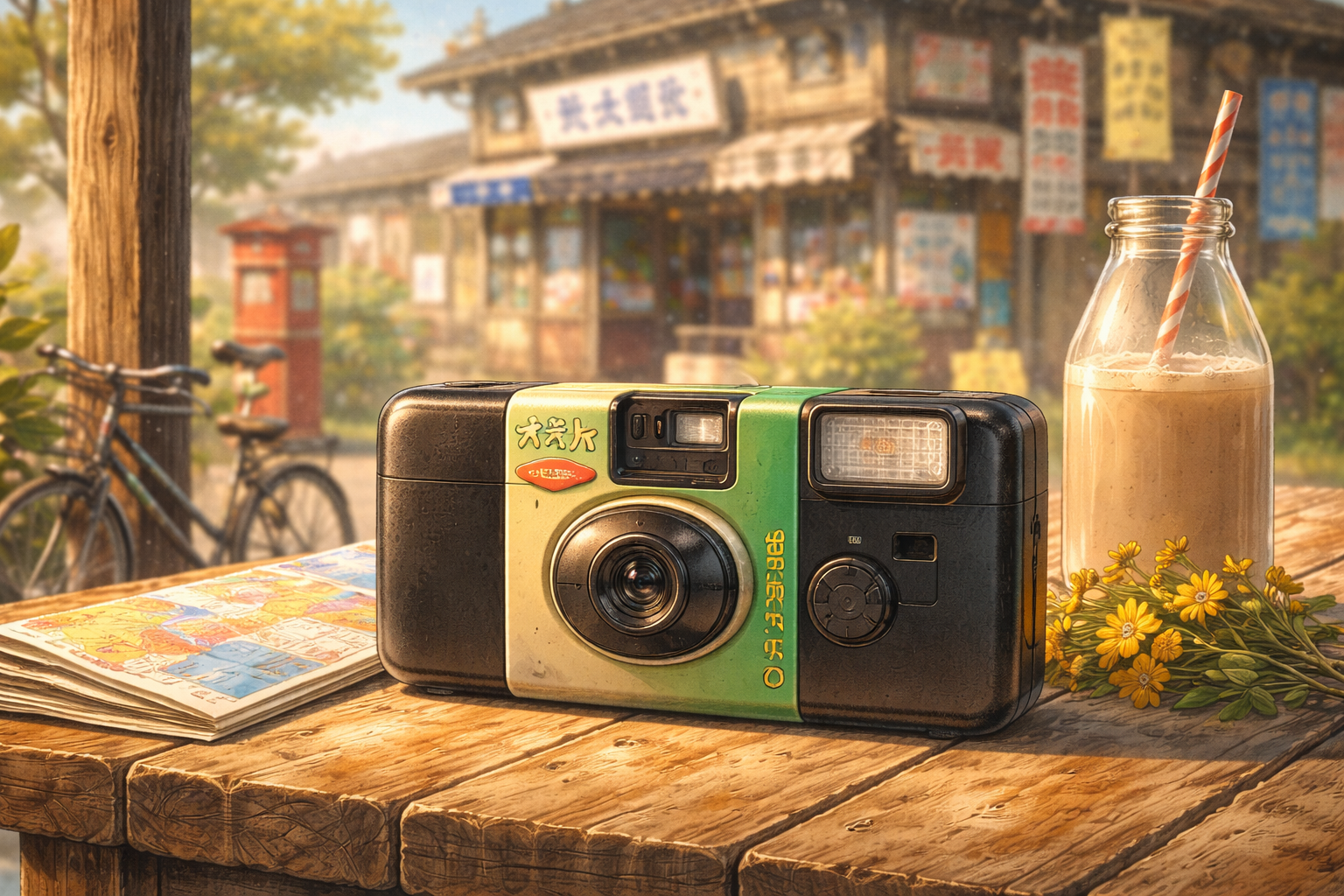
During the Shōwa era, there were disposable cameras.
People didn’t always carry a camera with them like today.
So when they suddenly felt like taking a photo, these simple cameras were incredibly useful.
You could find them almost anywhere—at tourist spots, train stations, or small shops.
They were perfect for unexpected moments or unplanned detours.
The number of shots was limited.
You couldn’t just take photos freely.
That’s why people chose their moment carefully—
the one they truly wanted to keep.
There was no way to check the photo right after taking it.
You had to wait until it was developed.
Still, people pressed the shutter,
as if entrusting their memories to that single frame.
Even that uncertainty
was part of the journey.