A cherry blossom festival after the bloom.
And still, people gather.
Date visited: 2026.4.8 (Wednesday)
First, the route of the day on the map.
The morning began at Nishiki Market.
Walking through the lively streets,
with street food and small discoveries along the way.
👉🚉Walking Nishiki Market Kyoto | Food Street Experience and Crowd Changes
Leaving Nishiki Market behind, I walked through the city.
A little quietness returned.
Away from the tourist flow, closer to everyday life.
I visited several shops looking for a bag to match a formal kimono.
Secondhand shops, new stores.
The ones I liked were, unsurprisingly, expensive.
I hesitated a little and kept walking.
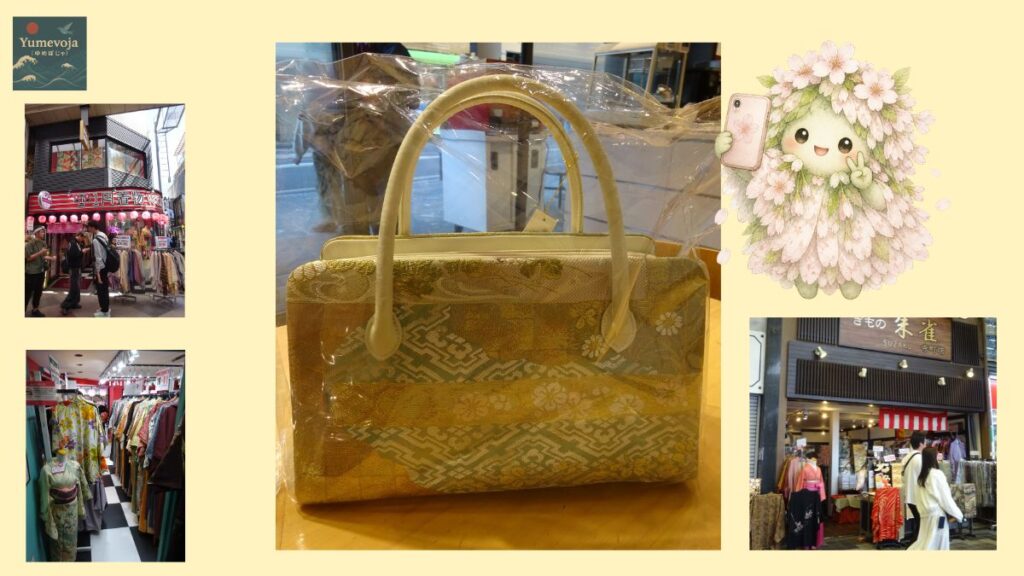
Choosing while hesitating.
A small sense of satisfaction.
👉👘Between Kimono and People ①|Searching for a Formal Kimono Bag in Kyoto
Before heading to Yasaka Shrine, I wandered a little in search of lunch.
Between 2 p.m. and 5 p.m.
A difficult time to look for food.
Many restaurants close during these hours before dinner service begins.
I have missed the timing many times before.
And then, a small moment that quietly rescued me.
The gentle smile of the young woman running the shop alone also stayed with me.
👉🍵Yaki Imo & Nikuman in Kawaramachi Kyoto | A Quiet Break Spot
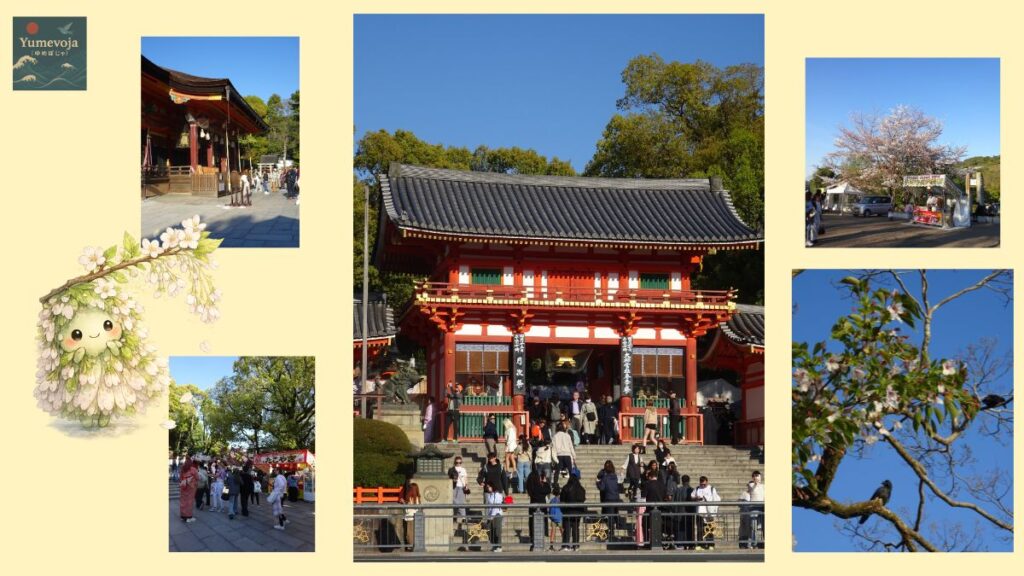
I headed toward Yasaka Shrine.
The crowds were heavy.
There was no choice but to move with the flow.
A tall foreign visitor stepped aside and said, “Sumimasen” in Japanese.
For a moment, the atmosphere softened.
I walked along the long street lined with food stalls leading to the shrine grounds.
The last time I came, many of the stalls were closed.
Today, everything was lively.
I was not hungry.
If I ate now, dinner would not fit later.
Around me, voices kept saying “Wow.”
A foreign child wearing kimono.
A little awkward, but adorable.
Inside the shrine grounds, young visitors shyly followed the proper prayer etiquette.
There was something gentle about the scene.
A foreign parent and child drew an omikuji fortune slip and shouted, “Wow!”
I could not understand what it said, but they looked happy.
A little girl played by ringing the shrine bell.
I waited quietly.
Her father arrived and gently guided her away.
No one rushed her.
The atmosphere felt calm.
Then, to Maruyama Park during the cherry blossom festival.
The park overflowed with people and food stalls.
The cherry blossoms had already turned into leaves.
No one was really looking at the blossoms anymore.
Still, everyone looked happy.
I headed toward the station.
In the side streets, groups of people wandered around searching for dinner, just like me.
Almost like zombies.
The zombies merged together.
To cross the bridge, we returned to the main street.
And then, the zombies scattered.
Wherever the flow carried me, I stopped for dinner.
Even knowing that Kyoto is a city of reservations,
I still want to search.
To feel. To discover.
And with surprisingly high probability, I miss the mark a little.
This time too, I missed slightly.
Chewing on a rather firm kamameshi rice dish,
I remembered another kamameshi from long ago.
A restaurant I visited many times during a longer stay.
Where was that place again?
For someone like me who prefers lighter flavors, everything tasted a bit too strong.
I wondered if my fellow zombies had better luck.
I grew up in a world where leaving food behind was not acceptable.
So I finish everything.
With gratitude.
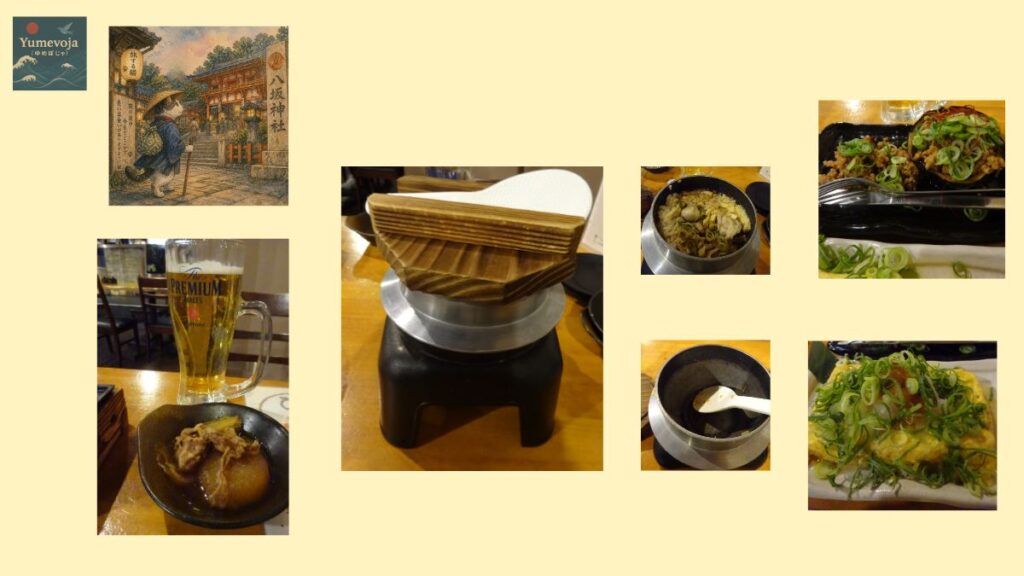
A night slightly off track.
That too is part of the journey.
Today again, I ate well and walked a lot.
24,422 steps.
I often miss the mark a little.
And still, I return to Kyoto again.
Tomorrow, back to ordinary life.
Back to a world where waiting is not allowed.
This concludes the “Classic Kyoto” series.
From here on, the journey takes a small detour.
👉 Related illustrations here
(Free to use)
▶︎ Go to the illustration page
👉Choose Kyoto by mood.
▶︎View the Kyoto guide

Today’s bonus capsule!
✨ Gateway to the Shōwa Era―Hanami
The Showa era (1926–1989) was a time when modern technology and ideas began to transform everyday life in Japan.
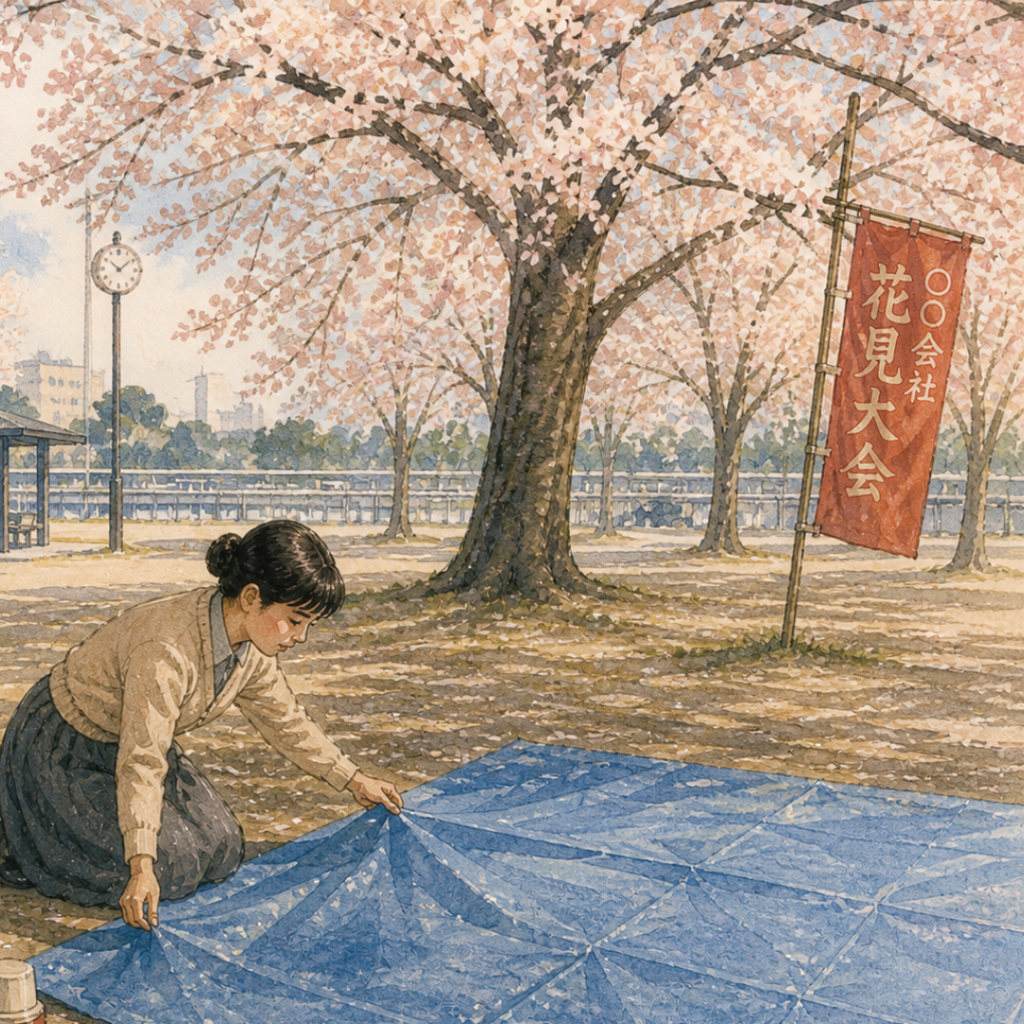
In the Showa era, one of the first tasks given to a new employee in spring was reserving a spot for the company’s cherry blossom viewing. Early in the morning, we would head to the park and spread out a blue tarp under the cherry trees, often being among the very first to arrive. The best spots were taken quickly, and even a small delay meant ending up far from the main area.
Staying there for hours without leaving was part of the job. Looking back, it feels quite demanding—something that today might even be considered close to workplace harassment. Yet at the time, it was a completely ordinary scene.
As evening came, colleagues would gather after work, and the lively party would begin. Time under the cherry blossoms was something shared together, built on a little patience and a sense of belonging.