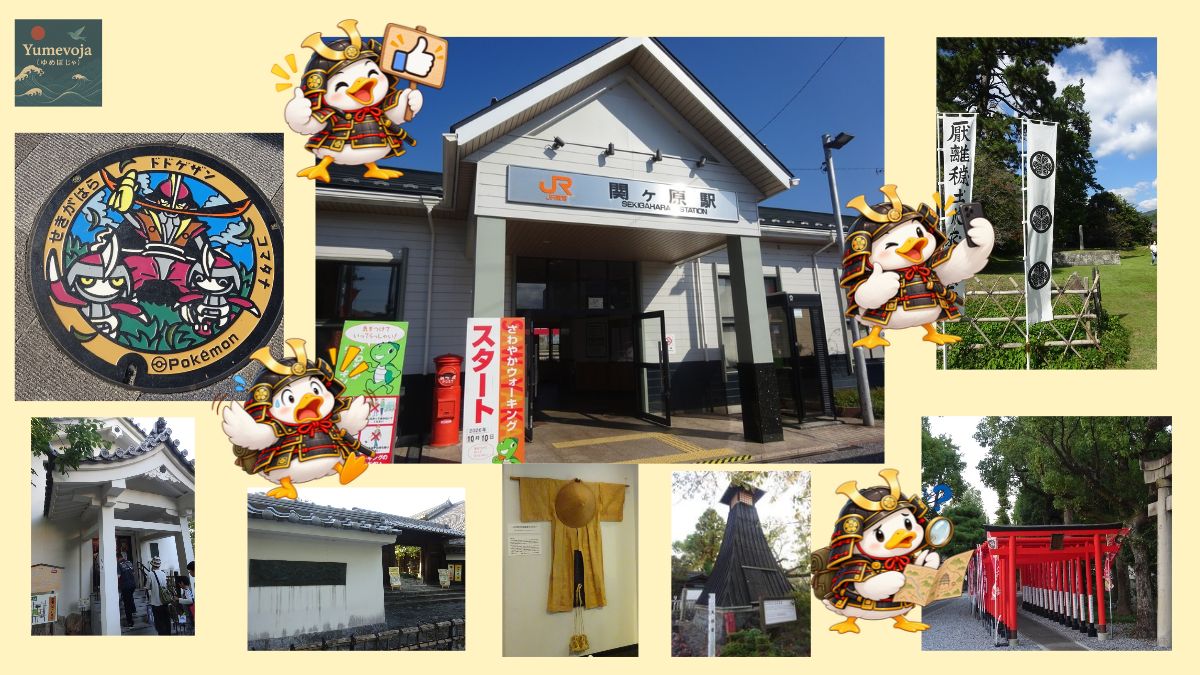
Visit dates: October 10 (Saturday) – October 11 (Sunday), 2026 | Sunny
At Osaka Castle, I saw a folding screen depicting the Battle of Sekigahara.
This time, I’m going to stand on that very battlefield.
Looking for something that makes me go, “Wow!”?
Kyoto → Maibara → Sekigahara → Ogaki
Breakfast at My Destination
Food is one of the great pleasures of traveling.
That’s why I often leave without breakfast, planning to find something to eat when I arrive.
And sometimes, I end up wandering around hungry, unable to find anywhere to eat.
This time, too, I set off without breakfast.
My destination was Sekigahara.
I decided to take the Shinkansen on the way there.
If I took a Special Rapid train, I might be able to sit down and work on my laptop.
But I’ve experienced major delays on conventional railway lines many times before.
This time, I had already reserved an 11:15 a.m. theater session at the Gifu Sekigahara Battlefield Memorial Museum.
So I chose a reliable early arrival over extra working time.
A Shinkansen Trip That Isn’t Quite So Spontaneous?
I like the Shinkansen and use it often.
With so many departures, I can usually reserve a seat online shortly before leaving and pass through the ticket gates using my ICOCA card.
But this time, I needed to get off at Maibara.
Not as many Shinkansen trains stop at Maibara as I’m used to.
Kodama trains are the main option, although some Hikari services also stop there. It seemed wise to check the timetable beforehand.
“I’ll just take the next Shinkansen.”
That usual carefree approach wasn’t going to work this time.
At Maibara, I transferred to a local train.
Then, inside the carriage—
Clunk.
Clunk.
What was that?
People around me were flipping the backs of their seats to face the opposite direction.
Apparently, passengers could adjust the seats themselves to face the direction of travel.
I couldn’t tell which way was forward, so I watched the others.
Clunk.
One more thing learned.
At 9:07 a.m., I arrived at Sekigahara Station.
A Small Stumble Right at Sekigahara Station
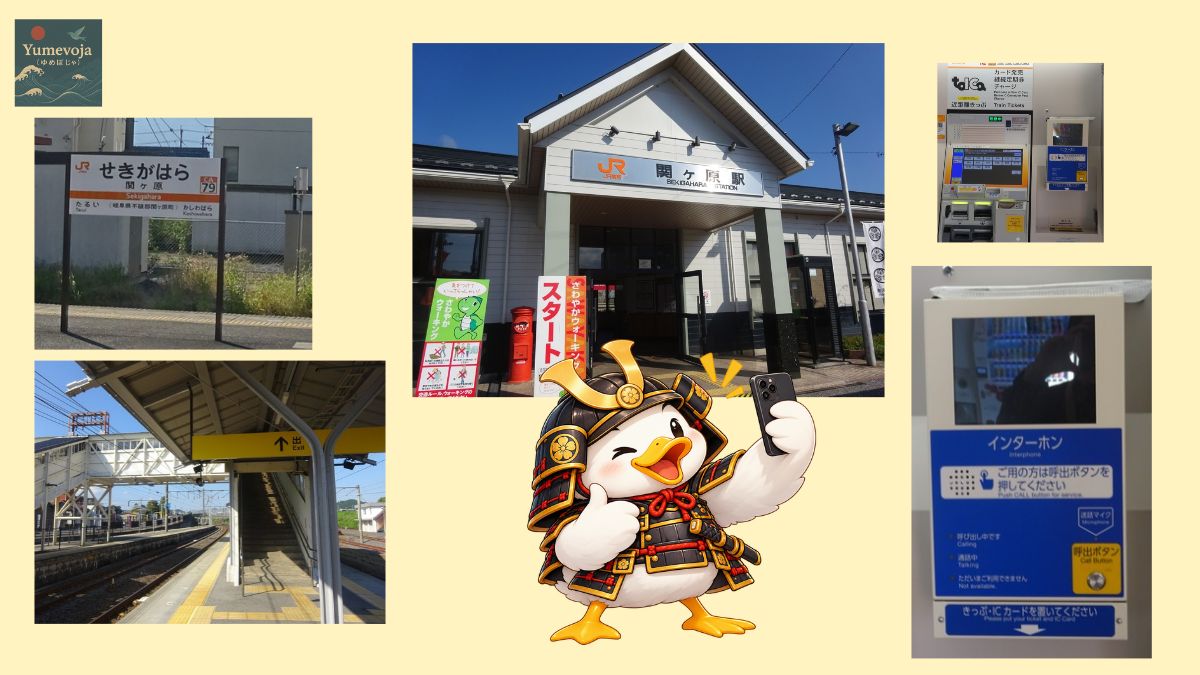
I hadn’t bought a ticket all the way to Sekigahara, so my first task was to settle the fare difference.
I joined the queue.
I should have bought the correct ticket from the beginning.
I also stopped at the station restroom, but the toilets I saw were Japanese-style squat toilets.
Outside the station, I found a clean Western-style toilet at a souvenir shop, so I used that instead.
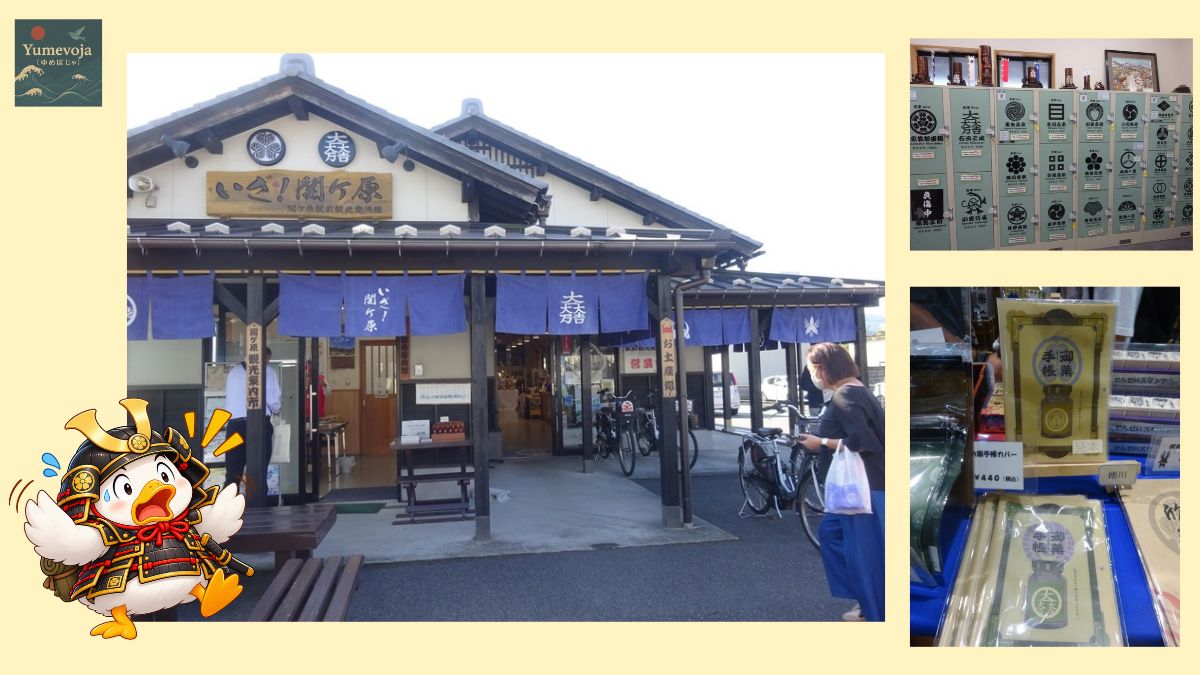
A little later, a tour bus arrived, and a queue formed for the restroom.
I’m glad I got there early.
Then I spotted something unusual in the souvenir shop.
A medication notebook cover featuring Tokugawa Ieyasu.
440 yen.
How amusing.
I left my luggage in a coin locker decorated with samurai family crests and set off.
No Breakfast in Sight
Now then.
Breakfast.
I looked around Sekigahara Station but couldn’t immediately find anywhere to eat.
I thought there would surely be something at the Gifu Sekigahara Battlefield Memorial Museum.
The café was available, but food service didn’t begin until 11 a.m.
My theater reservation was at 11:15.
Too late.
I searched on my phone for somewhere already open.
And found a small café on the ground floor of a building opposite the battlefield museum.
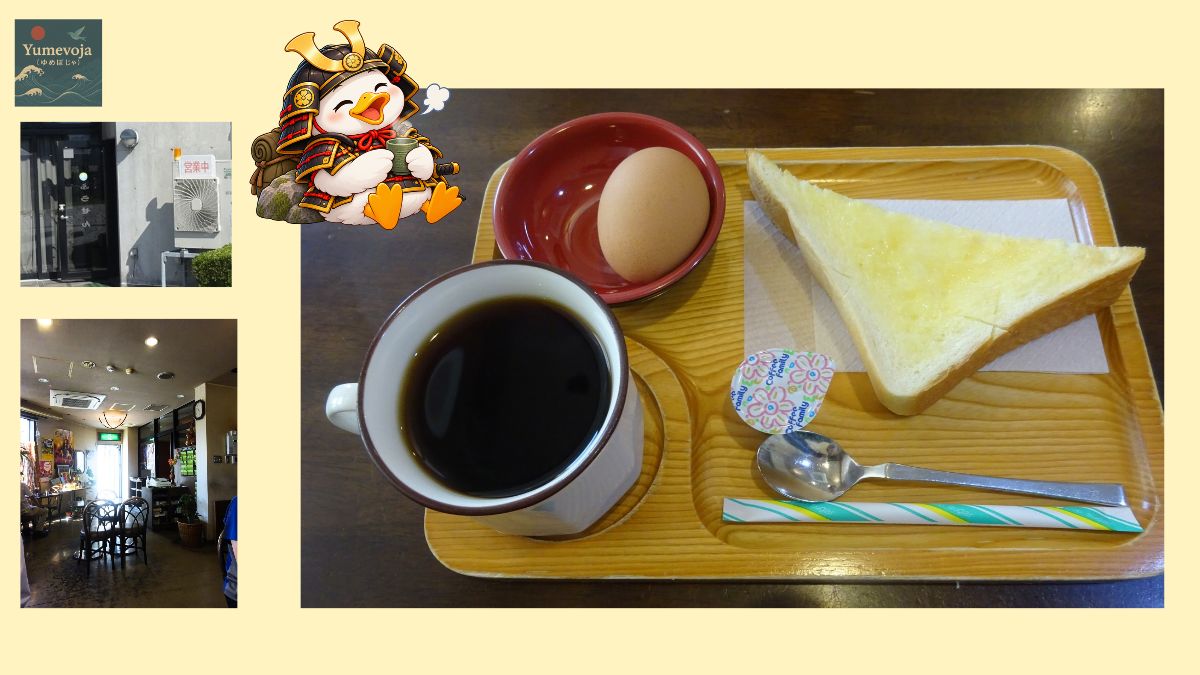
📍 Google Maps: Café Fūsen
An older person was running the café.
Across the road, large tour buses were coming and going.
Inside, meanwhile, older local customers were spending a leisurely morning.
Although the café was right beside a tourist attraction, time seemed to move differently here.
A morning set for 450 yen.
Finally, breakfast.
Relieved, I took my time.
…A little too much time.
My theater session was approaching.
I’m Going to Get a Good Spot!
I hurried to the Gifu Sekigahara Battlefield Memorial Museum.
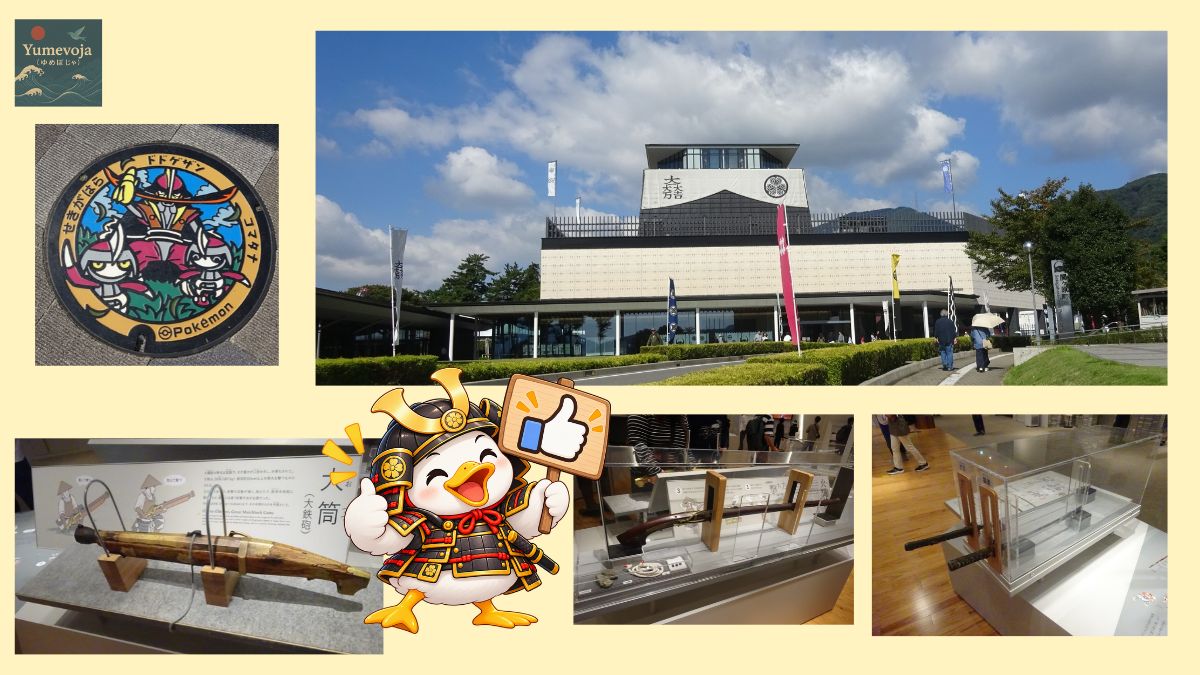
Visitors with reservations were admitted first.
Great.
I’m going to get a good seat.
…Huh?
There were no seats.
At first, we stood and watched a video, peering into the display.
Since I’d entered early, I secured a position right in front.
I wouldn’t have to watch from the side or the back.
A good decision.
Or so I thought.
When the first video ended, we moved into the theater farther inside.
Because I’d been standing at the front, I was now almost the last person to enter.
Mixed feelings.
The theater seats vibrate.
For visitors who dislike vibration, non-vibrating seats are available in the front row.
Naturally, I chose a vibrating seat.
Since I was almost last to enter, I ended up at the edge.
Then the show began.
The chair shook.
Wind blew.
This was more than simply watching a film.
I’m glad I came.
There is no separate charge for the theater, but the number of visitors admitted to each session is limited.
There were many tour groups, so if you have a preferred time, it’s worth checking in advance.
Also, from what I saw, the presentation was mainly in Japanese, with relatively few English subtitles.
It might be a little difficult for international visitors to follow.
Searching for a “Wow!” on the Battlefield
After visiting the museum, I headed out to the actual battlefield.
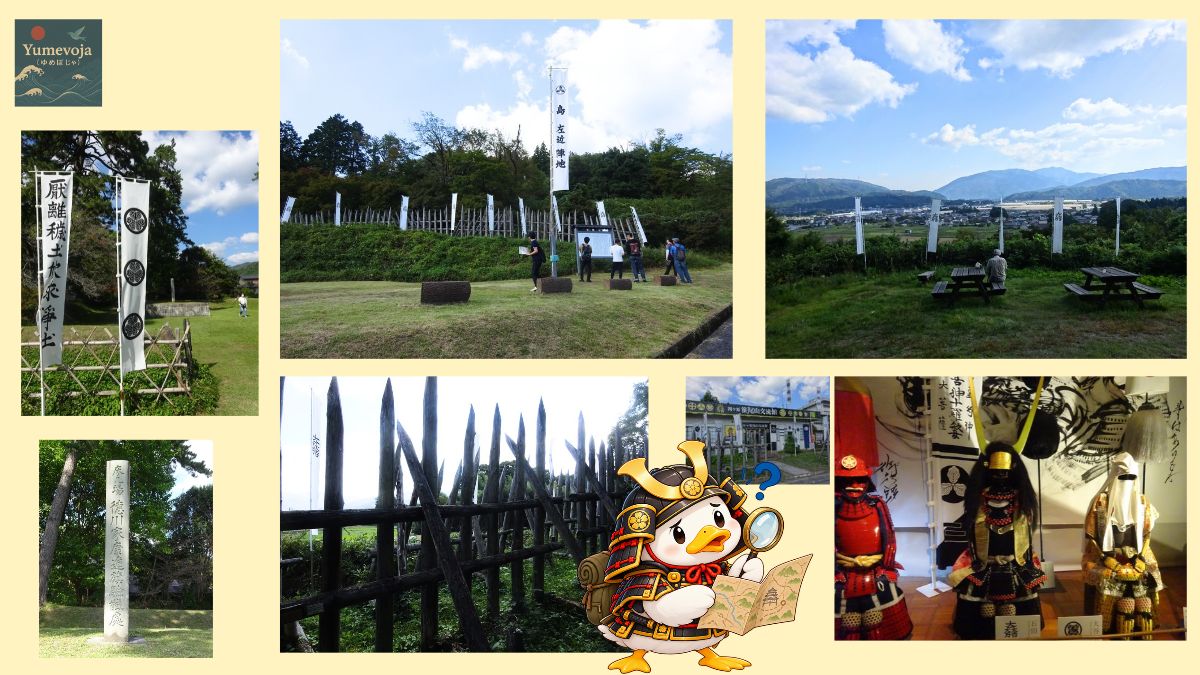
The site of Tokugawa Ieyasu’s final headquarters.
The site of Ishida Mitsunari’s camp on Mount Sasao.
I walked the short route.
“This is where the camp stood.”
Even when I was told that…
Hmm.
It was difficult to feel the history.
There wasn’t a great castle still standing.
Nor were there dramatic ruins suddenly appearing before my eyes.
Even here, perhaps I was searching for something obvious.
Something that would make me say, “Wow!”
I saw other visitors carrying trekking poles and wearing proper hiking gear.
Perhaps walking a longer route would have given me a different impression.
Since I’d chosen the short course, I finished sooner than expected.
What Exactly Is “Mitsunari Meshi”?
As I walked, I kept noticing the same words.
“Mitsunari Meshi.”
What was that?
A particular dish?
Still unsure, I spotted someone wearing samurai armor.
What was going on?
It turned out they were inviting visitors into a place offering exhibits and food.
I was looking for lunch anyway.
I happily followed.
That’s where I ate a Daimyo Don, a rice bowl fit for a feudal lord.
And this restaurant also served “Mitsunari Meshi.”
Pancakes.
But it was lunchtime.
Surely I’d find other Mitsunari Meshi dishes elsewhere.
So I skipped the pancakes.
…In the end, I never got to try any.
“Mitsunari Meshi” isn’t a single dish. It’s a collection of officially recognized menu items inspired by Ishida Mitsunari.
For more information:
【External link: Mitsunari Meshi | Hikone Tourism Guide】
I’ll write about the Daimyo Don in a separate article.
【Related article: 🍵Beauty & Taste|Following a Samurai to a Hida Beef Bowl in Sekigahara 】
Ahead of Schedule. Let’s Go to Ogaki!
Even after finishing my visit to Sekigahara, I still had time.
My hotel for the night was in Ogaki.
So why not move some of the sightseeing I’d planned for the following day forward?
I boarded the train.
Actually, until I started planning this trip,
“Ogaki”
wasn’t even a place name I knew.
And now I was heading there earlier than planned.
Walking Through a Town I Had Never Known
Ogaki Castle.
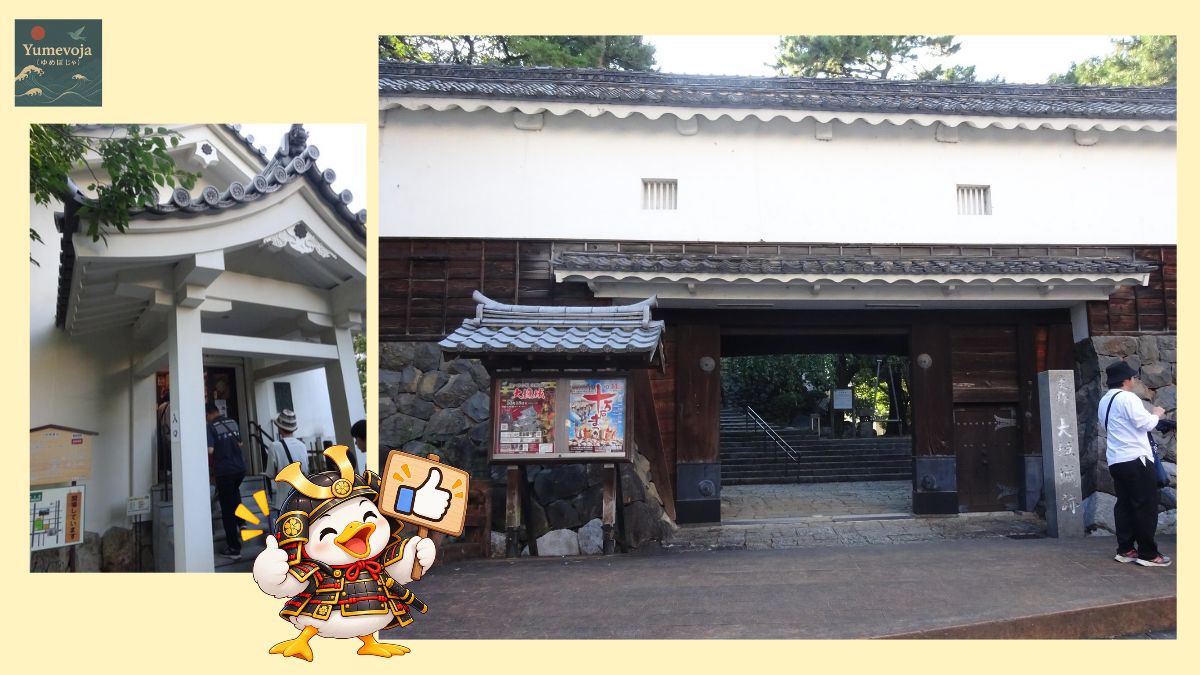
Ogaki Tourism Association: Suito Trip | Ogaki Castle
Ogaki City official website: Ogaki Castle
The Local History Museum.
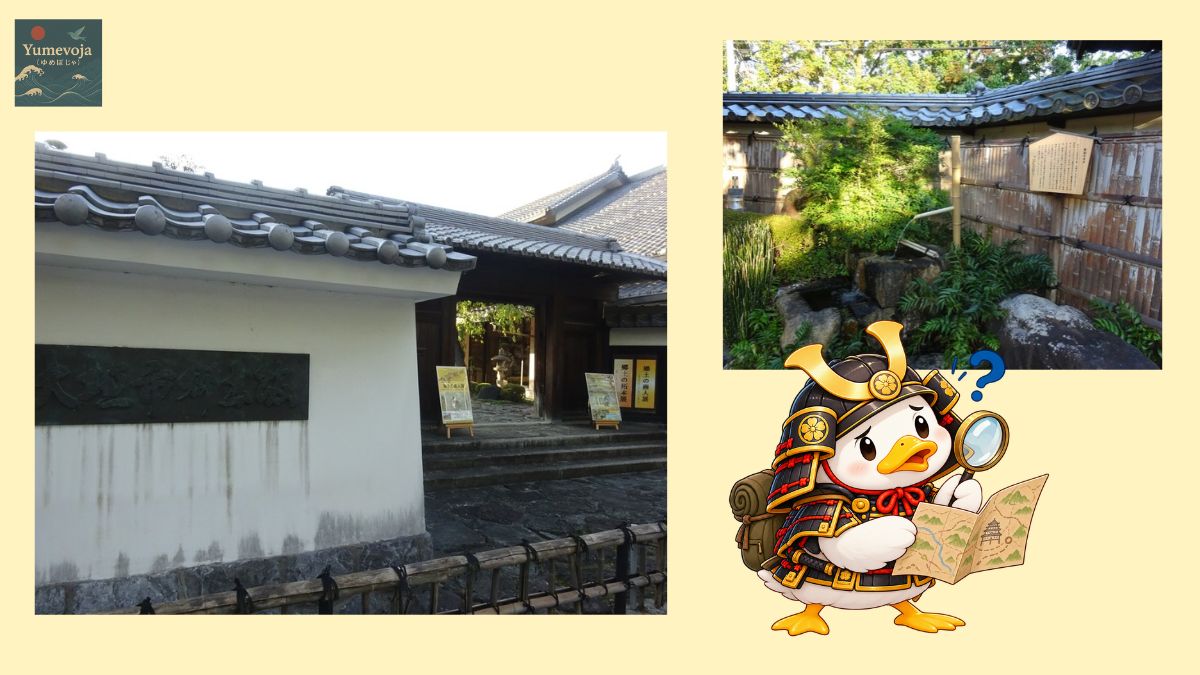
Ogaki City official website: Local History Museum
My final stop was the Oku no Hosomichi Musubi no Chi Memorial Hall.
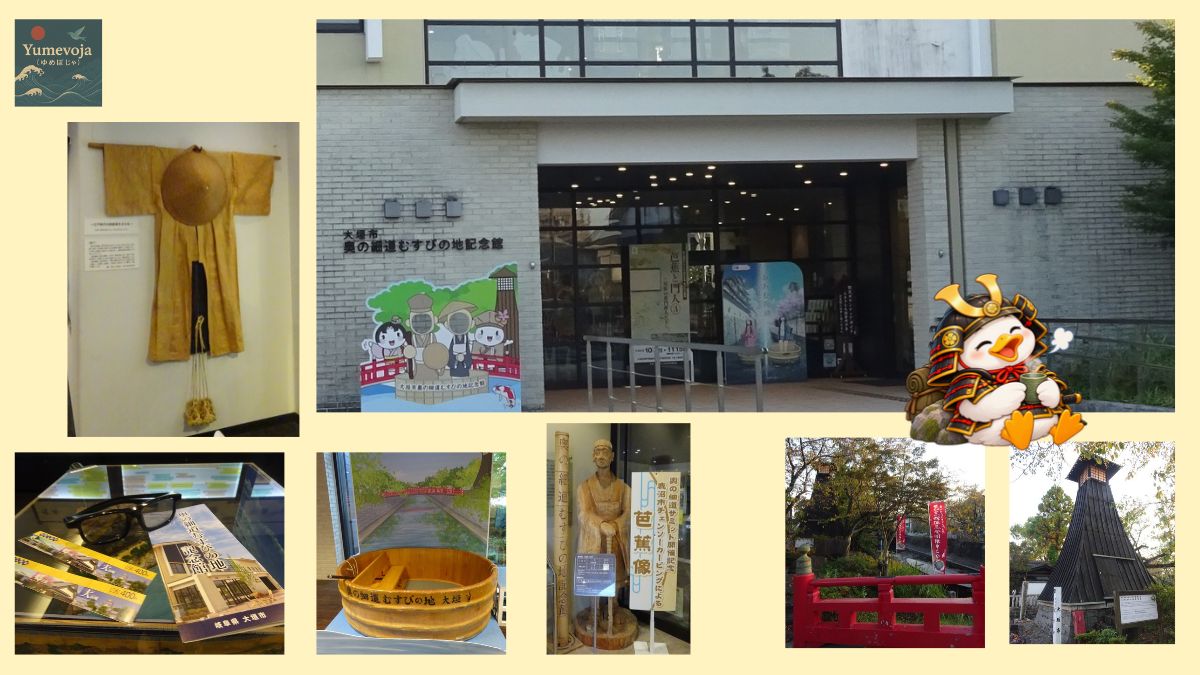
Ogaki Tourism Association: Suito Trip | Oku no Hosomichi Musubi no Chi Memorial Hall
When I arrived, there were only about 30 minutes left before closing.
I asked at the entrance.
“Can I still see it in 30 minutes?”
They said it was fine.
Then I’m going in.
There wasn’t enough time to read everything carefully.
But I did make it to the mini theater, where visitors wear 3D glasses.
And it was surprisingly interesting.
Matsuo Bashō.
Oku no Hosomichi (The Narrow Road to the Deep North).
Of course I knew both the poet and his famous travel work.
But I hadn’t known that his journey ended in Ogaki.
As I explored the exhibits, I learned about Ogaki and the people who supported Bashō along his travels.
Bashō, whom I’d previously known mainly by name, began to feel more like a real person.
I wished I’d had more time.
Cutting Away, and Cutting Away, Until Only the Essential Remains
As I explored Bashō’s world, something occurred to me.
The Japanese aesthetic of subtraction.
Today, we’re surrounded by information.
Photographs.
Videos.
Explanations.
We can keep adding more and more, as if to say, “Look at this!”
But a haiku has just seventeen sound units in Japanese.
You face yourself, cutting away and cutting away, until only what matters remains.
What an extraordinary world.
…Not something I can easily imitate.
After all, I’d spent the day searching for a big “Wow!” at Sekigahara.
No More Watching the Clock
5 p.m.
Every attraction I’d wanted to visit that day had now closed.
From here on, I no longer needed to worry about closing times.
I started walking from the Oku no Hosomichi Musubi no Chi Memorial Hall toward Ogaki Station.
Following a walking route from a brochure, but in reverse.
Along the river.
I also stopped at Hachiman Shrine.
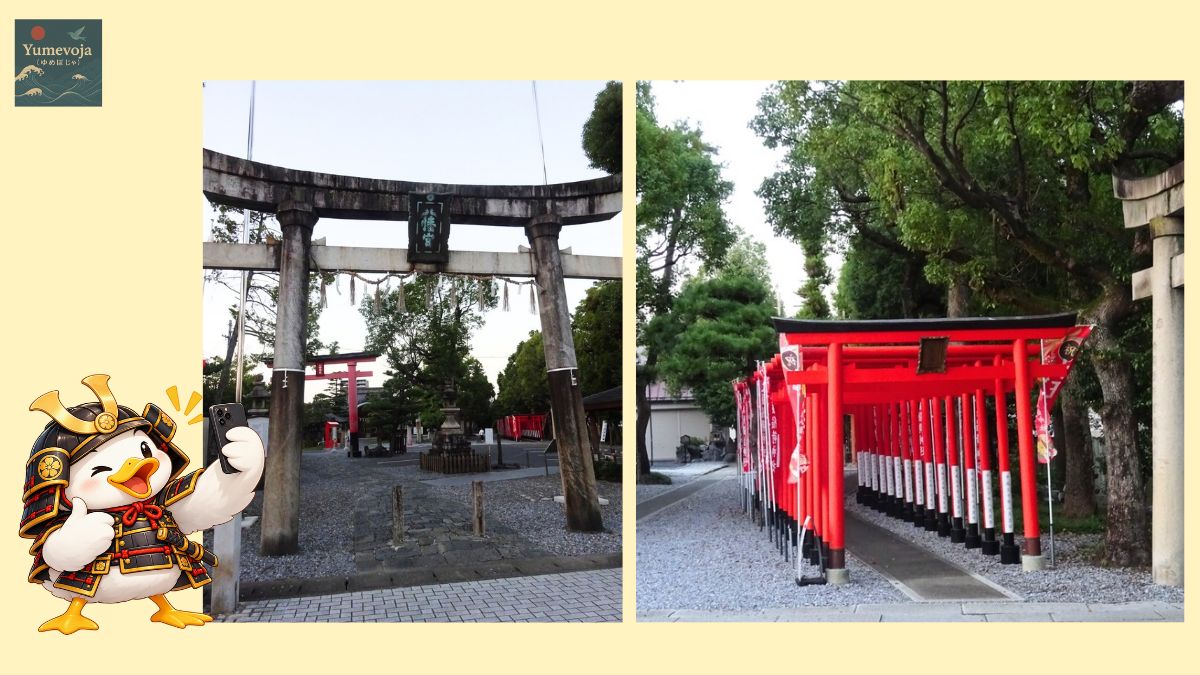
All day long, I’d been watching the clock.
Train times.
Theater times.
Closing times.
Finally, I could simply walk.
I made my way slowly back toward the station through Ogaki in the evening light.
A Light Just Off the Main Road
I started looking for dinner.
If possible, I wanted somewhere local rather than a restaurant aimed mainly at tourists.
A little way off the road toward Ogaki Station, I noticed a light.
“Seiro-mushi.”
Steamed food.
…That sounded like a safe bet.
Steaming is a cooking method that lets the ingredients speak for themselves.
A small restaurant.
It reminded me of the traditional inn where I’d eaten in Kurama.
The food there had been delicious, too.
I went in with high expectations.
A winner.
Before I knew it, I was ordering one extra dish after another.
I’ll take my time telling that story in a separate article.
【Related article: 🍵 Beauty & Taste|From Hida Beef to Chicken Rice Porridge: A Night in Ogaki】
24,034 Steps. That’s Enough for Today
My hotel for the night was APA Hotel Ogaki-Ekimae.
Finally, a bath.
My step count for the day:
24,034 steps.
The day had begun with a simple plan to visit Sekigahara.
I searched for a “Wow!” on the battlefield.
I traveled to Ogaki, a town whose name I hadn’t even known.
And in the end, I encountered Bashō’s art of subtraction.
The things that went according to plan.
The unexpected stumbles.
The discoveries I made because my plans changed.
All of them together made up today’s journey.
And the next morning…
Breakfast at the hotel was buffet-style.
Yesterday, I’d wandered around looking for breakfast.
But today, from the moment I woke up—
Full-on competitive eater mode!
Through the window, I could see people heading toward the station.
They were going to work.
And today, I was off to have fun.
Next stop: Sunomata.
【Related article: A Stopover Journey, Part 2 | From Sunomata to Gifu】(Coming soon)
👉 Related illustrations here
(Free to use)
▶︎ 🎨View illustration page