Section 4-2 — July 20, 2024
Day two of my pilgrimage through Ehime.
🗺️ Today’s Route
The route suggested in my guidebook for the day started with a train from Matsuyama Station to Uwajima Station.
From there, the plan was to visit Ryukoin and Warei Shrine, then return to Uwajima Station.
Next, I would take another train to Muden Station and walk to:
Temple 41, Ryukoji
Temple 42, Butsumokuji
Finally, I would take the train from Muden Station back to Matsuyama.
Replacing Just the Train Rides with My Car
I could have followed this route entirely by train.
But it involved taking several trains along the way, which meant waiting for connections.
And on a pilgrimage, you never really know how long each temple visit or temple stamp will take until you get there.
So this time, I decided on a combination:
Walk the parts meant for walking.
Use my own car for the train sections.
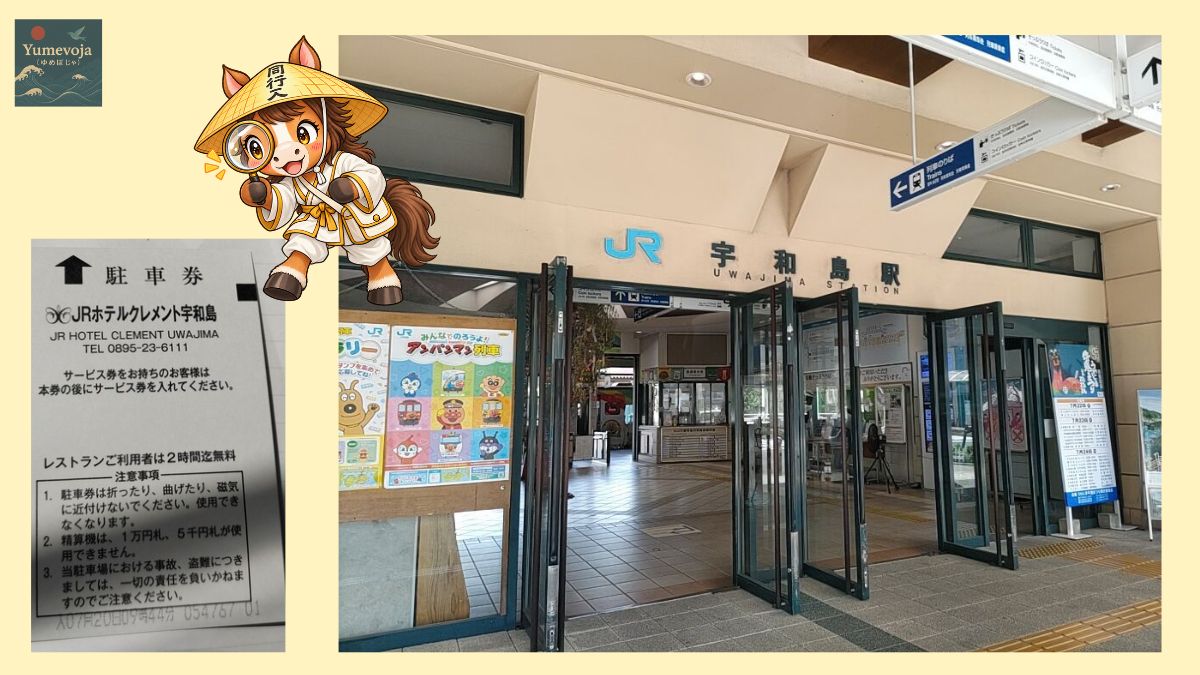
I drove from my hotel in Matsuyama to Uwajima and parked at JR Hotel Clement Uwajima.
At the time, parking cost 150 yen per hour.
From here, I continued on foot.
From Ryukoin to Warei Shrine
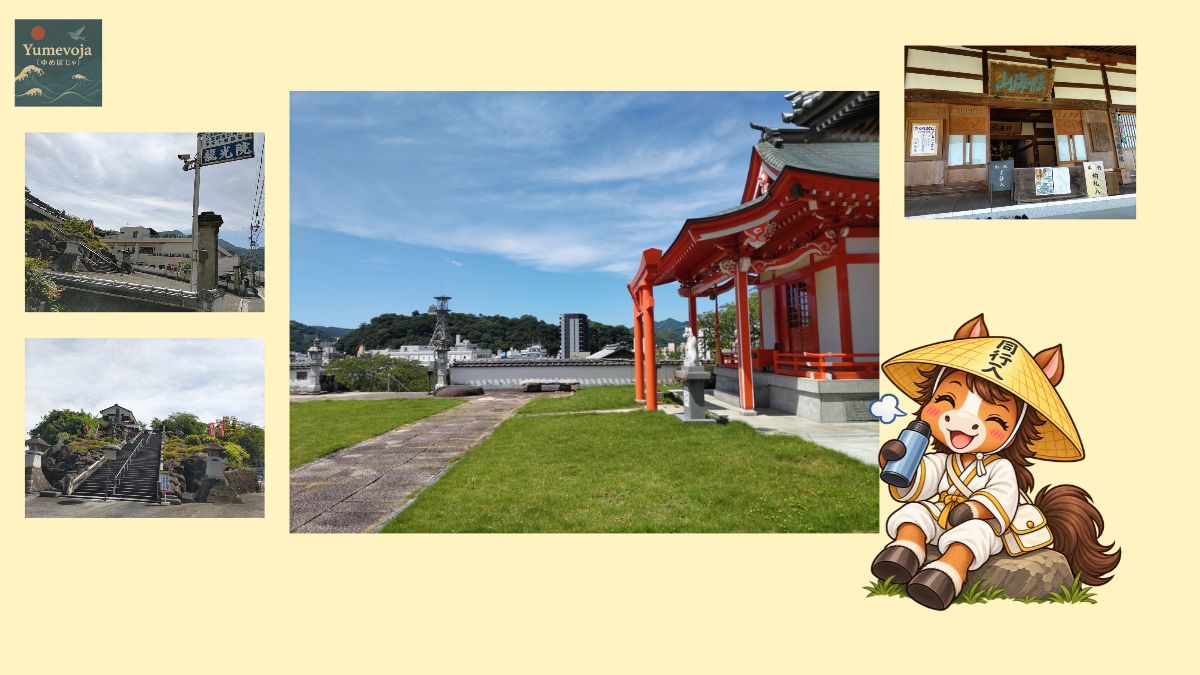
My first stop was Ryukoin.
(🌐 Official website: Ryukoin)
Ryukoin and Ryukoji have very similar names, but they are two different temples.
Ryukoin is Temple 6 of the Shikoku Bekkaku 20 Sacred Sites.
Ryukoji, which I would walk to later in the day, is Temple 41 of the Shikoku 88 Temple Pilgrimage.
I climbed the long stone steps.
From the temple grounds at the top, I could look out over Uwajima.
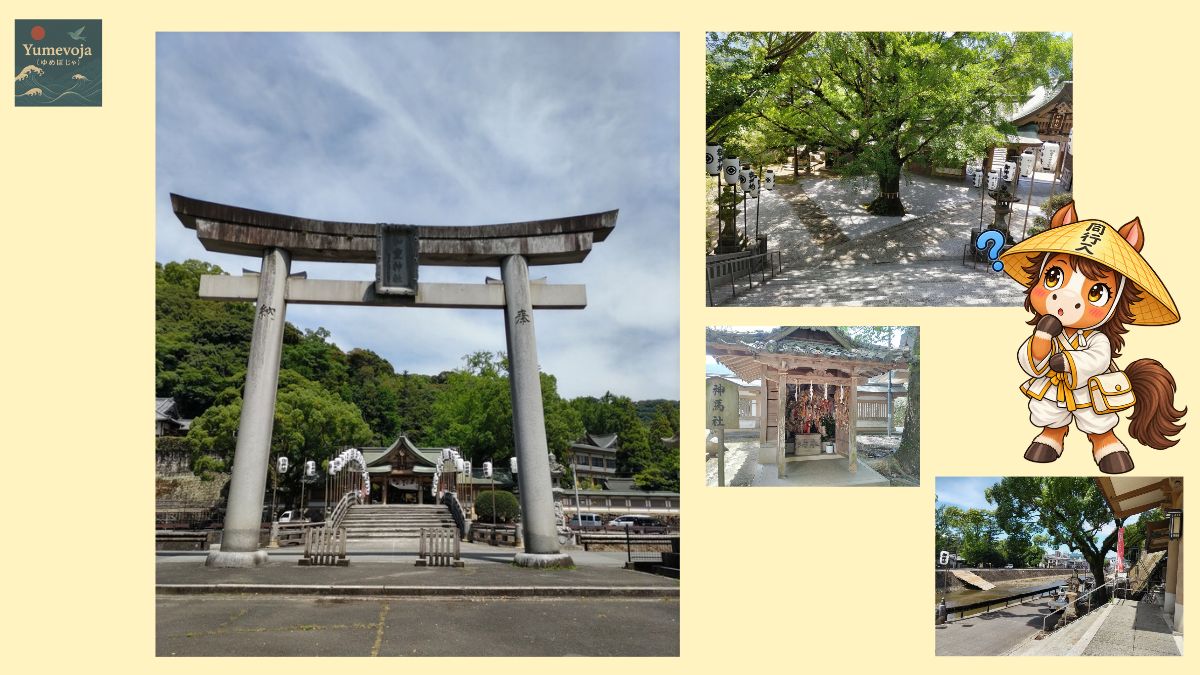
From there, I continued to Warei Shrine.
(🌐 Official website: Warei Shrine)
Once inside the grounds, I found several smaller shrines.
Since I had come all this way, I decided to visit them one by one.
This one.
And that one too.
Before I knew it, I was spending much more time here than I had expected.
Wait… am I staying longer than planned?
But after coming this far, simply walking past them didn’t feel right either.
So in the end, I visited them all.
After leaving Warei Shrine, I noticed preparations for some kind of festival along the river in front of the shrine.
What festival could it be?
Still a little curious, I headed back toward Uwajima Station.
That completed the walking part of my route around the station.
I got back into my parked car and headed for the next area.
Driving to Muden Station
My next destination was Muden Station.
From here, I planned to walk to Temple 41, Ryukoji, and Temple 42, Butsumokuji.
First, I needed to park the car—
…Wait.
Where am I supposed to park?
I Can’t Find Anywhere to Park
I looked for a parking lot around Muden Station, but couldn’t find one.
Not knowing what to do, I asked at a convenience store near the station that had a large parking lot.
I was told,
“There isn’t really anywhere to park around here.”
And then, I was offered a place to leave my car near the person’s home next door.
What?
Really?
There is a tradition on the Shikoku Pilgrimage called osettai—acts of hospitality offered to pilgrims.
I had heard of pilgrims being given drinks or food.
But this time:
Someone gave me a place to park my car.
So this can be osettai, too.
Grateful for the kindness, I left my car there and started walking.
To Temple 41, Ryukoji
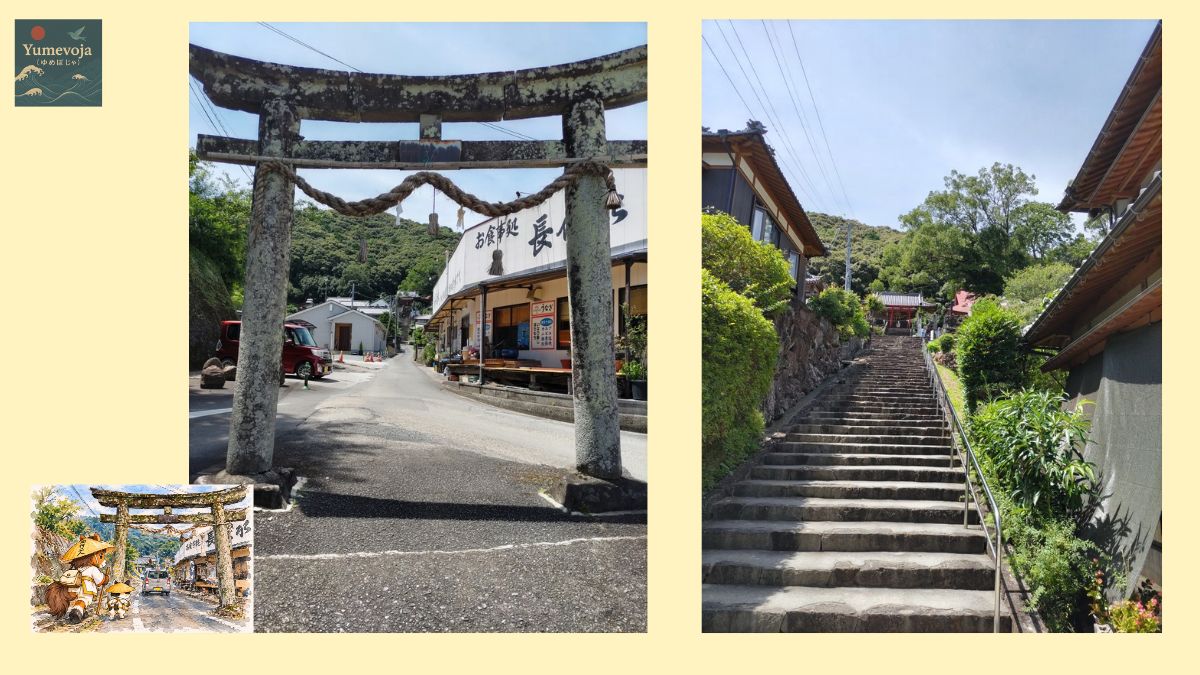
(🌐 Official website: Ryukoji)
First, I headed for Temple 41, Ryukoji.
The road leading up toward the temple is narrow.
If I were doing the pilgrimage by car, this road might make me a little nervous.
But today, I was walking.
No worries here.
After my visit, I headed to the temple office to receive my stamp.
But then—
Huh?
Is it closed?
One person was already standing in front of the door, waiting.
So I thought I should wait too and stood behind them.
While doing the pilgrimage, I had encountered temple offices where you ring a bell or call someone to come out.
The door here was frosted glass, so we couldn’t see inside.
“Maybe no one is there right now.”
Thinking that, the two of us waited.
And then—
Someone who had just finished getting their temple stamp came out from inside.
…
Wait.
Were we supposed to just open the door?
When someone is already waiting in front of you, you don’t really question it, do you?
I had simply joined the line and waited right along with them.
To Temple 42, Butsumokuji
From Ryukoji, I continued to Temple 42, Butsumokuji.
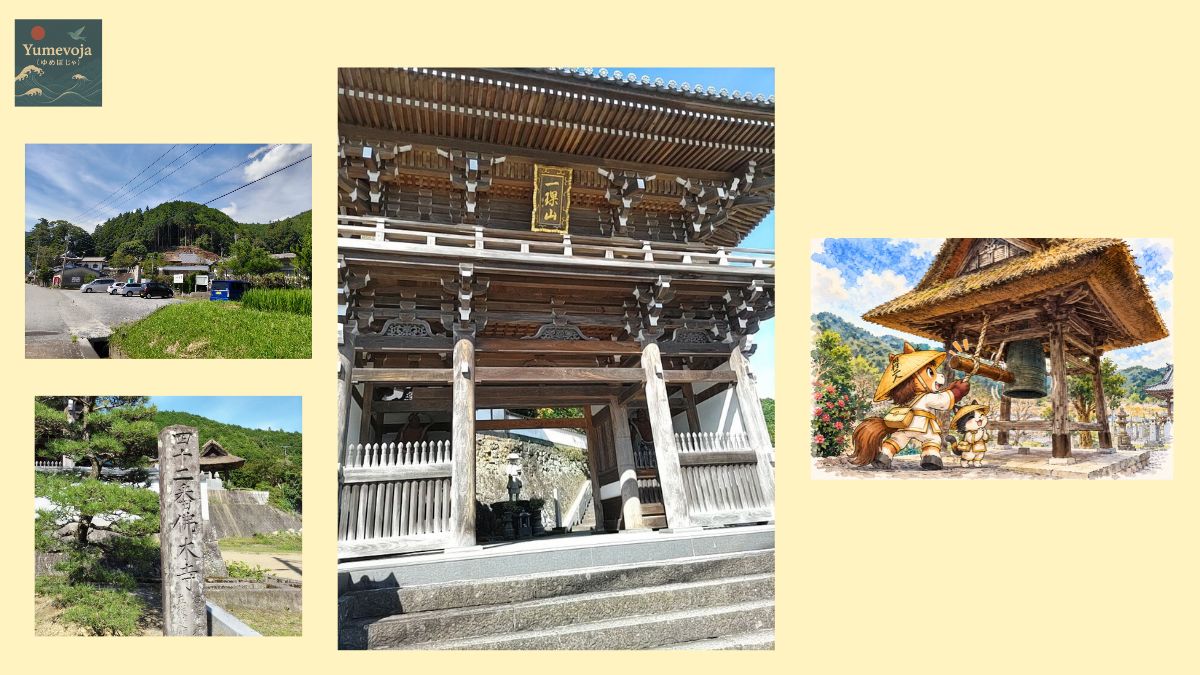
(🌐 Official website: Butsumokuji)
The route in my guidebook was marked “intermediate.”
It wasn’t supposed to be a route where I needed to worry too much about time.
But once I actually started walking it, little delays began adding up here and there.
Will I make it before the temple office closes?
I kept thinking about that as I walked.
And then—
Ah, there it is.
Butsumokuji.
I had made it before the temple office closed.
What a relief.
Of all the temples I visited that day, this was probably the one where I felt the most relaxed as I prayed.
Taking a Different Route Back to Muden Station
After visiting Butsumokuji, I headed back toward Muden Station.
Instead of retracing the same route via Ryukoji, I took a different road that provided a small shortcut.
I followed the route in my guidebook and eventually made it safely back to my car.
One More Thank You
I spoke once more to the person who had let me park there.
“I made it back safely.”
I also thanked them again for letting me use the parking space.
And then I bought my dinner at that convenience store.
This place had started with:
What am I going to do?
I couldn’t find anywhere to park.
But it ended with:
Thank you.
Walking, Driving, and Sometimes a Little Help from Others
The guidebook described this as a route to travel by train.
I replaced the train sections with my car and walked the parts I could.
I didn’t walk the entire way.
I didn’t drive the entire way either.
I changed how I traveled depending on the place and the time available that day.
And when things didn’t go according to plan, sometimes someone helped me.
What stayed with me most from this day wasn’t a temple itself.
It was someone saying:
“You can park here.”
The Shikoku Pilgrimage is a journey from temple to temple.
But when I look back, perhaps it is these small moments that I remember most.
👉 Related illustrations here
(Free to use)
▶︎ 🎨View illustration page
👉 Follow my solo Shikoku pilgrimage, course by course.
▶︎ View the Shikoku pilgrimage overview

Today’s bonus capsule!
✨ Gateway to the Shōwa Era
―Before Convenience Stores Were Everywhere
The Showa era (1926–1989) was a time when modern technology and ideas began to transform everyday life in Japan.
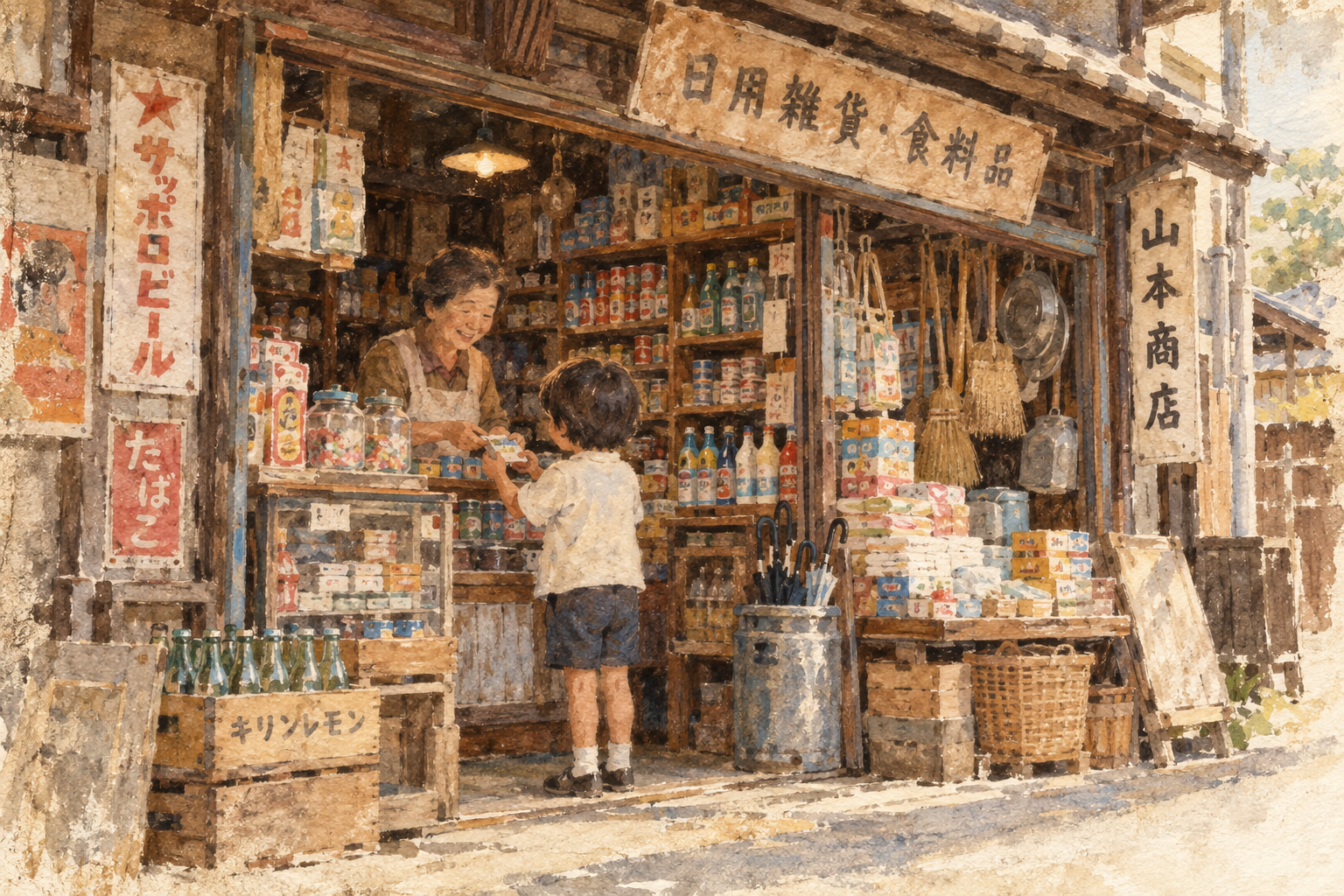
When I was a child, I don’t remember seeing convenience stores in my neighborhood.
Instead, we had small local shops that sold a little bit of everything—snacks, drinks, and everyday necessities.
Of course, they weren’t open 24 hours a day.
Once the shop closed for the night, if you needed something, you simply had to wait until tomorrow.
Today, Japanese convenience stores offer much more than food. You can use an ATM, send a parcel, make copies, and take care of all kinds of everyday tasks.
From the Showa era to today, those little neighborhood shops have given way to places that support almost every part of daily life.
But on this pilgrimage, when I couldn’t find a place to park, what helped me wasn’t one of those convenient services.
It was, once again, a person.