Visited: February 22, 2026 (Sun)
I summarized the route of this day in Kyoto on a My Map.
It shows the journey including Kinkaku-ji, Ryōan-ji, and the places where I stopped to eat.
It was a day of walking and good food.
You can follow the path of the day on the map.
▶ Read the Kinkaku-ji article
🚉Highlights and Crowd Experience at Kinkaku-ji|The Quiet Moss Behind the Golden Light
Leaving Kinkakuji, I headed toward Ryoanji.
As I walked along the Kinukake no Michi, the lively atmosphere from earlier gradually faded away.
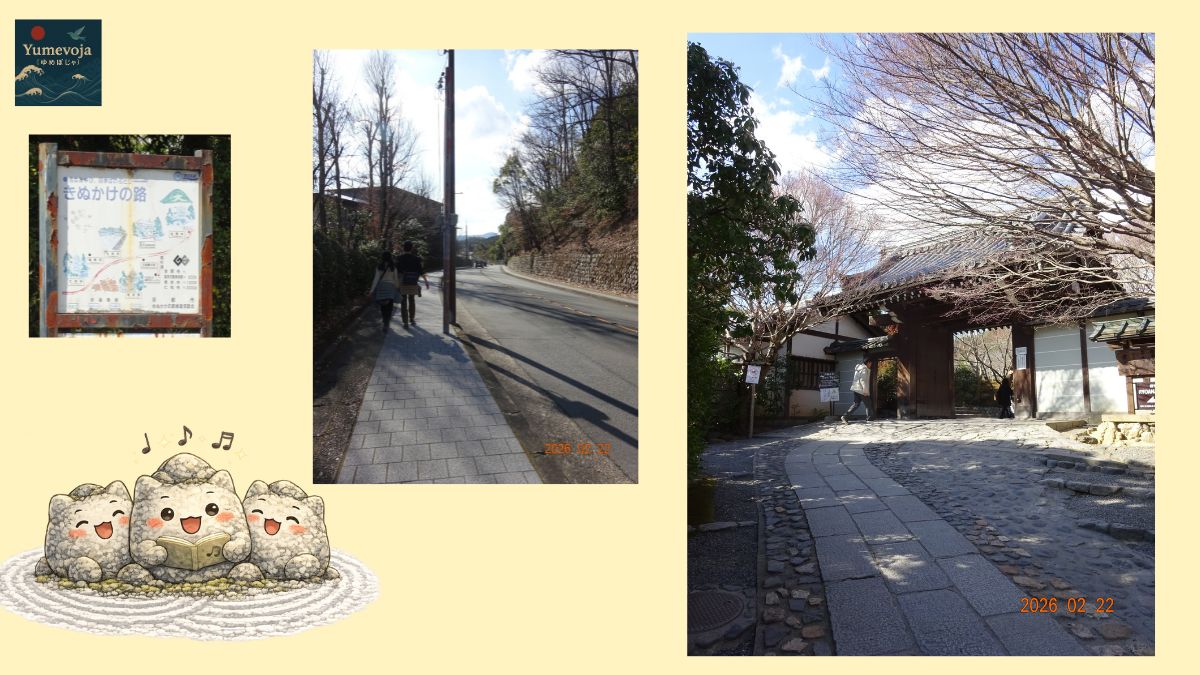
Walking from Kinkakuji to Ryoanji along Kinukake no Michi,
heading toward the quiet temple gate.
Even within Kyoto, the density of the air seems to change.
Passing through the gate of Ryoanji, the silence deepens even more.
In the rock garden,
people are there.
Voices can be heard.
Footsteps reach the ear, faintly.
And yet, strangely,
all other sounds seem to disappear.
Voices remain,
but the world feels as if it is quietly sinking into silence.
At that moment, someone dropped something.
A dry sound echoed through the garden.
In an instant, everyone’s gaze turned in that direction.
That was how quiet this place was.
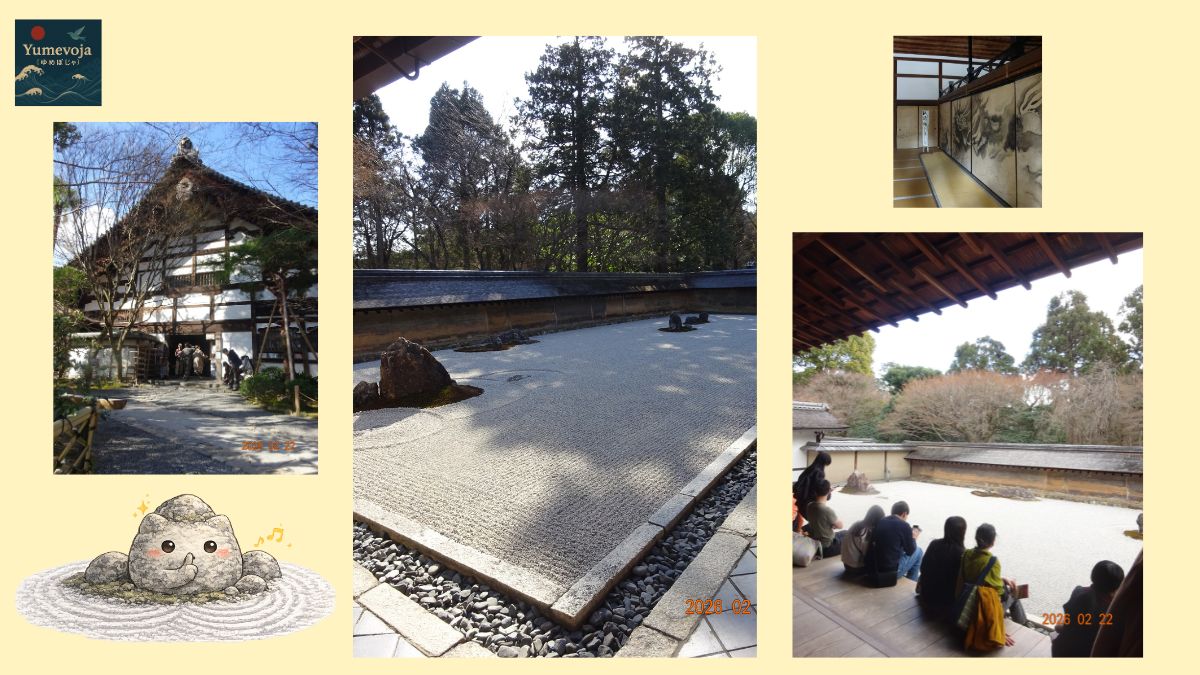
Ryoanji’s rock garden. In the quiet white gravel garden,
people sit and spend time in silence.
I sat in front of the rock garden.
The garden at Ryoanji does not speak.
At first, to be honest, I didn’t quite understand it.
I sat there for a while, passing time while looking at my smartphone.
Then I lifted my head.
Something felt different.
Sunlight filtering through the trees moved gently in the wind, flickering across the garden.
It was the same view I had been looking at before, yet somehow different.
If I had simply taken a photo and moved on,
I probably would never have noticed this small change.
After sitting for a while, you stop trying to see.
And that is when the garden begins to reveal its changes.
At least, that was how it felt.
The stones do not move.
Yet the garden was quietly moving.
Before I knew it, I had been sitting there for nearly an hour.
A family from overseas was also sitting nearby with their young child for quite a long time.
The child wasn’t noisy.
They were whispering softly with their parents.
It didn’t feel as if the child had been told to be quiet.
Rather, the child seemed to be sensing the atmosphere of the parents.
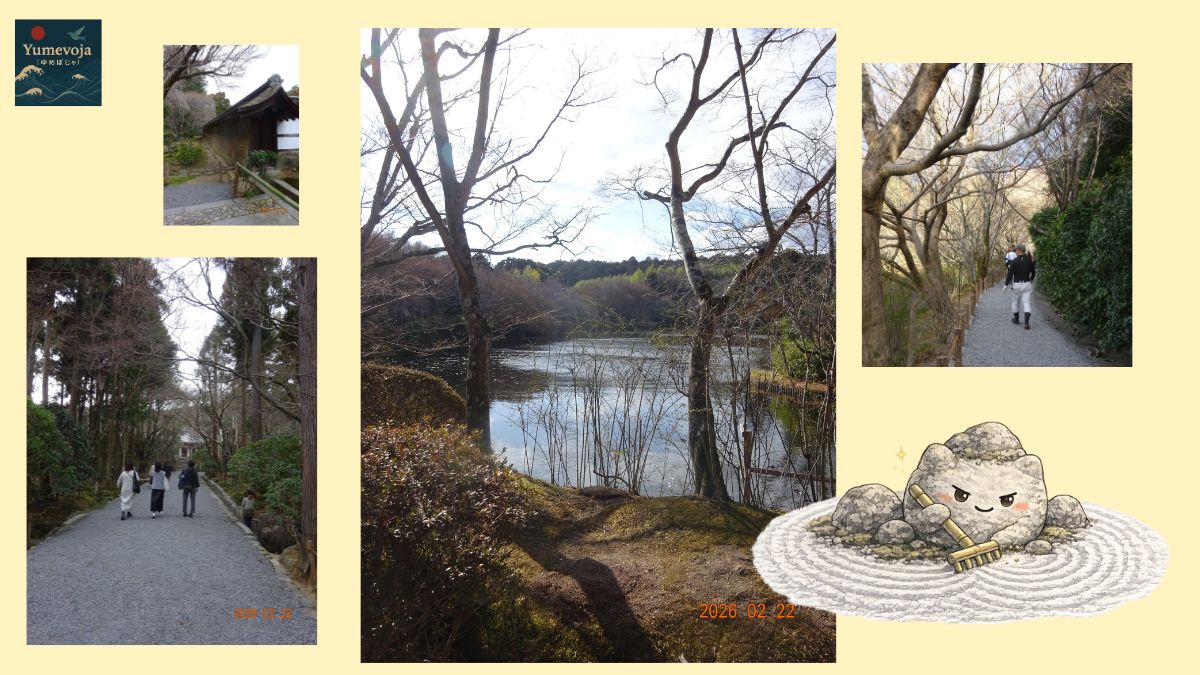
Leaving the quiet rock garden behind, walking along the path beside the pond.
The garden of Ryoanji spreads quietly around.
By the time I was leaving, the gate had already closed.
Ryoanji closes a little earlier than many temples.
Apparently the gate shuts about thirty minutes before the official closing time.
Outside, some foreign tourists who had arrived too late were turning back.
It felt very different from Fushimi Inari.
Here, time flows quietly.
Leaving Ryoanji, I headed toward the Randen station.
Along the way, I passed through a small shopping street.
Many shops had their shutters closed, and the street felt rather quiet.
I found a small udon shop with a sign saying it was open.
I thought I would have a quick meal before heading home.
When I entered, an elderly woman said,
“Rice dishes are finished. We can only make udon.”
So I ordered kamo nanba.
Soon after, loud voices came from the back of the shop.
A man in the kitchen was scolding the woman harshly.
It seemed that the shop was already near closing time.
I was the only customer.
The voices continued the entire time while my udon was being prepared.
I remember the taste.
But what remained stronger in my memory was something else.
After leaving the shop, I thought:
I don’t want today to end like this.
I want to try Kyoto’s food once more.
With that decision, I headed toward the Randen station.
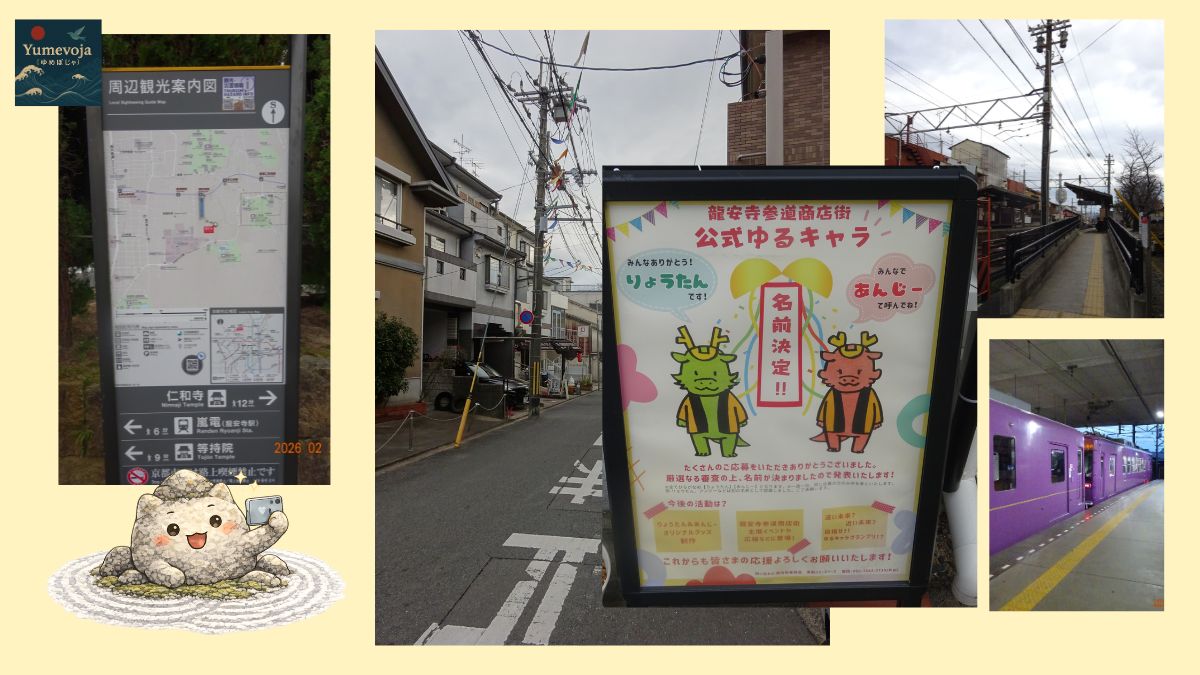
Leaving Ryoanji and heading to the Randen station.
A quiet shopping street and the purple streetcar carry Kyoto’s everyday life.
The Randen requires a transfer partway through the journey,
and that transfer can be a little confusing.
The Randen runs slowly through the town.
It slips along right beside houses.
The silence of the rock garden was still somewhere in my mind.
At Ryoanji, the stones never moved.
Yet the garden was quietly moving.
And this day in Kyoto, too,
was slowly moving on to its next place.
👉 Continue the journey here:
🍵Beauty & Taste | A Second Dinner in Kyoto

Today’s bonus capsule!
✨ Gateway to the Shōwa Era―The Rotary Phone
The Showa era (1926–1989) was a time when modern technology and ideas began to transform everyday life in Japan.
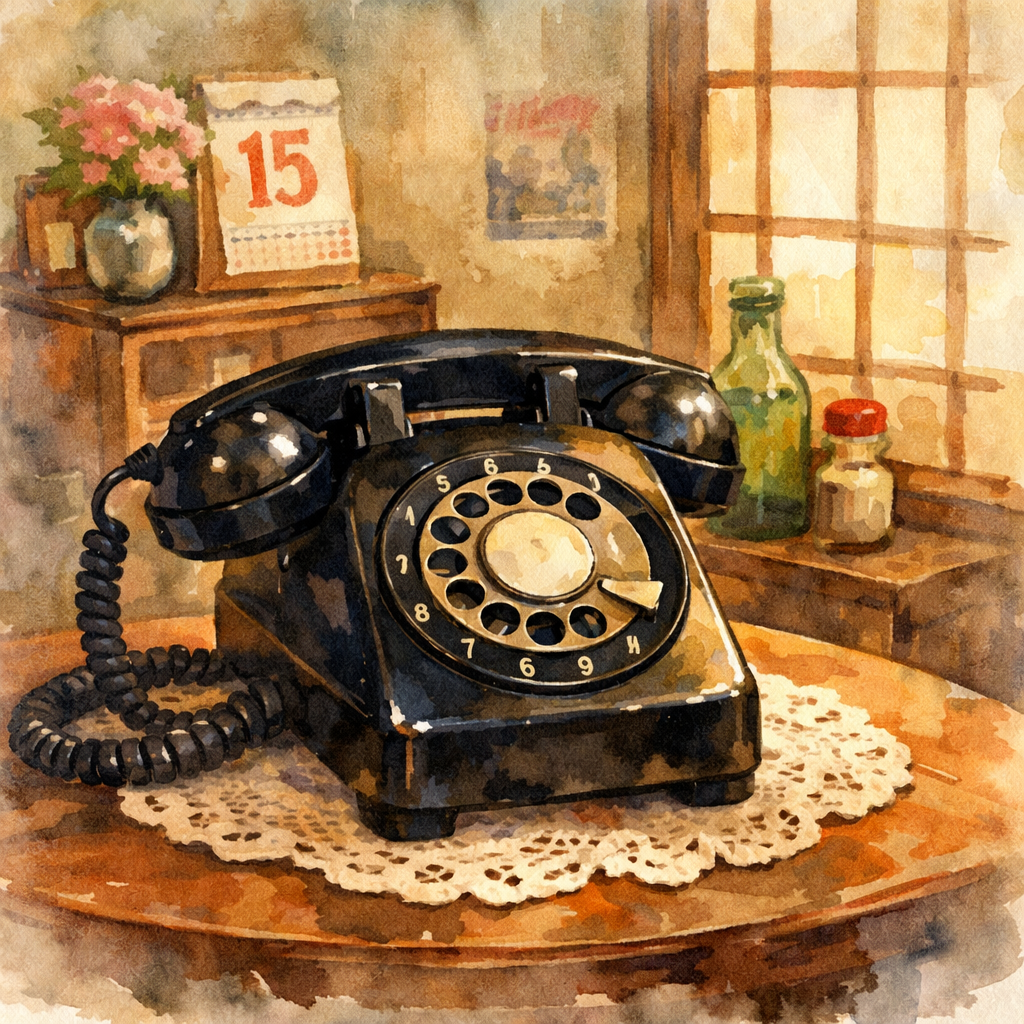
One of the symbols of the Showa era was the black rotary phone.
You would lift the heavy receiver, place your finger into a hole, and slowly turn the dial.
With each number you dialed, the disk would take its time returning to its original position. Somehow, that small pause always felt longer than it was.
If you made a mistake, you had to start all over again.
That tiny frustration now feels strangely nostalgic.
Back then, I had memorized the phone numbers of family and friends.
Rows of digits lived clearly inside my head.
Today, without my smartphone, I can hardly recall any of them.
Perhaps in gaining convenience, we quietly let something else go.
The slow clicking sound of the dial returning—
it was the sound of inconvenience, yes, but also the sound of time that belonged to me.