Stage 1-2 | June 16, 2024
The first place where I finally managed to park my car was Ryōzenji, the first temple.
I didn’t even know how to read the name, and entering it into the car navigation system took a little time.
This is where the journey begins.
At the shop beside the main hall, I bought only the minimum equipment.
To be honest, I wasn’t sure yet whether I would continue.
I was taught how to write the pilgrim slips and asked if I could leave my car there.
When I said I planned to return by bus,
the man at the shop looked slightly concerned and told me to be careful,
because buses from Itano Station do not run very often.
At that moment,
I thought,
“It will probably be fine.”
As I began my visit, a woman at the temple gave me a small handmade pouch.
It was my very first osettai, a moment I still remember clearly.
There were several to choose from,
and I picked the smallest one.
Later in the pilgrimage,
I met a woman with a child who received osettai from the same woman.
She, too, chose the very same pouch.
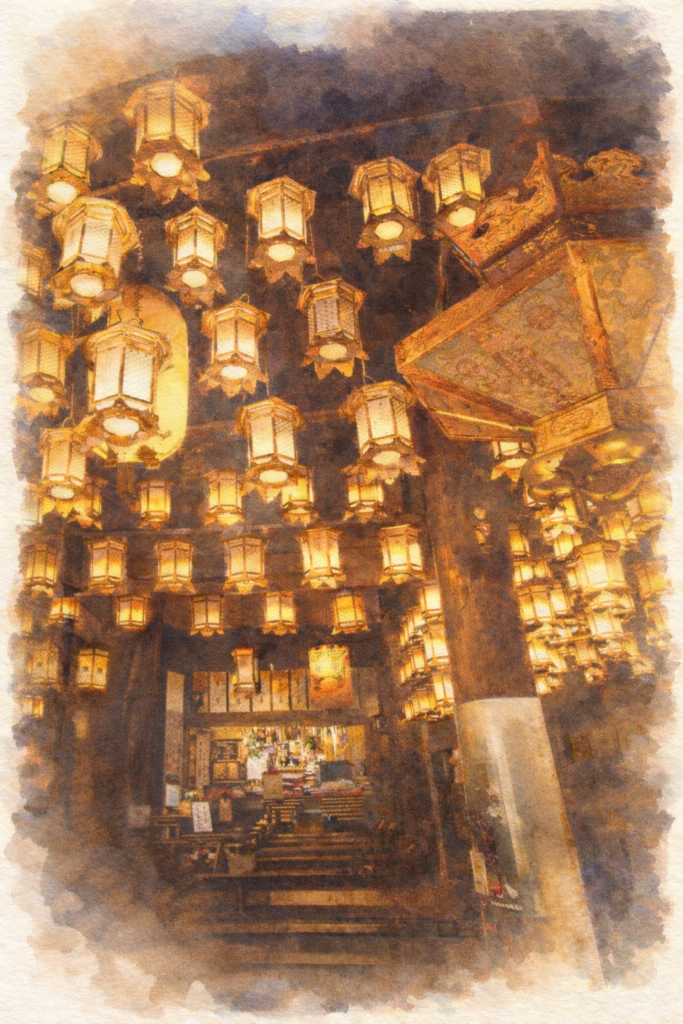
Ryōzenji Temple — Pilgrimage Temple No. 1
For a while after I started walking, I felt uplifted.
I moved on to the second, then the third temple, and after leaving Konsenji, the third temple, I headed toward JR Itano Station.
According to the guidebook, this was a natural stopping point.
The words of the man at the shop also assumed
that I would return from here by bus.
Even so,
the feeling that
“I’ve come all this way—I can still go on,”
won out.
I also walked to temples without numbers that were listed in the guidebook.
Hōkokuji. Aizen’in.
I had not prepared enough,
nor had I done much research.
By choosing not to look things up,
I was enjoying a small sense of adventure.
But that lightness,
in the heat,
was nothing more than being unprepared.
The white robe was thicker than I had expected, and no air passed through it.
I wasn’t consciously drinking enough water.
As I walked on, losing my way, my strength was slowly drained.
Before I realized it,
I was sitting down at Dainichiji, the fourth temple, unable to move.
The priest noticed something was wrong and spoke to me.
I was guided to a bench in the shade,
and given a cold sports drink, salty snacks,
and a frozen ice pack.
For a while,
I rested, thinking of nothing.
When I had calmed down a little,
he spoke to me about the mindset of pilgrimage.
In hot weather,
it is enough to wear the white robe only inside the temple.
What matters is the intention to pray;
the tools themselves are not important.
If you plan to continue,
prepare properly.
Do not cling too much to form.
He did not speak in a blaming way.
Yet his words stayed with me.
I felt a little embarrassed
about how much I had focused on appearances.
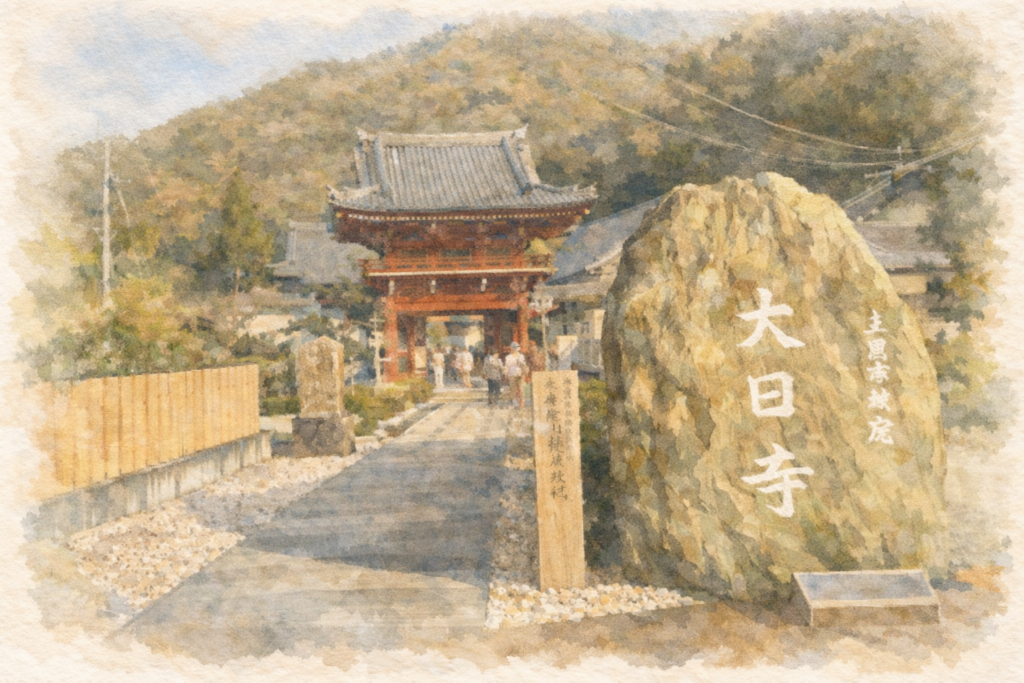
Dainichiji Temple — Pilgrimage Temple No. 4
After going as far as Jizōji, the fifth temple,
I decided that this would be enough for the day.
I chose to head back.
I could see local buses running along the main road,
so I assumed it would be easy to return to the first temple.
In reality, however,
there was at most one bus an hour—
and only as far as Itano Station.
The temples closed at 5 p.m.
If the parking lot was closed, I would not be able to get back to my car.
I had work the next day.
With no other choice, I decided to walk back along the main road.
In the heat and exhaustion, I walked desperately.
The pilgrimage paths often made me think,
“Really? We go through here?”
They were narrow, winding, easy to lose,
and the footing was poor.
My white sneakers sank into the mud
and became completely dirty.
The reason I managed to return so quickly was almost a miracle.
I had run at times,
but more than that,
it was because the main road was straight.
A little after 5 p.m.,
I arrived at the parking lot of the first temple.
As I walked toward my car,
the man from the shop came out and said,
“I was worried about you.”
I felt both apologetic
and deeply regretful
that I had taken his advice too lightly.
In that single day,
I realized how much I am supported by the conveniences of everyday life.
I had assumed that buses and taxis
would always be available.
The pilgrimage road easily breaks that assumption.
But rather than inconvenience,
I felt that it was giving me time to think.
Advice is born from experience.
The cost of taking it lightly
came back to me clearly, through my body.
That was the lesson of the day.

Today’s bonus capsule!
✨ Gateway to the Showa Era―Ramune
The Showa era (1926–1989) was a time when modern technology and ideas began to transform everyday life in Japan.
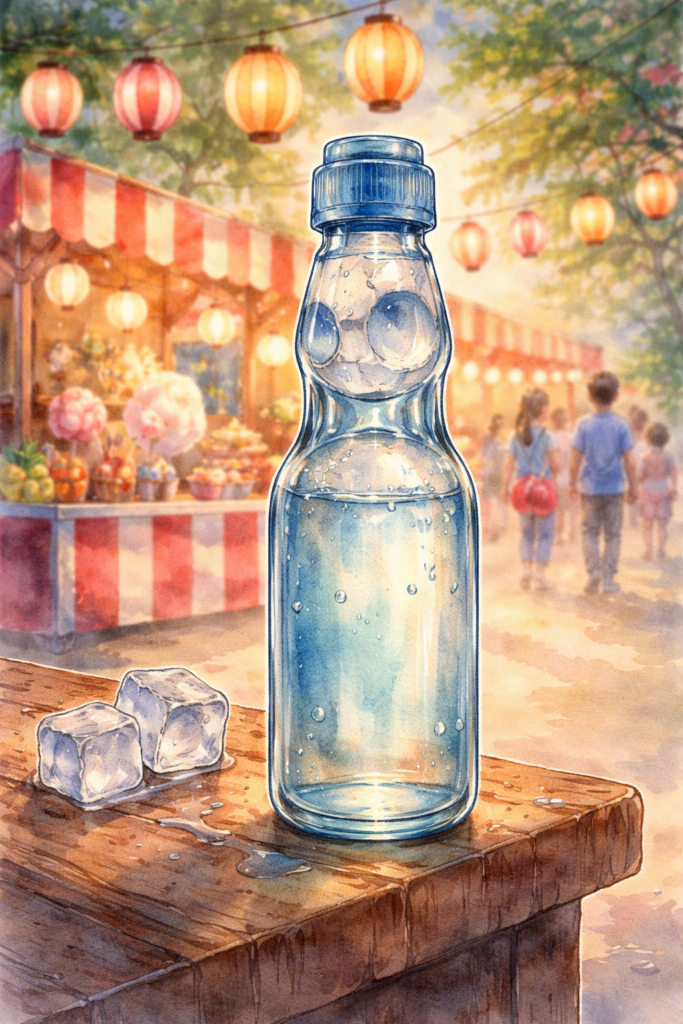
My father didn’t like sweet things,
but he allowed them at the summer festival.
The ramune bottle was harder than I expected.
If you tilted it too much,
the marble blocked the opening and the drink stopped.
The more I rushed, the harder it was to drink.
This bottle shape did not originate in Japan.
Yet, tied to summer festivals,
it became part of Japanese memory.
My brother knew the right angle.
He drank it naturally, without thinking.
I couldn’t drink it as well as he did,
and that, now, feels nostalgic.