Tracing the time of washoku in a quiet afternoon.
Visit: June 16, 2025
Tracing the passage of washoku time, a quiet afternoon.
After leaving the beer factory, a poster for a “Washoku Exhibition”
caught my eye at the station.
It wasn’t in my plans, yet something gently held me there.
After a moment of hesitation, I found myself walking toward
the Kyoto Museum of Culture.
As I moved through the exhibition,
what I felt most strongly was the quiet strength of washoku’s
unchanging nature.
Rather than brilliance, a calm balance.
Rather than novelty, forms passed down through time.
Even without eating,
my heart slowly felt fulfilled.
I continued on to the permanent exhibition.
With one hour left before closing,
I traced the history of Kyoto in silence.
A layering of time that accepted foreign cultures,
not by simple imitation,
but by reshaping them into something uniquely its own.
And alongside this,
the presence of things that have been protected
no matter how the ages have changed.
Change and permanence.
It quietly became clear to me
that this balance is the very charm of Japanese culture.
And perhaps in the ancient cultures of distant lands,
the same kind of beauty also exists—
my thoughts gently widening toward the world beyond.
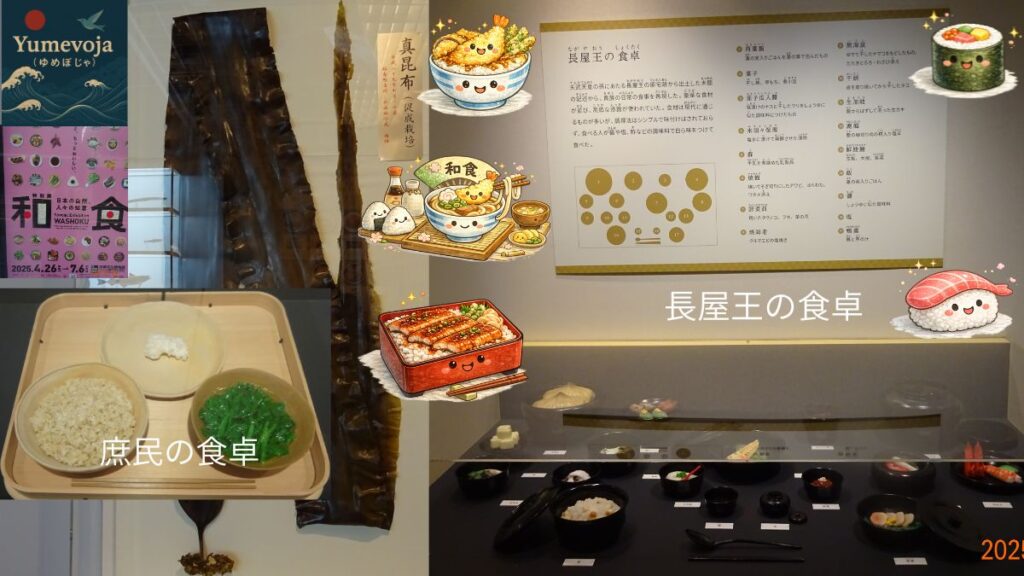
In every era, the ordinary dining table feels a little lonely… perhaps?

✨ Gateway to the Shōwa Era―Morning Toast
Today’s bonus capsule!
The Showa era (1926–1989) was a time when modern technology and ideas began to transform everyday life in Japan.
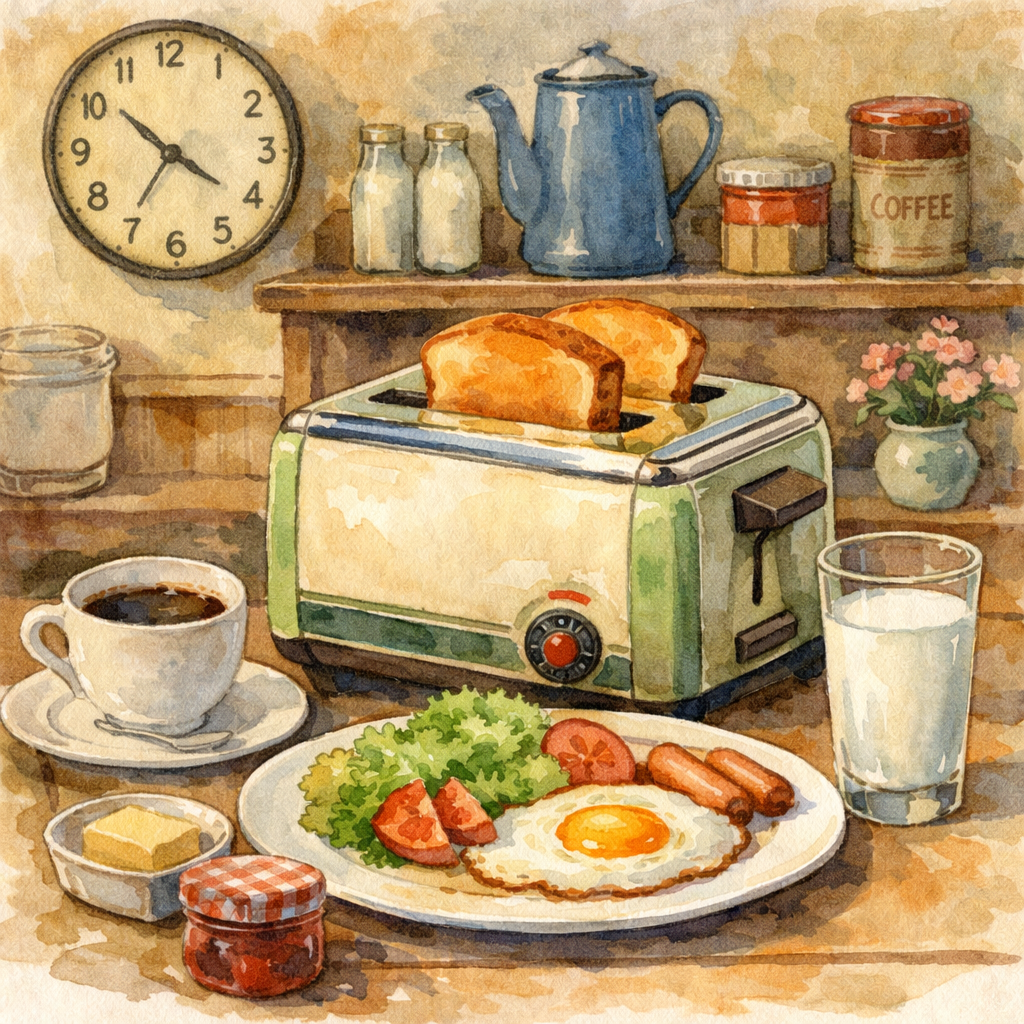
When I was a child, breakfast was always rice.
Steaming miso soup and a small grilled fish—
that was the quiet beginning of an ordinary day.
Before long, slices of bread began to appear on the table,
and the scenery of busy mornings slowly changed.
The breakfast table,
almost without notice,
came to smell of toasted bread.
And yet, when night falls,
it returns to steaming bowls of rice.
Perhaps the rhythm of time in Japan
still sways gently between the two.