I walked through a quieter side of Kyoto,
just after leaving Kiyomizu-dera.
Visit date: February 23, 2026 (Mon, National Holiday)
👉 Start your day from Kiyomizu-dera here
👉🚉Walking Kiyomizu-dera
After leaving Kiyomizu-dera,
I took a short break at a matcha café.
Then I continued walking through Higashiyama,
and soon found myself back in the flow of people.
I was a little tired,
but decided to keep walking just a bit longer.
In front of Yasaka Pagoda
After walking for a while,
I saw Yasaka Pagoda (Hōkan-ji).
It is a famous spot,
and many people stopped to take photos.
I went a little closer,
but the entrance was closed,
so I couldn’t go inside.
Everyone was looking in the same direction,
taking similar photos.
Maybe that is also a form of sightseeing.
I stood a little apart,
just watching.
Not being able to enter—
perhaps that, too, was part of the day.
On the way to Kōdaiji
As I kept walking,
I reached the entrance of Kōdaiji.
Several gardeners were working there.
It looked like they were replacing moss.
Like laying square pieces of turf,
one by one.
They were talking,
but their hands never stopped.
There was no hesitation.
Most visitors simply passed by,
without noticing.
But it is because of people like them
that such quiet gardens are maintained.
I paused for a moment,
just watching their hands.
At Kōdaiji
Kōdaiji
The moment I passed through the gate,
the air changed.
Ah… it’s quiet.
That was my first thought.
There were people,
but the atmosphere was different.
It felt like stepping inward.
Nene’s temple
Kōdaiji was built by Nene,
the wife of Toyotomi Hideyoshi.
Her husband rose to power,
yet they had no children.
It is also said
that he loved many women.
She had wealth,
and everything seemed within reach.
But still,
was she happy?
I found myself thinking about that.
There is no “showing off” here.
Not strength,
but something quietly left behind.
It felt like a space filled
with personal thoughts.
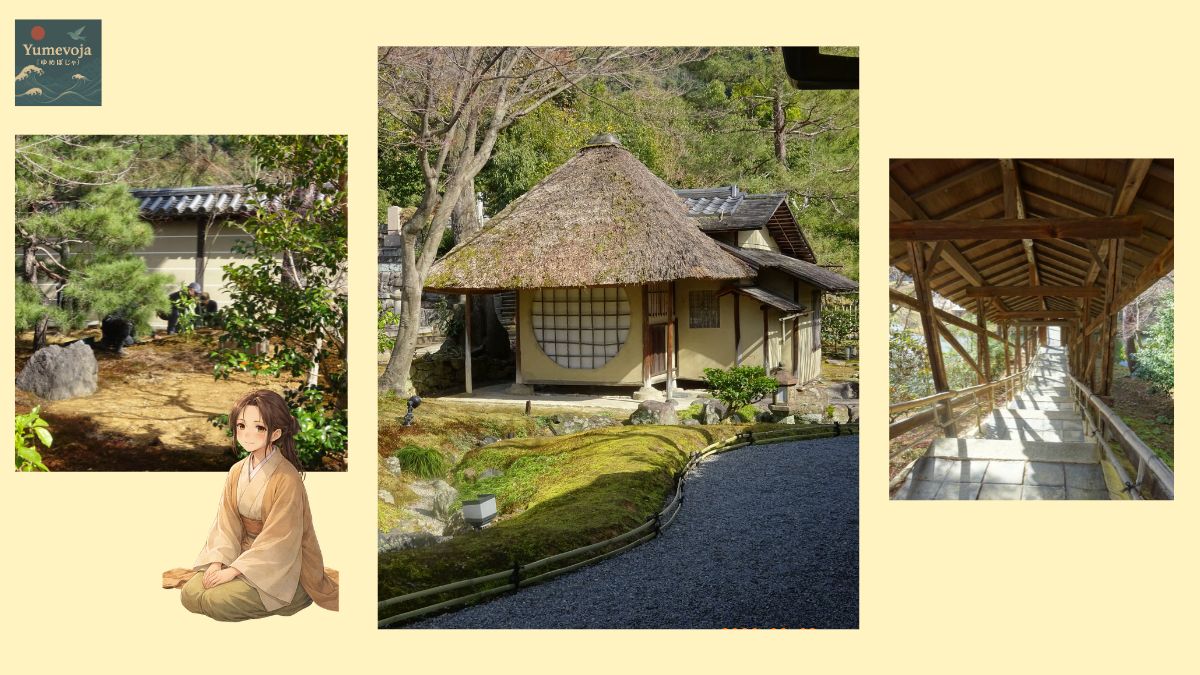
The garden and buildings of Kōdaiji.
Even in busy Higashiyama,
there was a quiet feeling, as if stepping inward.
The bamboo grove
There was also a bamboo grove inside Kōdaiji.
It was very quiet—
as if Princess Kaguya might appear.
Tall bamboo stretched upward,
and when the wind passed through,
it made a soft sound.
There were people,
yet it somehow felt silent.
I found myself stopping without thinking.
Not flashy,
but full of atmosphere.
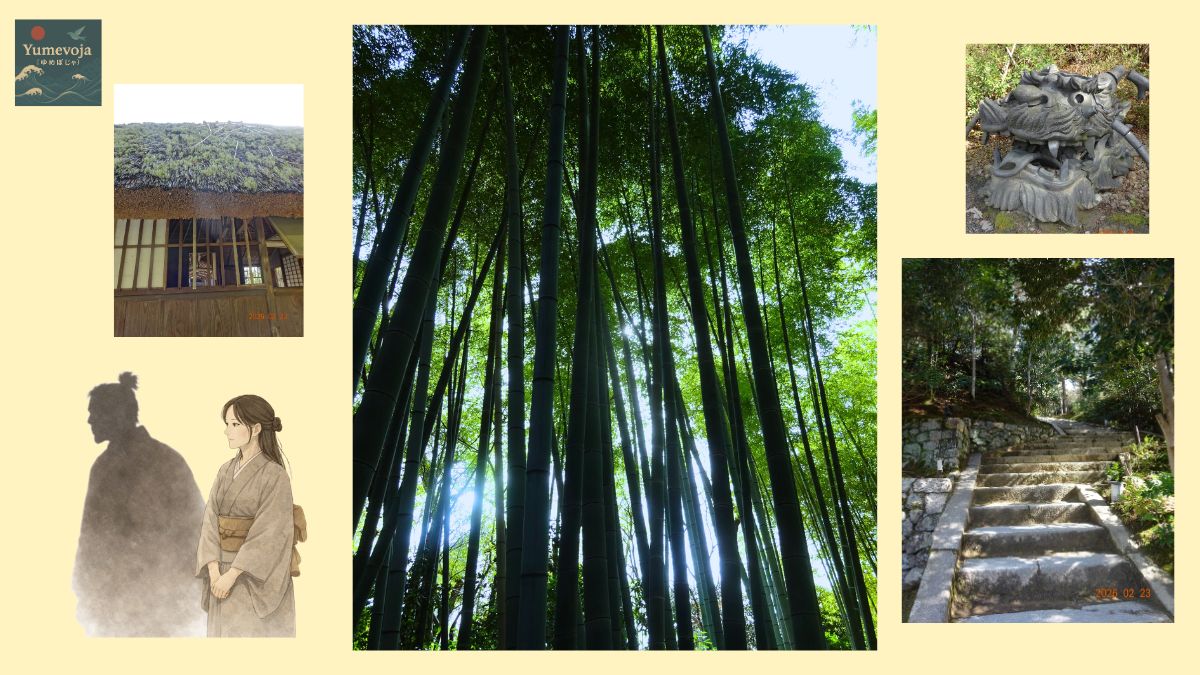
A very quiet bamboo grove.
It felt like Princess Kaguya might appear.
A quiet sadness
There is no answer here.
Even when everything seems in place,
it does not always mean happiness.
The quietness of Kōdaiji
gently brings such thoughts.
Entokuin
Entokuin is a sub-temple of Kōdaiji,
where Nene is said to have spent her later years.
There were several small gardens.
Moss gardens, rock gardens—
all modest,
none asserting themselves.
No liveliness,
only a quiet sense of prayer.
Being there,
my thoughts naturally turned inward.
I found myself reflecting
on Nene’s life, and my own.
How should a woman live?
I thought about that deeply.
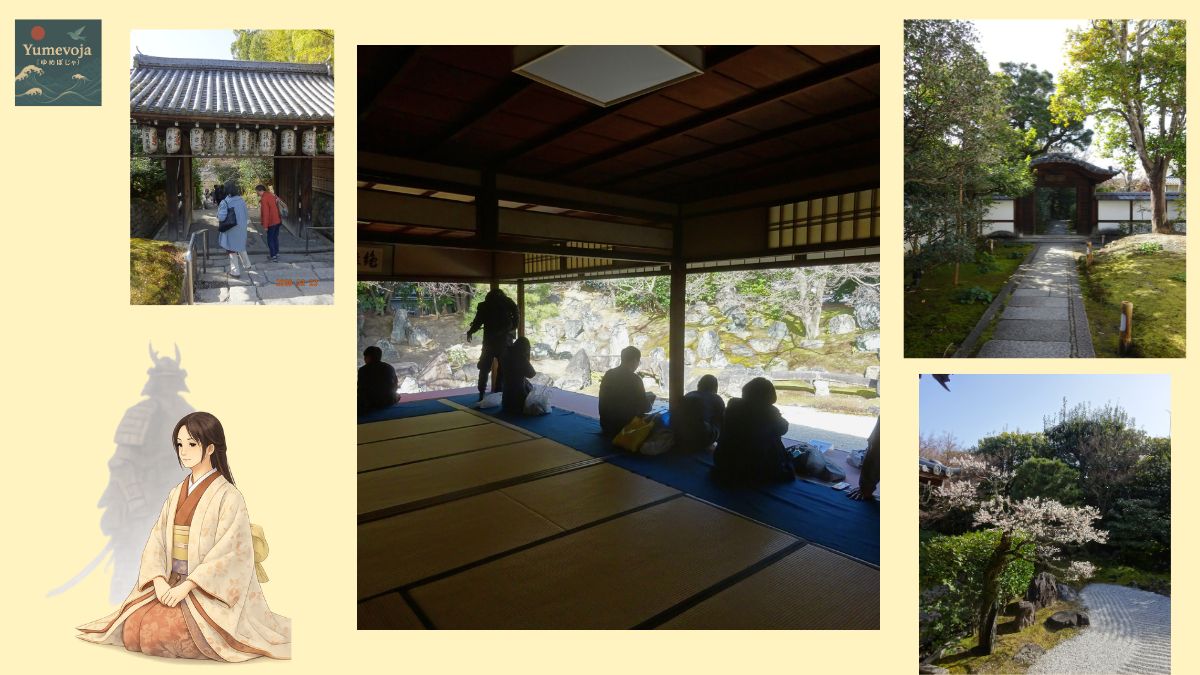
The small gardens of Entokuin.
Nothing stands out,
yet the mind slowly turns inward.
A small museum
Near Entokuin,
there was a small museum.
Items related to Nene and Hideyoshi
were quietly displayed.
Among them,
I found something familiar.
Hideyoshi’s embroidered battle coat.
I had seen it months before
at an exhibition.
I even wrote about it
and made an illustration.
We meet again, I thought.
Was it coincidence,
or something connected?
I stood there for a while,
thinking about it.
A small waffle shop
After that, I stopped by one more place.
A waffle shop.
Even looking at the photos,
I couldn’t tell the name.
It was a small place,
and no one was inside.
I went in anyway
and ordered a waffle.
As I started eating,
people began to come in,
perhaps because they could see inside.
Before I knew it,
the empty shop was full.
It didn’t feel like a place to stay long,
so I left soon after finishing.
The waffle was good,
though a bit large and hard to eat.
I wondered if I had become
a bringer of customers.
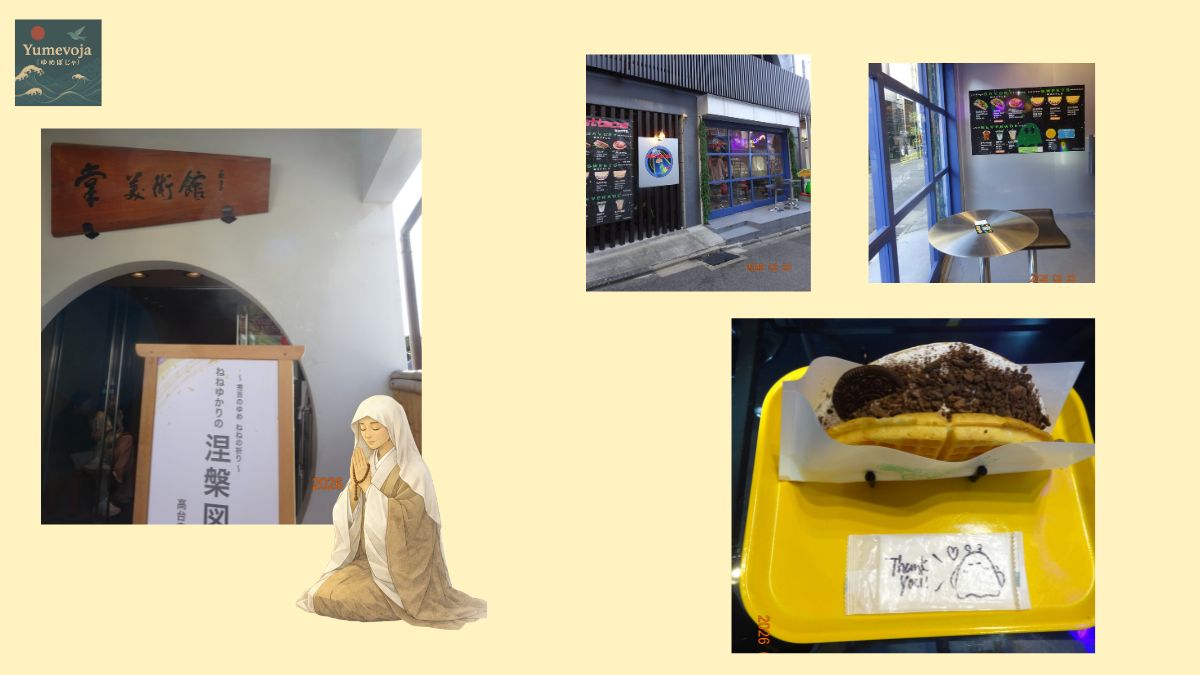
A small museum and a quiet reunion,
followed by a slightly busy moment with a waffle.
A day moving between stillness and everyday life.
After the waffle,
I felt a bit refreshed.
After a light pizza and a waffle,
I started walking again,
looking for something more filling.
I realized
I was truly hungry.
After this,
I continued walking
in search of dinner.
👉🍵Beauty & Taste | A Gyutan Tasting Set Dinner in Kawaramachi Alley

Today’s bonus capsule!
✨ Gateway to the Shōwa Era
―The Princess Cut
The Showa era (1926–1989) was a time when modern technology and ideas began to transform everyday life in Japan.
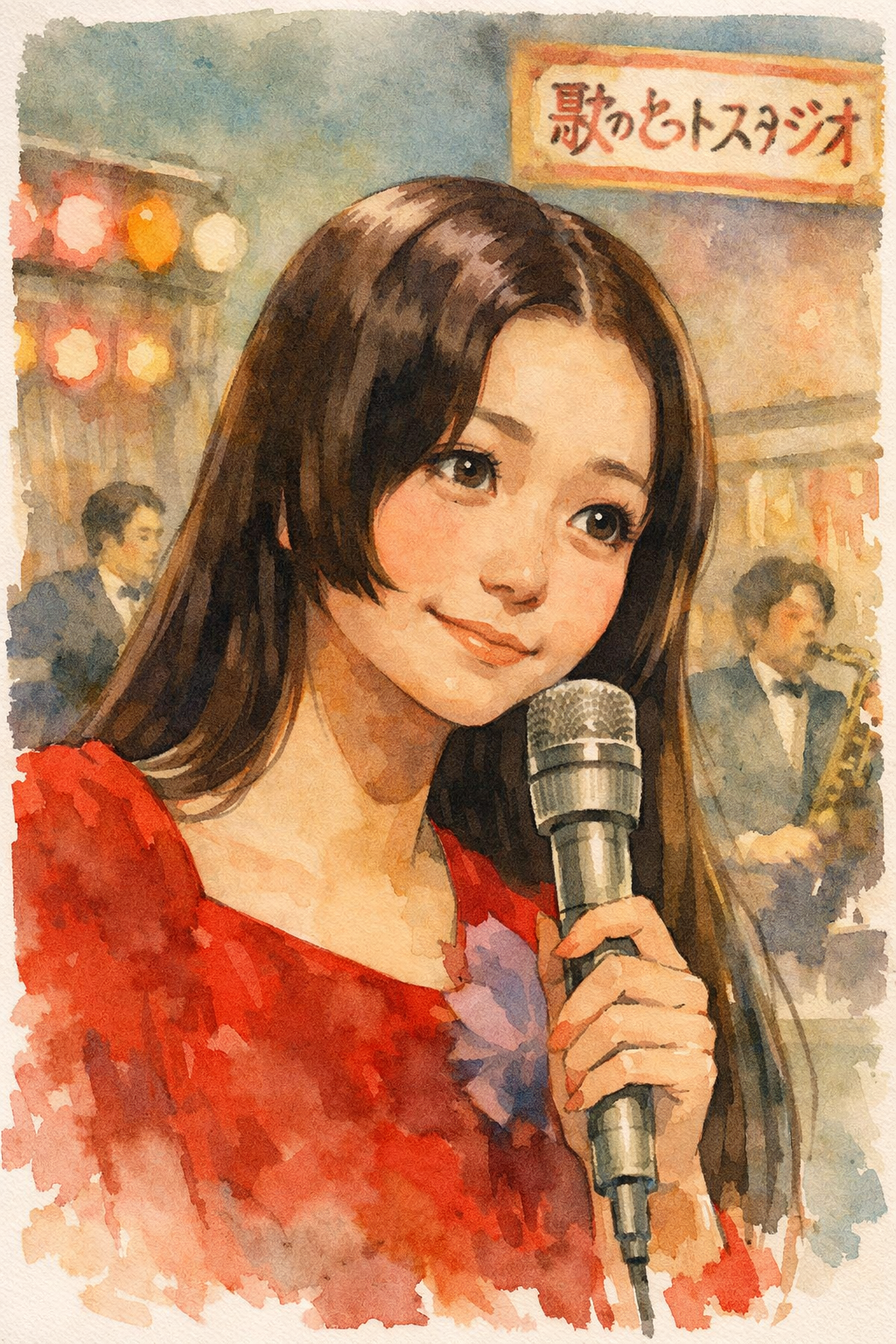
In the Showa era,
there was a hairstyle known as the “princess cut.”
When I was in elementary school,
there was a popular idol singer named Megumi Asaoka.
Her hairstyle was exactly that—
the princess cut.
It was soft and charming,
yet somehow felt special.
And yet,
it was a little too unique,
and no one around me tried to copy it.
It was cute,
but somehow out of reach.
Perhaps that was part of its charm.
Now, I hear that people overseas
are enjoying this hairstyle.
Perhaps time goes in circles.
Walking through the quiet grounds of Kodai-ji,
I found myself thinking of those days.
A kind of beauty that does not stand out,
yet quietly stays in the heart.
Perhaps that is what Japanese beauty is.