Visit Date: March 6, 2025
From the owner of a somen noodle shop in Kyoto,
I received a handwritten list titled, “Good Places to Eat in Kyoto.”
Still carrying the gentle sweetness of dessert,
I headed next to a pickle shop.
I hadn’t even known the shop existed.
I didn’t know you could dine at a pickle store.
I called a few days in advance to make a reservation.
I had heard that last-minute bookings require a phone call, so I didn’t hesitate.
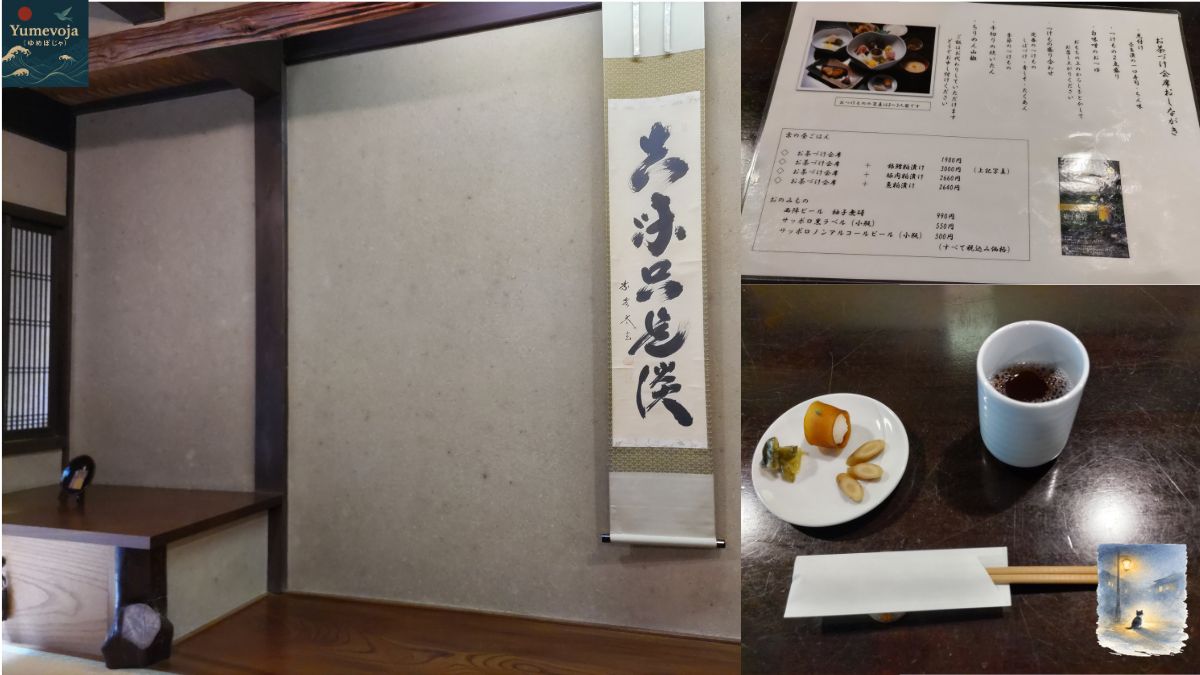
A small tatami room.
The ochazuke kaiseki begins in silence.
I was shown into a modest tatami room
with about five low tables.
There were women dining quietly,
and what looked like a calm married couple.
Among them sat a foreign man who didn’t seem very comfortable in Japanese.
Kaiseki in a pickle shop.
I wondered how many Japanese people even know this exists.
The dishes are never rushed.
Each one is brought out slowly, in silence.
And there was also the “instruction” from the somen shop owner:
“You should add the fish.”
At first, I wondered if the pickles alone might be enough.
But that additional dish proved necessary.
It does not compete for attention.
It quietly supports.
An elegant piece of fish.
It harmonizes perfectly with the delicacy of the pickles.
Different colors, thicknesses, levels of salt.
They hold a depth that cannot simply be contained within the word “pickles.”
Not flashy,
but carefully composed beauty.
Finally, ochazuke.
Steam rises gently,
sinking slowly into the body.
It was not everyday elegance,
but a quiet luxury of a different kind.
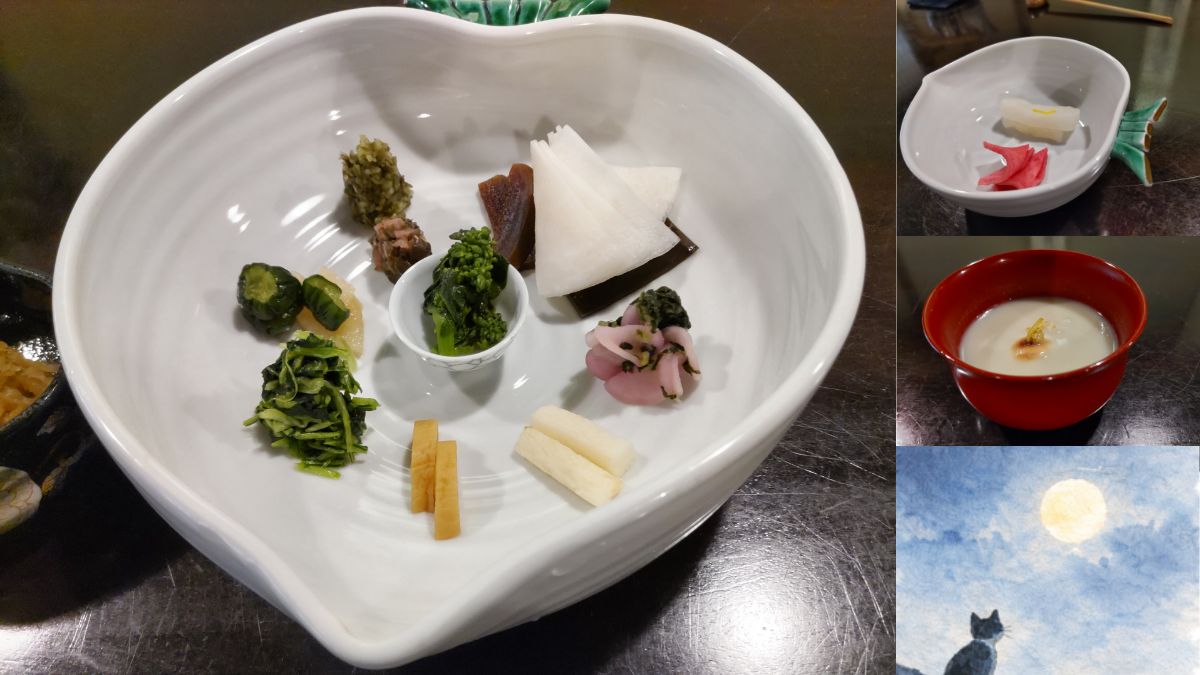
Salt takes the lead. The depth of Kyoto pickles.
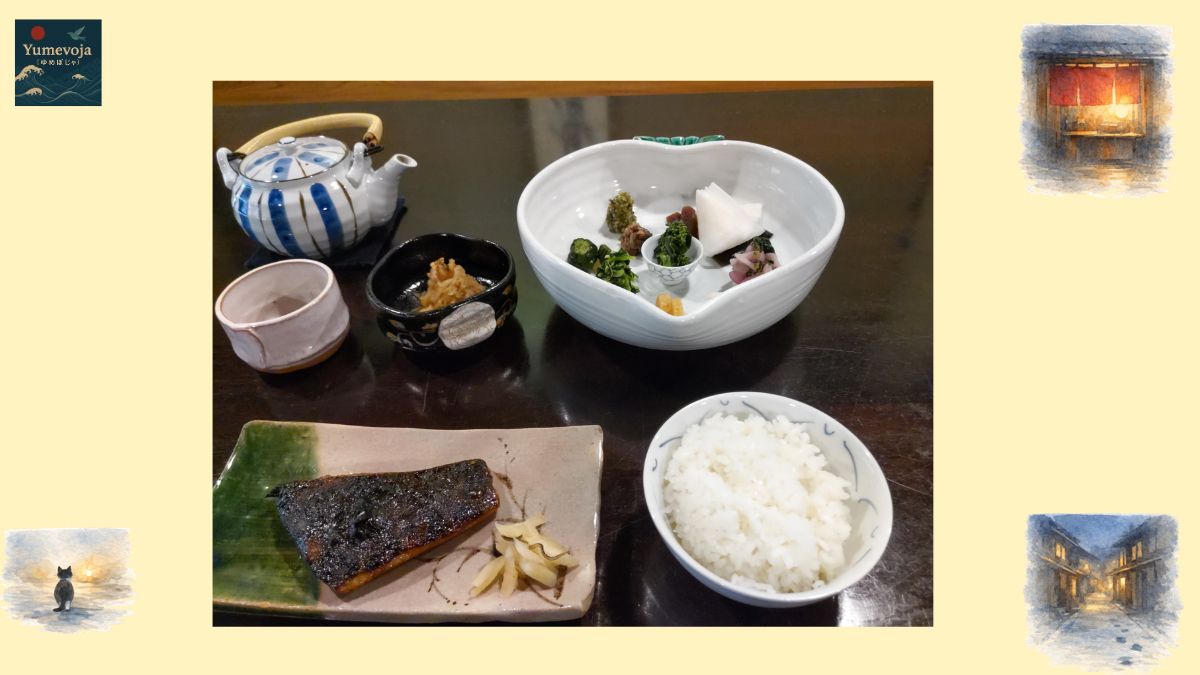
An elegant fish that never competes.
And then, the meal closes with ochazuke.
That day in Kyoto began with sweetness, and moved toward salt.
And at night, I headed to a lively restaurant.
It was the day I realized that Kyoto is not only a city of silence.