After walking on, a quiet shadow remained.
Visited: June 15, 2025
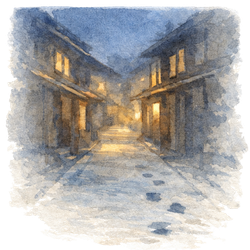
After leaving the museum, I wandered through the streets of Kyoto without a plan.
I searched for vintage obi belts and stepped into a few shops that caught my eye.
It was a kind of time that felt both purposeful and aimless. Yet it is this kind of open space that gently shapes the outline of a journey.
As the sun began to set, I headed to a diner I had visited before.
There is always a small expectation in returning to a familiar place—the hope of feeling that same satisfaction once again.
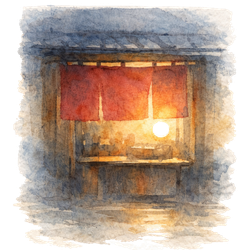
But this meal was different from the last time.
The flavors felt slightly blurred, and the excitement I once felt did not return.
The restaurant was not busy. Rather than peaceful, the atmosphere felt a little lonely.
Because I was seated near the register, I could clearly see the entrance.
Several foreign visitors came in, asked whether credit cards were accepted, and left when they learned they were not.
Watching this exchange, I asked why they had decided not to accept credit cards.
I was told that they had offered card payment until two years ago.
However, continued losses led them to switch to cash only.
There was also the quiet burden of explaining this at every checkout.
Perhaps it was also a matter of language.
It is not always English.
Facing these situations repeatedly seemed to carry its own fatigue.
It was a glimpse of the hardships of running a business—realities not easily seen from the bright side of a tourist destination.
The small pressures and honest feelings people carry.
I felt as though I had unexpectedly touched a fragment of that truth.
It was not a day that ended in complete satisfaction.
Yet that is precisely why it felt real.
Travel stays in memory because it holds both light and shadow.
This day was shaped less by grand events and more by small choices and quiet coincidences.
The roads I wandered, the unplanned exhibition, even the slightly disappointing dinner—all of it formed the outline of this day.
Kyoto’s night passed quietly.
There was no spectacle.
And yet, something within me was gently stirred.
Travel is not only about gaining something.
Perhaps it is in the moments that do not go as planned, in the unexpected emotions, that we begin to understand ourselves more deeply.
The fullness of the afternoon and the faint bitterness of the night—
holding both, Kyoto closed the curtain on this day.
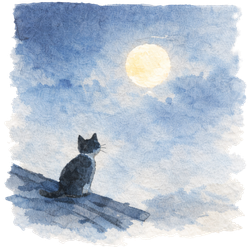
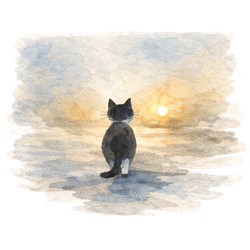
And from there, the next journey quietly begins.

Today’s bonus capsule!
✨ Gateway to the Shōwa Era
―Memory of a Furisode
The Showa era (1926–1989) was a time when modern technology and ideas began to transform everyday life in Japan.
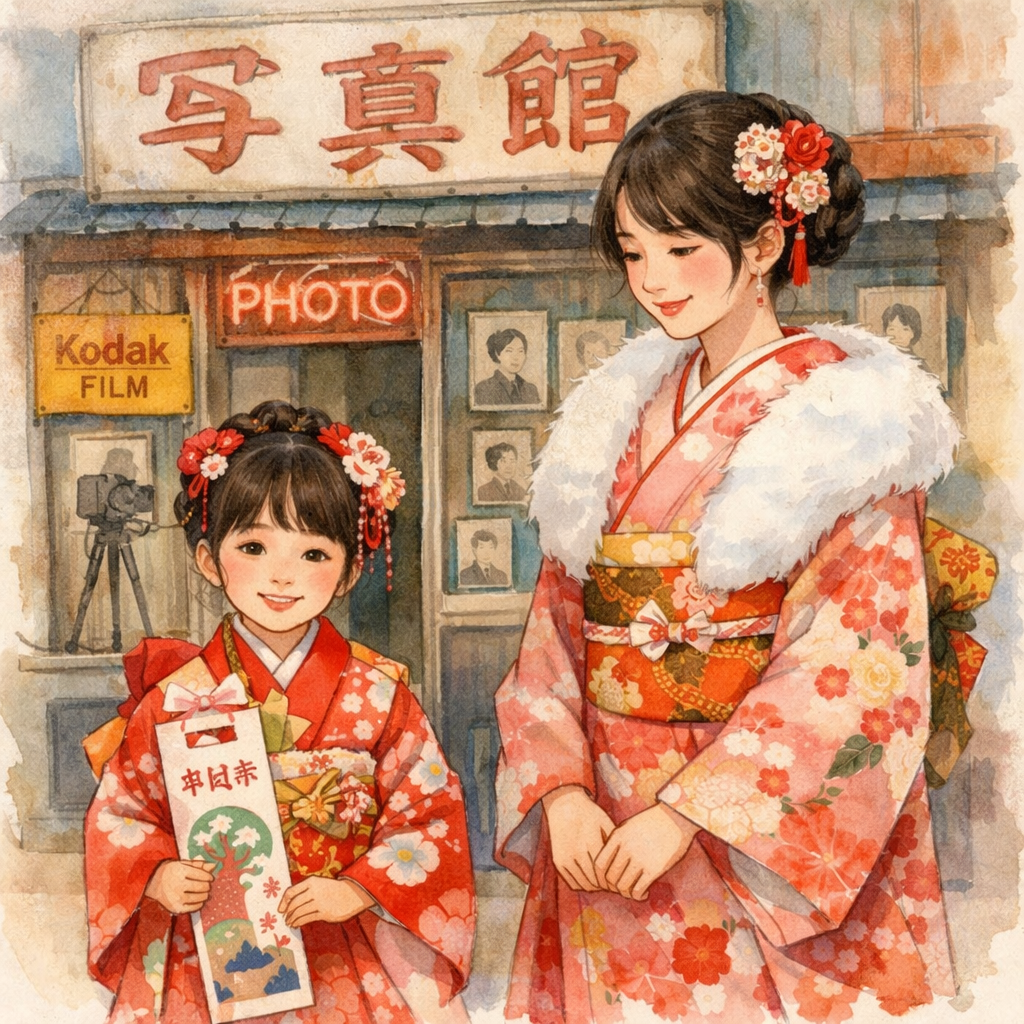
After Shichi-Go-San, the next time I became aware of kimono was my coming-of-age ceremony.
Shichi-Go-San is a Japanese celebration of children’s growth, and years later I wore a furisode, a formal long-sleeved kimono for young women.
In the mirror, I looked slightly more like an adult, though the silk felt both proud and a little restrictive.
After the ceremony, I said I wanted to eat yakiniku, which troubled my mother.
She worried the smell of grilled meat would cling to the silk sleeves and tried to stop me more than once.
But in the end, I ate the yakiniku anyway.
What remains in my memory is not the pattern of the kimono or the photographs,
but my mother’s half-exasperated smile and the warm smell of grilled meat drifting into an ordinary evening.
There was a time when kimono quietly accompanied the milestones of life.
This small moment still carries the gentle texture of those days.