Heat, Waiting Time, and Decision-Making
Visit: June 4 , 2025
This was my second visit to the Expo.
More than how much I managed to see, what stayed with me was how I got through the day.
I visited a total of eight countries plus the Japan Pavilion.
Among them, the Saudi Arabia Pavilion stood out overwhelmingly.
The moment you step inside, it feels less like an exhibition and more like entering a city.
From the scale of the NEOM project to The LINE, the entire pavilion conveyed a clear sense of seriousness and intent.
As the host country for 2030, Saudi Arabia made its statement not through words, but through space itself.
“On a different level” is probably the closest description.
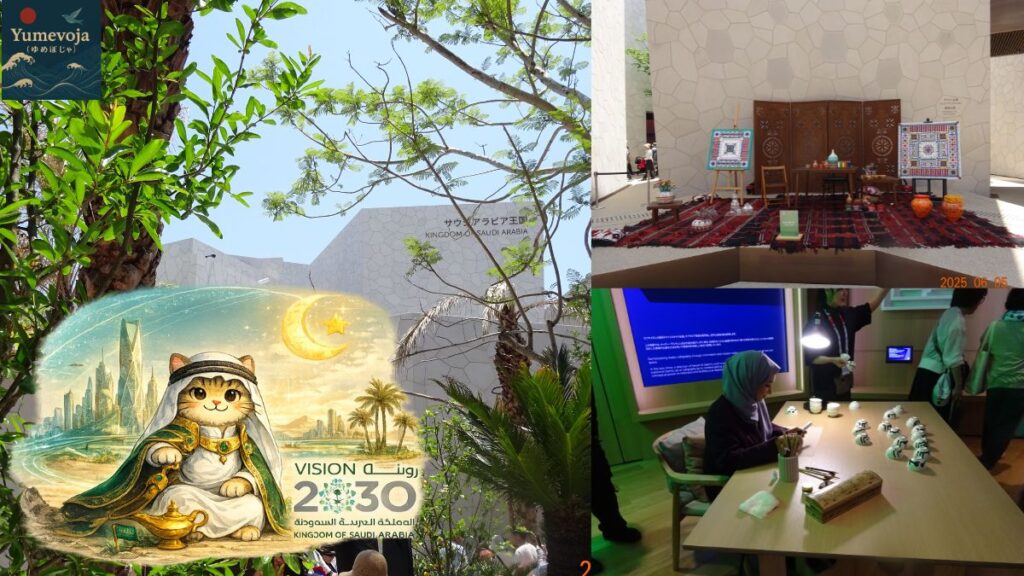
Saudi Arabia Pavilion — Next host country. Arabic script is art in itself.
In contrast, the Indonesia Pavilion felt gentle and calm.
It wasn’t flashy, but the atmosphere was soothing.
Sitting down in the tiered theater and having a cup of their special soup at the attached café quietly reset both my body and mind.
Its light flavor was exactly what I needed.
The Uzbekistan Pavilion and the Serbia Pavilion both had 90-minute waits.
Uzbekistan impressed with its mysterious emerald-green ceramics, but the line moved unpredictably, which made it hard to relax.
Serbia focused on playful, child-oriented exhibits, and to be honest, it didn’t resonate with where I am in life right now.
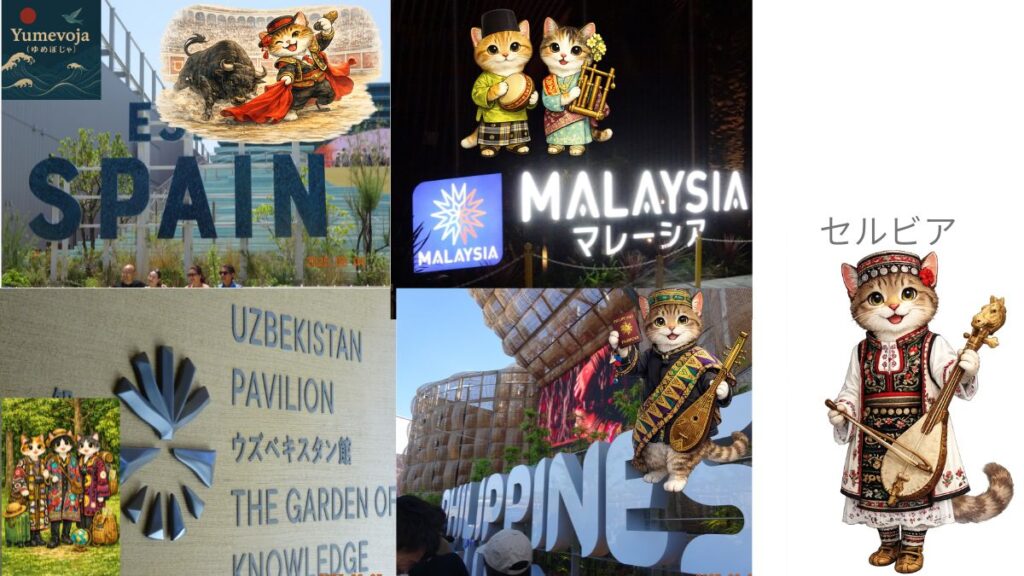
Spain, Uzbekistan, Malaysia, the Philippines, Serbia — each with a strong individual character.
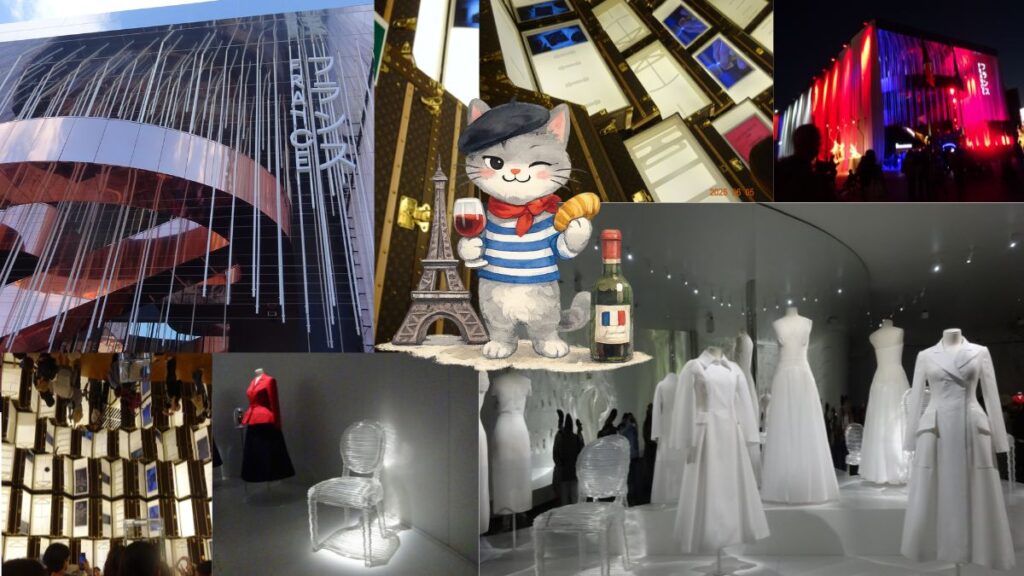
France — its commitment to beauty is uncompromising.
The only pavilion I had reserved in advance was the Japan Pavilion, with entry at 18:50 — prime time.
The theme was “Japan’s future,” and each of the three booths had its own restroom.
Multiple restrooms inside a pavilion — that idea alone feels very Japanese.
Doraemon and Hello Kitty were everywhere.
And when someone commented that Hello Kitty should be more selective about her jobs, I couldn’t help but agree.
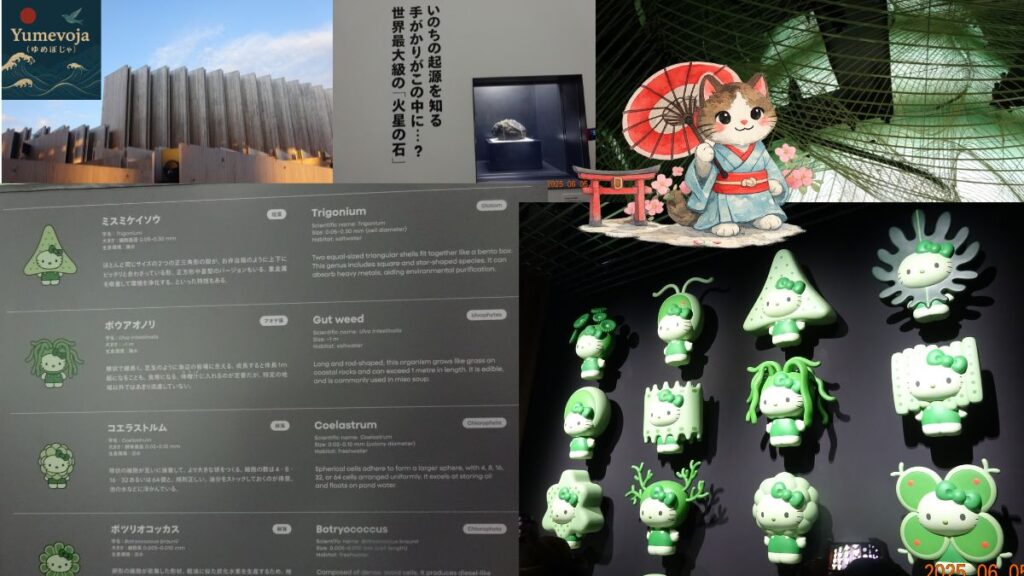
Japan Pavilion — all characters assembled. “Good job today.”
My heat-countermeasures, honed through the Shikoku pilgrimage, proved useful.
A lightweight folding stool I had repaired and brought along, a dampened hat and face cover, and a cooling neck wrap.
While others around me were clearly exhausted, I felt relatively comfortable.
That said, sitting down risks losing your place in line — you still have to stay alert.
Restrooms were another serious issue.
Even on a weekday, congestion was unavoidable, and when I felt close to my limit, I asked a staff member.
Their immediate response — “The Commons area is less crowded” — saved me.
The Expo site is still running on human judgment.
I had planned to take a direct bus from the West Gate, but the line was enormous.
Memories of a past 120-minute wait flashed through my mind.
Segmented pilgrimage routes and Expo visits are surprisingly similar.
How far do you go in one day?
Do you give up here?
Or do you change your route?
I re-entered the venue and decided to return by train from the East Gate instead.
Right after that decision, an announcement for the drone show came on.
I found myself in an almost perfect spot, up on the Ohyane Ring.
Thanks to extra train services, I made it home safely.
While remembering the comfort of a seated bus ride, I felt relieved that I hadn’t made the wrong call.
That day, I walked 30,000 steps.
Heat. Waiting. Not understanding English.
Even so, with preparation and sound judgment, it was manageable.
The Expo presents visions of a “future society,”
but this day made me realize that what truly supports it, even now, is unmistakably human capability.
👉 Related article:
🍵 Beauty & Taste | Expo ②

✨ Gateway to the Showa Era―Suitcases
Today’s bonus capsule!
The Showa era (1926–1989) was a time when modern technology and ideas began to transform everyday life in Japan.
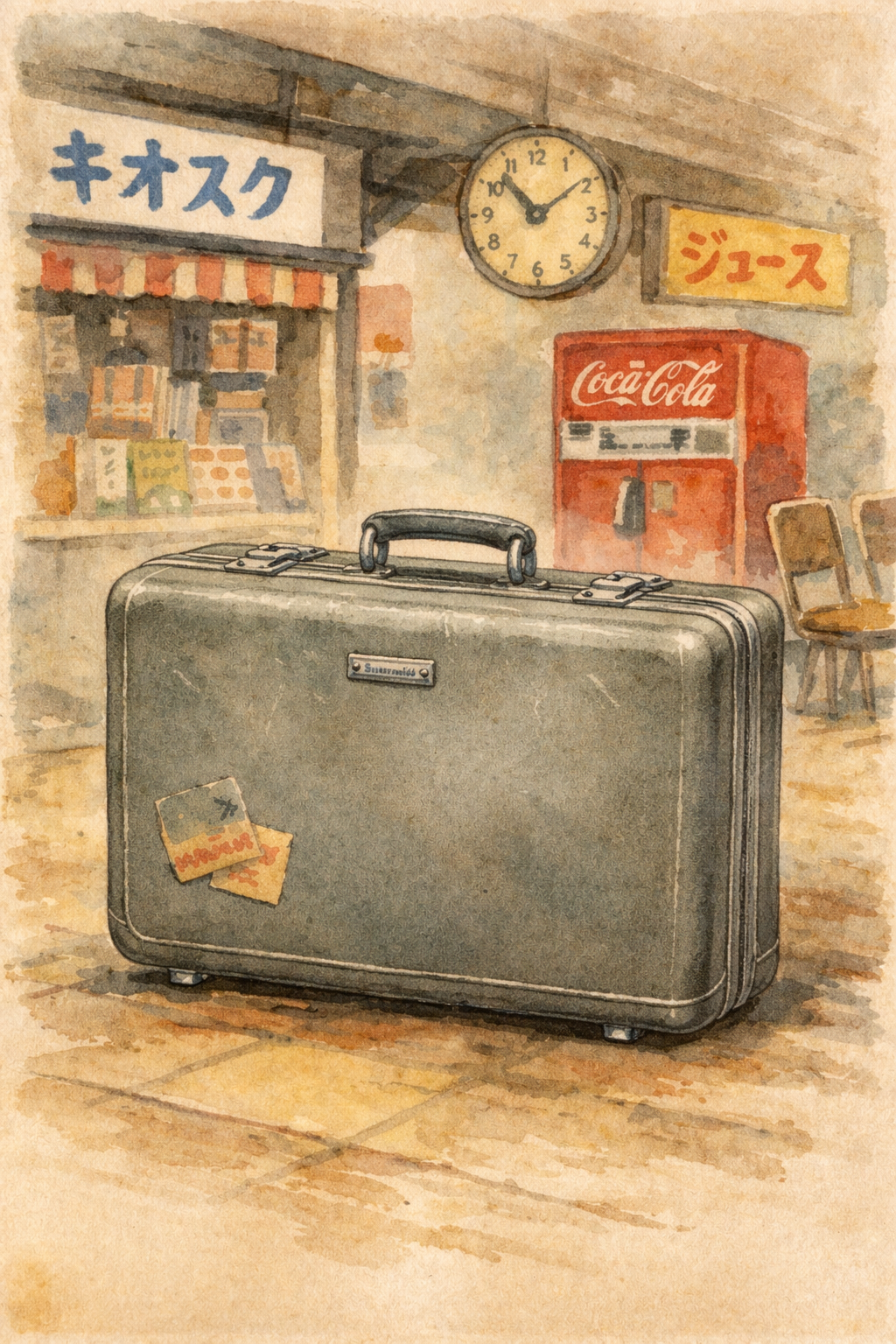
At the French pavilion, bags were displayed across an entire wall.
The sheer number and the sense of perfection were overwhelming.
Seeing them, I suddenly remembered suitcases from the Showa era.
They were plain in color and boxy in shape.
Not light, not especially functional.
Yet they quietly protected their contents throughout the journey.
Today’s suitcases are different.
They come in endless patterns,
and some can be opened partially.
They are designed for taking things out while moving.
As the way we travel has changed,
so has the role of what we carry.
Between the future I saw at the Expo
and the Showa memories that resurfaced,
I realize I am walking somewhere in between.