Stage 2-1 | June 29, 2024
This pilgrimage partly followed the same route as the second half of my previous journey.
I had already walked this section once, so I felt confident and did not expect to get lost.
Stopping at the point suggested in the guidebook (the train-based plan) felt like a waste of time.
I already had all my pilgrimage gear, and I had checked the parking situation on my previous visit.
This time, I would not lose time buying supplies or doing research.
Because of that, I thought I could walk about two sections.
That judgment was too optimistic.
As expected, things did not go according to schedule.
Day 1 — Start
This pilgrimage was planned as a one-night, two-day trip.
I decided to record Day 1 and Day 2 separately.
Episode 2 corresponds to “Section 2–1” and covers the first day.
JR Itano Station
I parked my car in the station parking lot.
There were about 13 spaces, and the fee was 350 yen per day.
The system was simple: buy a ticket from the machine and place the receipt on the dashboard.
At this point, I still felt relaxed.
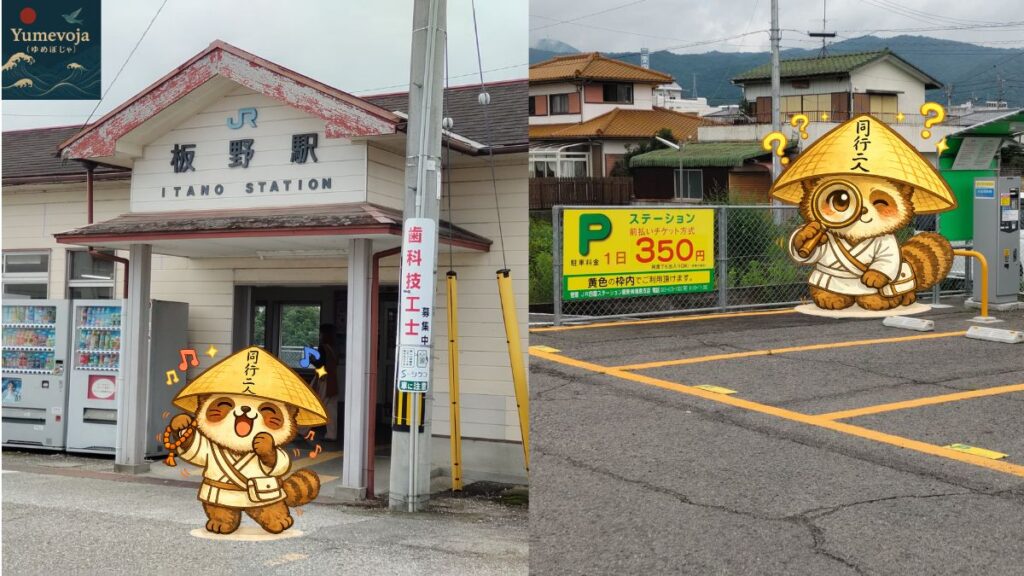
Itano Station. I parked my car here, and day one began.
Gohyaku Rakan (Five Hundred Arhats)
I started here because I did not have time to visit this place last time.
Wooden statues of arhats stood in rows in a dimly lit space.
Their expressions felt more frightening than I had expected.
Temple No. 6 — Anraku-ji
Temple No. 7 — Juraku-ji
This point marked the official “section break” in the guidebook.
However, feeling confident, I continued on without stopping.
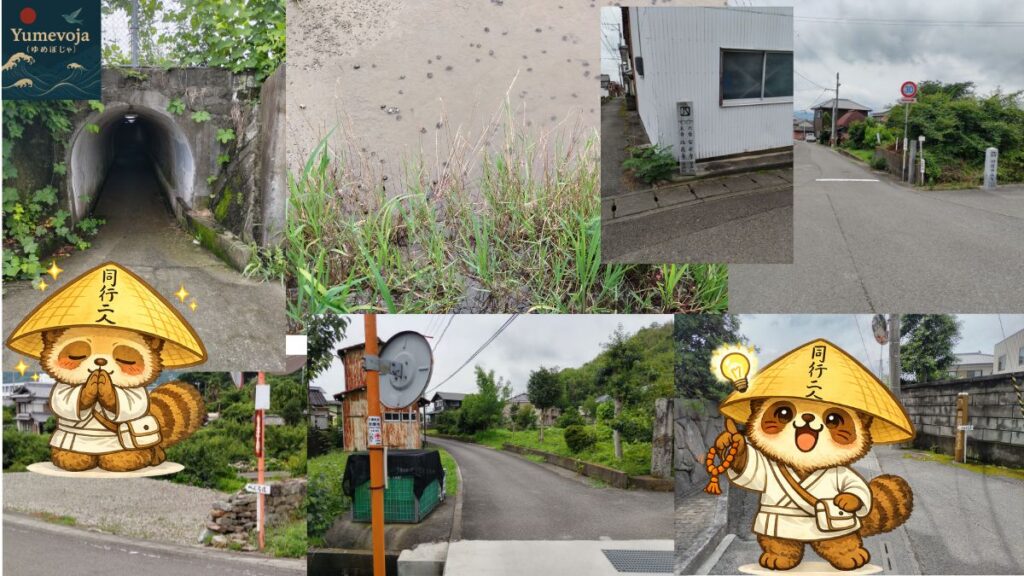
At that moment, I still thought I had plenty of margin.
Once again, this decision led to trouble.
I had learned nothing from my previous mistake.
Temple No. 8 — Kumadani-ji
Temple No. 9 — Hōrin-ji
Azukai Daishi
I kept moving forward without slowing down.
Temple No. 10 — Kirihata-ji
As the deadline for collecting temple stamps (nōkyō) approached,
333 stone steps stood in my way.
Rain began to fall.
After coming this far, failing to receive the stamp was painful.
I ran up the stone steps in the rain, desperate.
Would I make it in time?
It was already past 5:00 p.m.
The stamp office was closed.
As I stood there in despair, someone spoke to me gently.
“Are you here for nōkyō?”
The voice belonged to an elderly woman from the temple.
She told me that normally it would not be allowed after hours,
but because it was raining and I looked exhausted,
she kindly agreed to help me and completed the stamp.
The Next Trial
When I told her I planned to go to Awa-Kawashima Station next,
she looked surprised.
“Where? That will take at least three hours.”
The guidebook said it would take about one and a half hours,
but the sun was already beginning to set.
Once again, despair.
She then suggested, “Why don’t you call a taxi?”
There was no mobile signal, so I used a public phone to call a taxi company.
The answer was discouraging:
“We only accept reservations. We are done for today.”
When I desperately asked what I should do, the reply changed.
“Well… I’ll come pick you up.”
He told me,
“I’ll stop at a place a little below the temple where a car can park. Please wait there.”
I took a different path down from the stone steps,
but slipped on a steep stone slope and fell hard.
It hurt, but I had no time to worry about the pain.
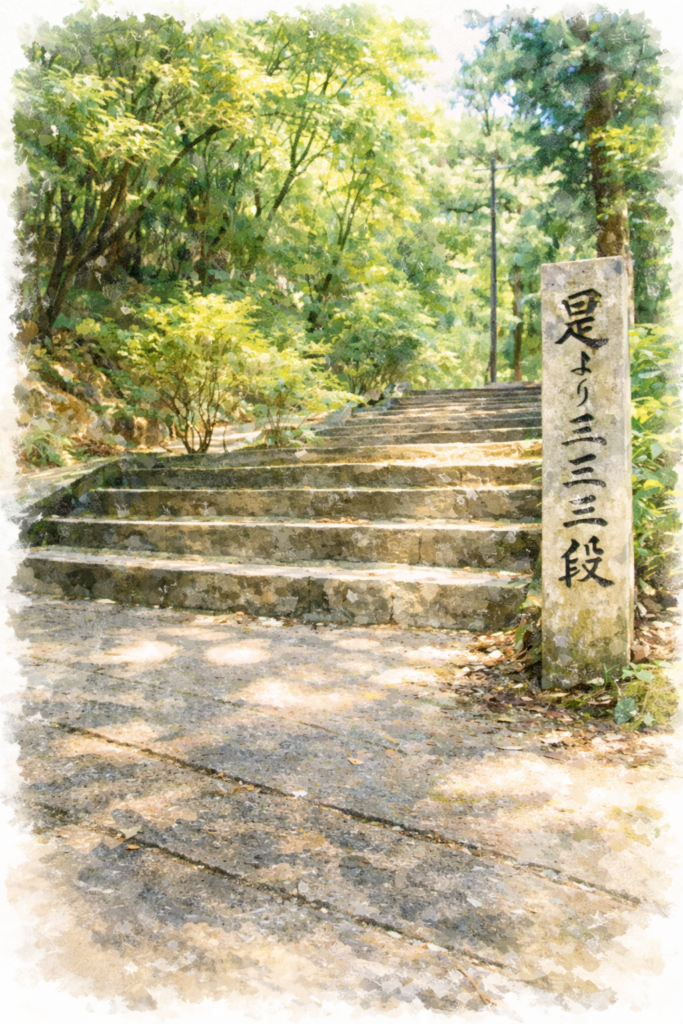
Temple No. 10 — Kirihata-ji
Gratitude and Conflicting Feelings
On the taxi ride back toward Itano Station,
I received honest advice about walking the pilgrimage.
He asked about my walking speed and pace between temples,
and then said,
“At this pace, you should give up the difficult section starting from Temple No. 11.”
Some older pilgrims can walk difficult sections without trouble.
But they have sufficient speed and physical strength.
At my current pace, it would be dangerous.
He recommended joining a bus tour instead.
I felt grateful for the help,
but also shaken by the reality of being told that walking the pilgrimage might not be possible for me.
Even after returning by car to a business hotel near Tokushima Station,
my thoughts were still in chaos.
The route from Temple No. 11 to No. 12 is the most difficult.
Should I give up and go home the next day?
The Decision
After thinking carefully, I reached a conclusion.
I do not have to follow the temples in strict order.
I can start with routes that are easier for beginners,
become accustomed to walking the pilgrimage,
and then challenge the difficult sections later.
Once again, I had caused trouble for local people.
Even so, I did not want to give up.
I want to walk as much as I can.
For the next day, I changed my plan to a course marked “beginner level” in the guidebook.
I decided to skip Temples No. 11 and No. 12
and visit Temples No. 13 through No. 17 instead.
Additional Note
Looking back, this day involved a series of unrealistic decisions.
Although the official closing time for nōkyō is listed as 5:00 p.m.,
I later learned that the unspoken rule is to arrive about 30 minutes earlier, around 4:30 p.m.
Since the COVID-19 pandemic,
many accommodations have closed or changed their operations,
and guidebook information does not always match reality.
Even with advance research, conditions on site can be very different.
This record is not meant to say, “This is how to do it right.”
It is a reminder to myself of what can happen when I push too hard.
For those who are considering starting the pilgrimage,
or thinking about walking it,
I left this account as it is, hoping it might encourage a pause and a careful review of plans.
Do not rush.
Do not compare yourself to others.
Walk at your own pace.
Now, I believe that the pilgrimage still has meaning, even so.

Today’s bonus capsule!
✨ Gateway to the Showa Era―Toilet
The Showa era (1926–1989) was a time when modern technology and ideas began to transform everyday life in Japan.
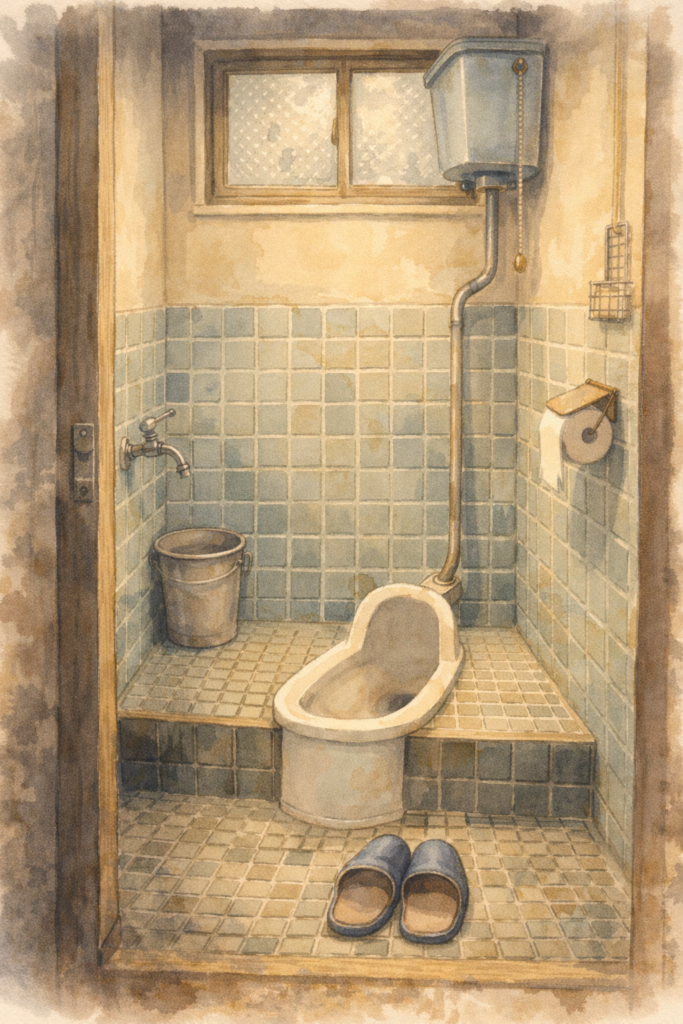
When I was a child in the Shōwa era,
squat toilets were the norm.
In the countryside, pit toilets were nothing unusual.
The opening felt wide,
and while using it,
you always kept your body tense.
Toward the end of Shōwa,
Western-style toilets slowly increased,
but they were not yet the standard.
When I encounter squat or pit toilets on the pilgrimage today,
they feel less like inconvenience
and more like places where time still remains.