Visit: May 11, 2025
After the museum, I headed to Tsukigase.
Meals were already sold out.
But that was expected.
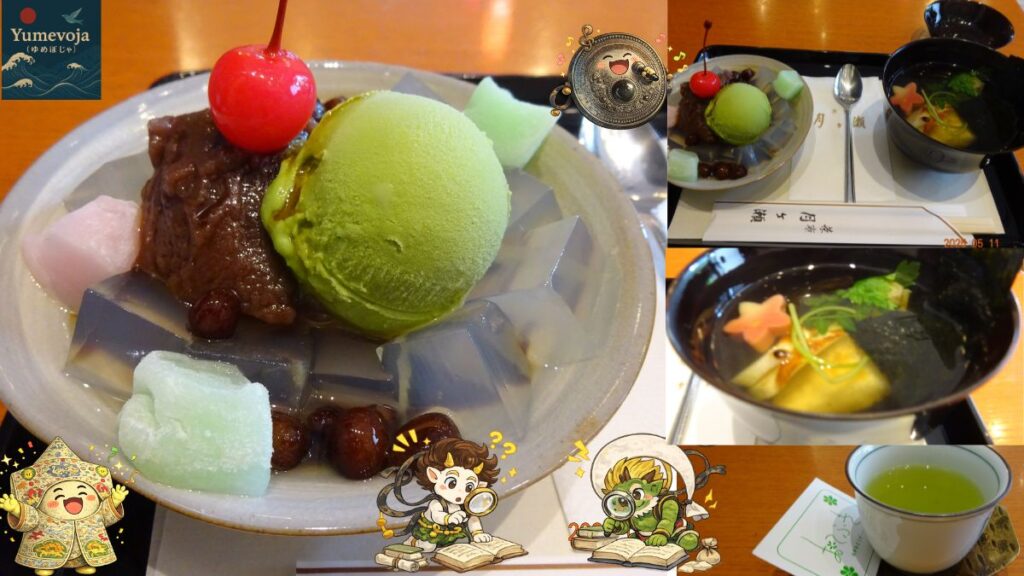
I chose the set with ozōni and anmitsu.
That was the plan.
I added just a little ice cream.
The ozōni was made with a clear, delicate broth.
Nothing about it insisted on attention.
And because of that, each sip invited quiet focus.
The shiratama in the anmitsu had an unusual texture.
Not chewy, but light and airy.
Somehow nostalgic, it brought back memories of ramune candies from childhood.
Nothing flashy.
Yet a moment that gently fills you.
Finding satisfaction by not adding more.
It was a moment in which I could taste
the Japanese aesthetic of subtraction.
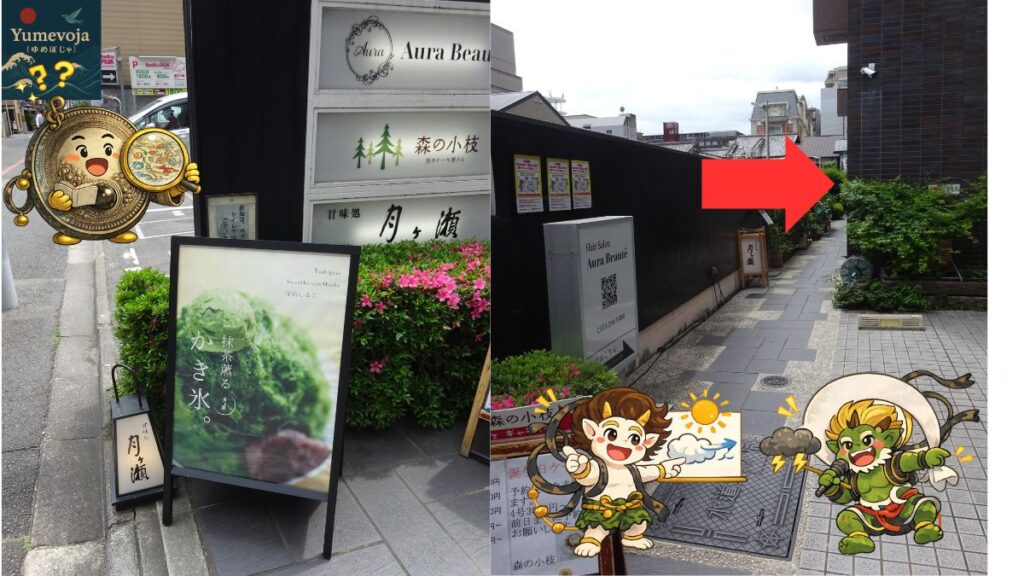
It was a little hard to find—I walked right past it once. (laughs)
A local in Kyoto told me, “You should go at least once,”
and even gave detailed instructions—right down to adding ice cream. (laughs)
👉 Related article:
🚉 Stopover Journey (The Crucible of Beauty) ① / ②Kyoto National Museum

Today’s bonus capsule!
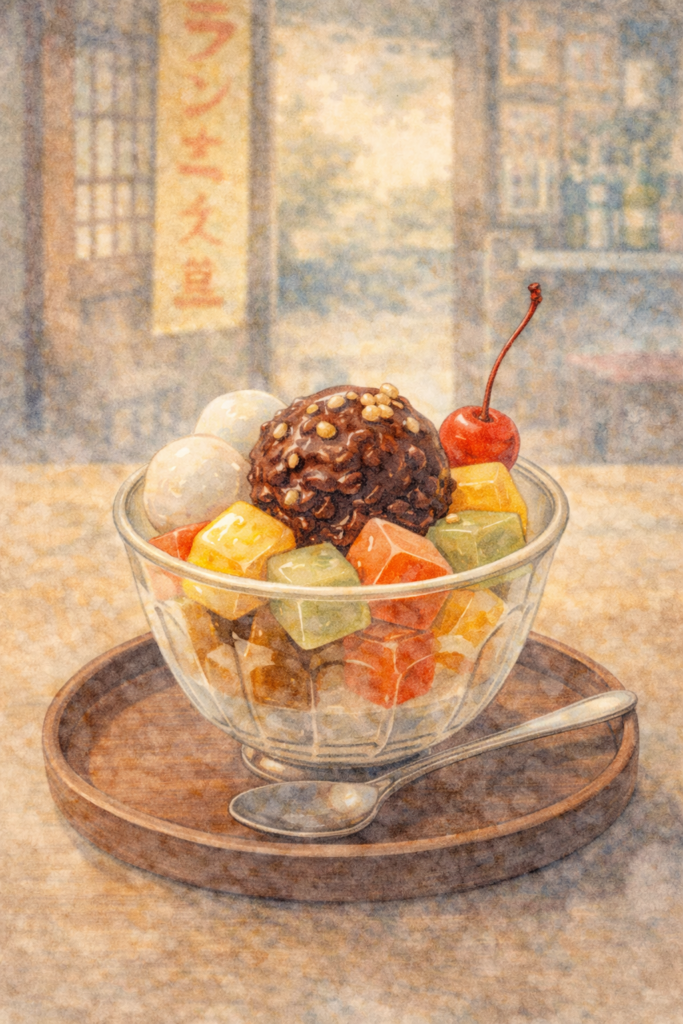
✨ Gateway to the Showa Era―Anmitsu
The Showa era (1926–1989) was a time when modern technology and ideas began to transform everyday life in Japan.
When I was a child,
I didn’t care much for anmitsu.
The black syrup felt heavy,
and I couldn’t understand
why anyone would choose it.
The taste itself
has not changed.
The anmitsu at Tsukigase
has surely tasted the same
for many years.
As adults,
there are many foods
whose beauty we come to understand.
Anmitsu was one of them for me.
What changed
was not the flavor,
but the person receiving it.
The taste of the Shōwa era
is still quietly there.
I think it is we
who slowly grow into it.