Visit: May 11, 2025
I walked through the Kyoto Imperial Garden while the feeling from the museum was still with me.
It is so close to daily life that it feels less like a tourist site and more like part of everyday routine.
Being able to see such a place from so near is something to be grateful for.
At the same time, because it is so familiar, its original dignity and meaning can quietly blend into the ordinary scenery.
At the Kyoto Imperial Palace, seasonal ceremonies and rituals still continue today.
However, they are not meant to be actively shown.
Public access is limited, and many traditions are carefully preserved as quiet, private practices.
Because of this, the palace we usually see may look like
“a place where nothing is happening.”
But the Kyoto Imperial Palace is not just a historical site.
There are things that are shown, and things that are deliberately not shown.
Holding both, it remains
a place that is still alive today.
When something is too close, its value can be hard to see.
Perhaps that is why this place gently asks us
how we choose to look at it.
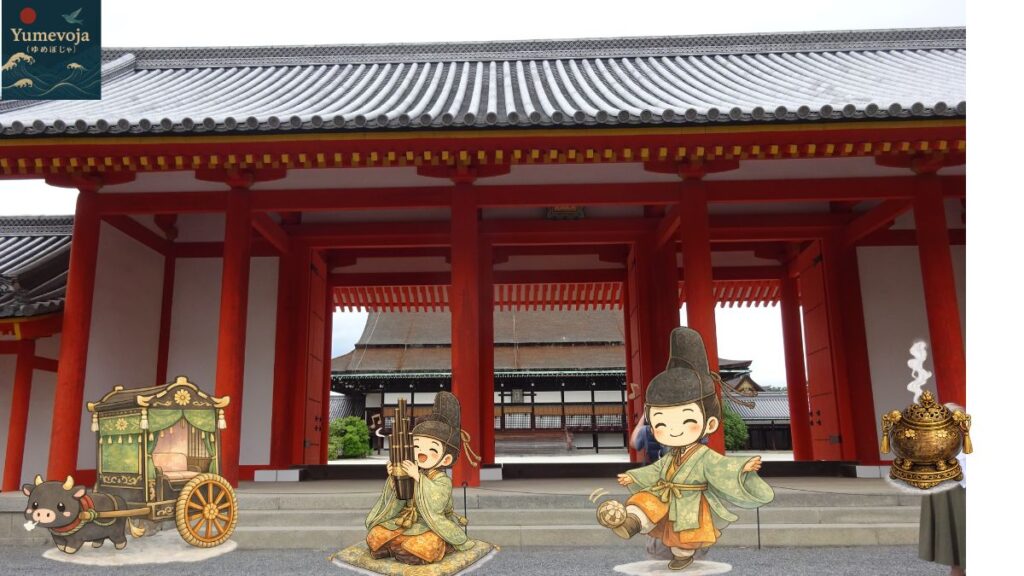
Kyoto Imperial Palace
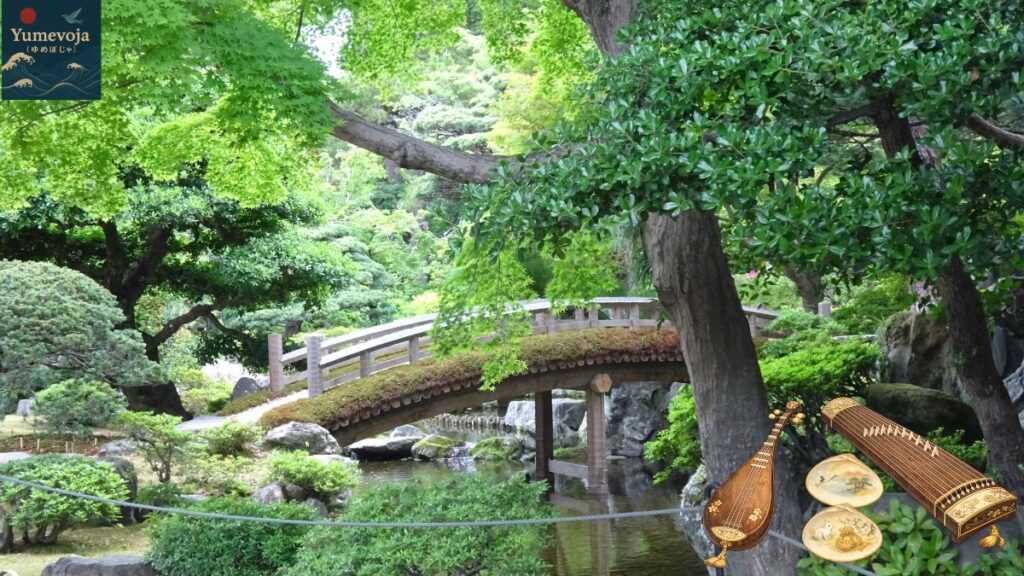
Kyoto Imperial Garden
👉 Related article:
🍵 Beauty & Taste (The Crucible of Beauty) ② / ②Kyō no Tsukune-ya | YUMEVOJA
🚉 Stopover Journey (The Crucible of Beauty) ① / ②Kyoto National Museum | YUMEVOJA

Today’s bonus capsule!
✨ Gateway to the Showa Era
―Kyoto Imperial Palace
The Showa era (1926–1989) was a time when modern technology and ideas began to transform everyday life in Japan.
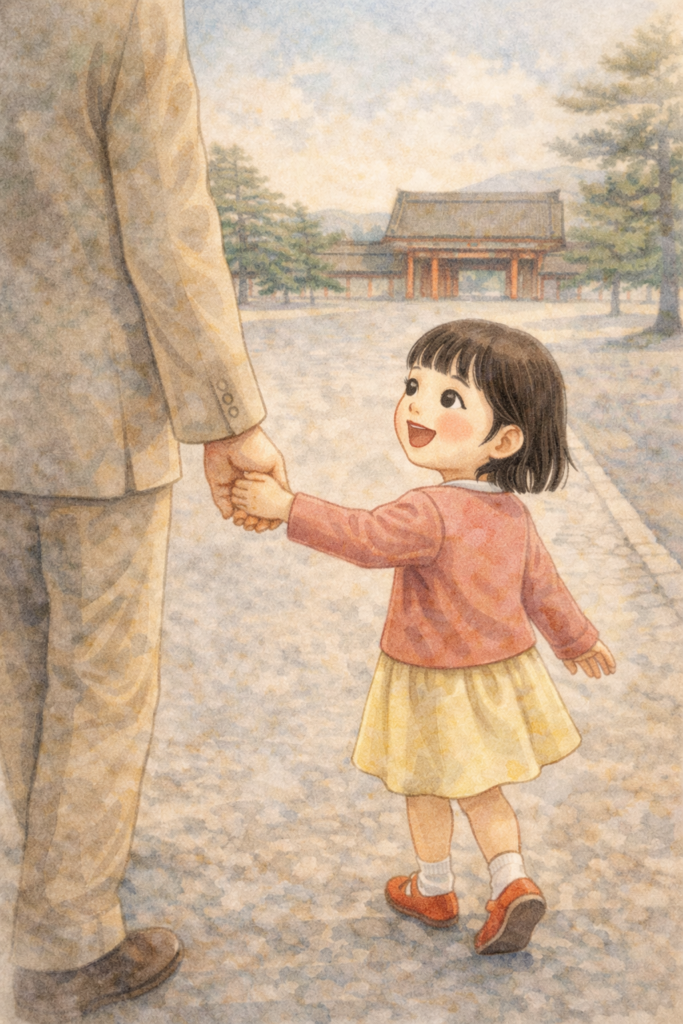
When I was a child,
I think I came here with my parents.
But I remember almost nothing.
Only a faint impression remains:
that it was vast.
Walking here as an adult,
I find myself thinking again.
A place with such deep history,
open to the public,
free of charge,
and so casually accessible.
It feels slightly strange.
This was, for a long time,
a symbolic place for Japan.
Now, it appears quietly exposed,
as just one destination among many.
It has not been forgotten.
But it is no longer spoken of with force.
As I walked through the grounds,
I felt, somehow,
a quiet sadness.
Perhaps the Shōwa era
was a time when important things
were no longer spoken of loudly.