Visit: May 6, 2025
I arrived in Tennoji early.
Knowing I would soon see Japan’s national treasures,
I didn’t feel like stopping for a drink.
Instead, I bought a juice from a vending machine,
quenched my thirst, and took a quiet moment to reset.
Osaka City Museum of Fine Arts – Japan’s National Treasures Exhibition
The museum was crowded during Golden Week,
but I entered smoothly with a timed ticket.
My strategy this time was simple:
don’t go back, and start with the quieter galleries.
Instead of trying to understand each work in depth,
I walked through, taking them in as fragments.
Japan’s National Treasures — A History of Beauty
The portrait of Minamoto no Yoritomo,
Jakuchu, Sesshu, Eitoku, Tohaku.
Works I knew from textbooks felt different
when standing in front of the originals.
Jakuchu’s sense of life.
Sesshu’s quietness.
Tohaku’s air, where sound seems to disappear.
Each one quietly spoke of
why it has been preserved.
National Treasures Connected to Osaka
The Seven-Star Sword.
Taikō Samonji.
They made me feel that Osaka is a place
that has long held faith and power,
prayer and reality, side by side.
The audio guide was narrated by Kenjiro Tsuda.
His low, steady voice was soothing,
conveying the atmosphere more than explanations.
Before I realized it,
I was replaying the same guide again and again,
and the distance between the works and myself
had clearly grown closer.
The Golden Seal “King of Na of Wa”
A Golden Week–only display.
Thirty minutes before closing,
I finally came face to face with it
in the last gallery.
It was surprisingly small,
yet its presence was overwhelming.
Thinking of the weight of time
that has protected and passed it down,
gratitude naturally arose
for those who preserved these ancient works.

“Is everyone here for the Golden Seal?”
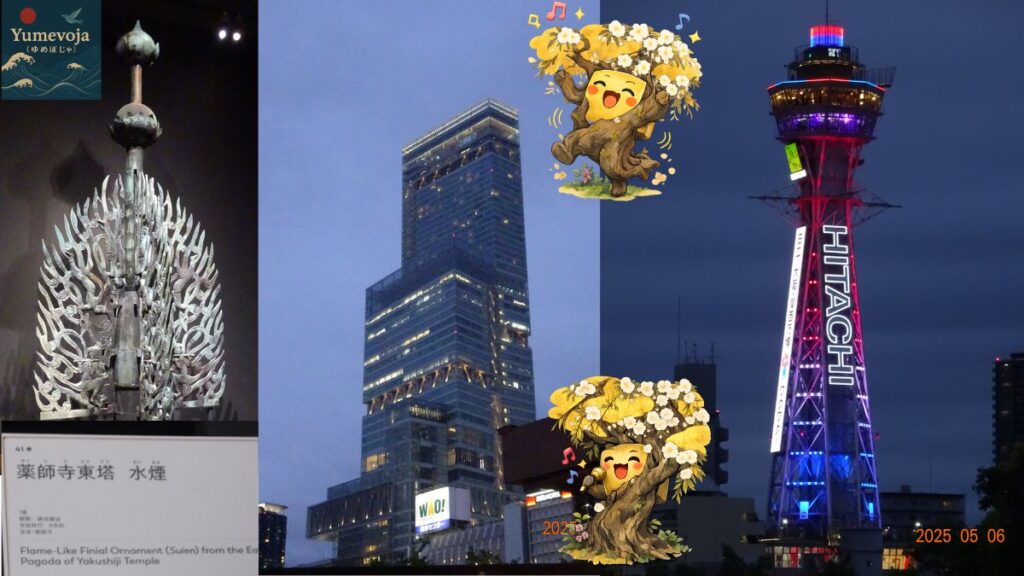
“Water smoke, Abeno Harukas, Tsutenkaku, cherry blossoms, and the Golden Seal
— the full combo!”
Afterglow and Closing
I didn’t see everything.
Still, it felt like enough.
I ended the day with Japanese food.
Nothing flashy, but the kind of meal that feels truly Japanese.
It quietly settled my mind.
I’ll write more about it later in “Beauty & Taste.”
👉 Related article:
🍵 Beauty & Taste (Osaka – Art Museum Days) ③Uose “Hime Gozen” — Ending the Day with a Delicate Japanese Meal
One-Line Summary
The cutting edge matters.
But there are things we must not lose.
The kind of cultural preservation I can do
is to go there, experience it, record it, and share it.
I want to keep doing that,
without forcing myself.
I summarized this day’s route on My Maps.
Rather than a tourist map,
it’s a single map that traces the flow of my feelings.
👉 Related article:
🚉 Stopover Journey (Osaka – Art Museum Days) ①/③Kobayashi Museum — Edo Humor & the Poetic World of Yamada Sōsuke
🚉 Stopover Journey (Osaka – Art Museum Days) ②/③Hagoromo — A Limited Lunch Box & a Stroll Through Shinsekai

Today’s bonus capsule!
✨ Gateway to the Showa Era―Museums.
The Showa era (1926–1989) was a time when modern technology and ideas began to transform everyday life in Japan.
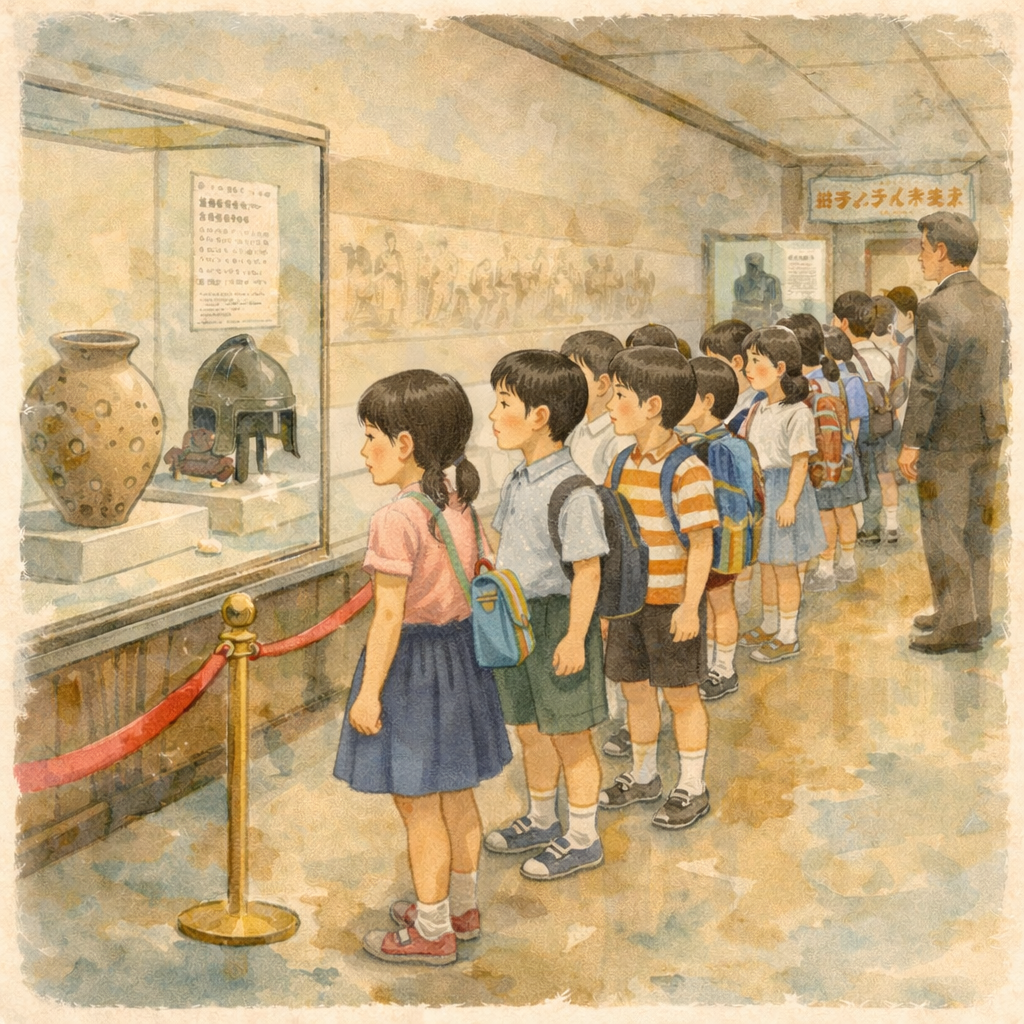
Showa-era museums were not places we went to enjoy.
They felt more like places where we were told to behave properly.
We lined up quietly,
peered into glass cases,
and read long explanations.
We knew learning was important — at least in our heads.
Museums today feel different.
Through images, sound, and hands-on experiences,
they gently draw us into their stories.
The way we learn has changed.
What they try to pass on has not.
That is why, now, museums feel truly engaging.