Visit: May 6, 2025
After immersing myself in Edo-period paintings and the world of Sōsuke Yamada at the Kobayashi Art Museum,
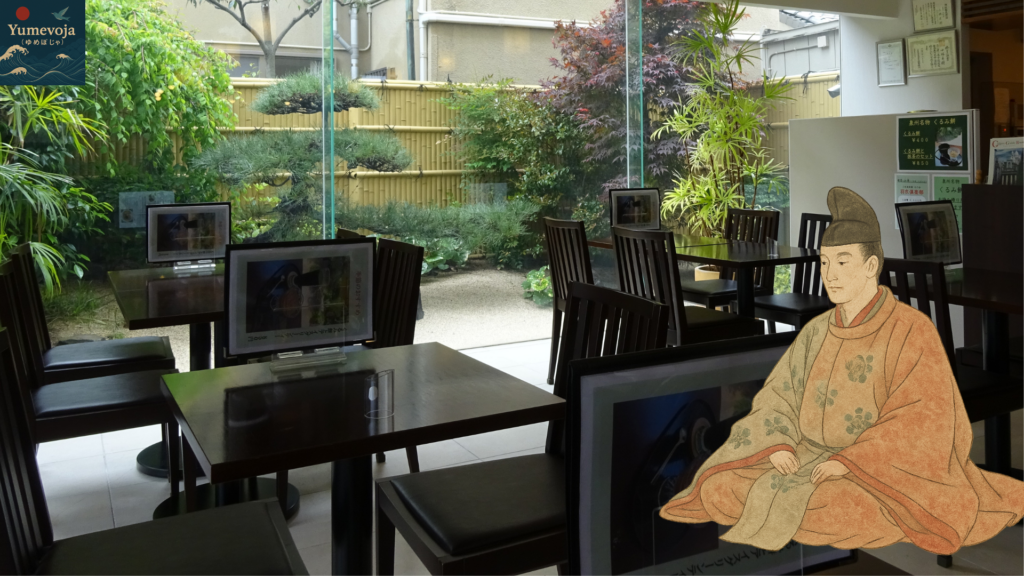
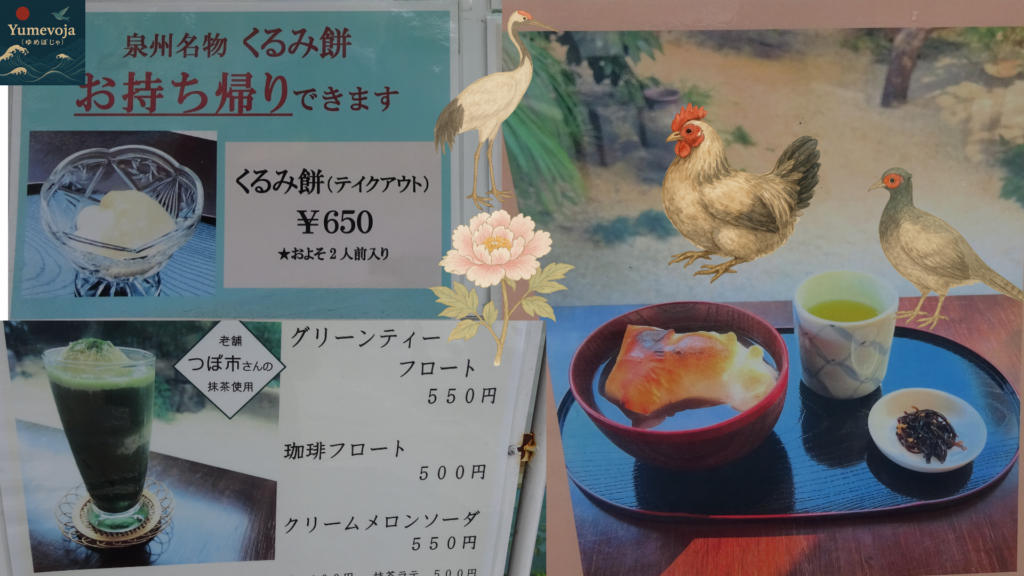
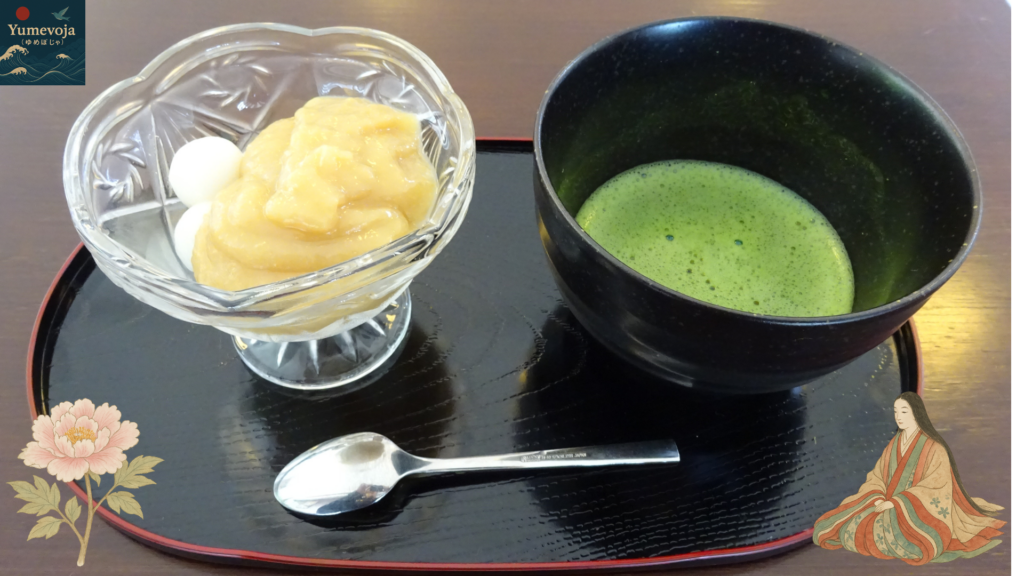
I sat down at the adjoining café, Hagoromo Coffee, to enjoy their “Kurumi mochi & matcha set.”
As the quiet of the exhibition rooms slowly lifted from my body,
the gentle colors of the Japanese sweets placed before me
made it feel as though that unique “museum time” was beginning all over again.
■ A Taste Rooted in Sakai — Kurumi-mochi with Sweet Bean Paste
Although it is called “kurumi” mochi,
this traditional sweet from Sakai in Osaka contains no walnuts.
Instead, it is a soft rice cake gently wrapped in a smooth sweet bean paste —
a treat that has been loved by locals for generations.
With a simple sweetness born from a region shaped by tea culture,
the moment it touches your tongue, the gentle flavor of the beans spreads softly.
It feels as if this modest confection quietly receives —
and softens — the lighthearted humor and ease found in the Edo-period art you’ve just seen.
It’s one of the museum’s most popular menu items,
gently grounding your senses after the emotional “high” of viewing the artworks.
The Matcha of the Long-Established Tsuboichi — A Moment When Bitterness Brings Balance
The matcha served in the set is from Tsuboichi, a long-established tea house in Sakai.
The moment you take a sip, its clean, sharp bitterness slips straight down your throat,
quietly gathering and grounding the gentle sweetness of the walnut mochi you tasted just before.
This contrast felt wonderfully soothing—
the flow from sweet → bitter → calm
created a quiet aftertaste, as if I had joined a small, intimate tea gathering.
A Gentle Pause That Arrives After Art
After finishing the exhibition, being able to slip in this kind of quiet Japanese pause before returning to the noise outside
is one of the great charms of the Kobayashi Art Museum.
Moments when I stopped, drawn into a painting.
Moments when I imagined the laughter and presence of people from Edo times.
Moments when I felt the wind inside Yamada Sōsuke’s landscapes.
All of those moments seemed to settle into a single quiet line,
gently connected by the sweetness of the walnut mochi
and the cleansing bitterness of the matcha.
■ Today’s Small Note
After art has stirred the heart,
a gentle Japanese sweet quietly brings everything back into balance.
It felt like another “small work of art” —
one meant to savor the lingering echoes of the museum.
👉 Related article:
🚉 Stopover Journey (Osaka – Art Museum Days) ①/③Kobayashi Museum — Edo Humor & the Poetic World of Yamada Sōsuke
✨ Gateway to the Showa Era―Cream Soda
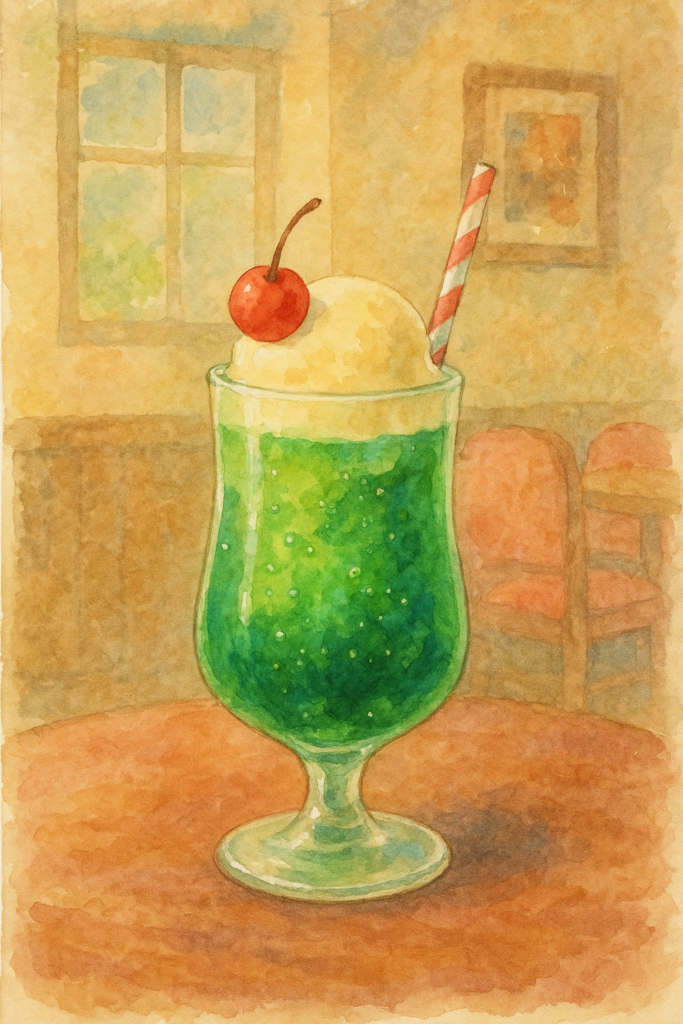
The Showa era (1926–1989) was a time when modern technology and ideas began to transform everyday life in Japan.
① Born in the Meiji era, loved in Shōwa
The early form of cream soda arrived in Japan during the Meiji era.
The American “ice cream soda” found its place in Japan,
and as café culture flourished in the Shōwa period,
it quickly became a beloved classic.
Maybe that’s why cream soda feels so perfectly Shōwa retro.
—
② A secret treat, shared with Mother
Father was strict about sweets.
That’s why the café where Mother whispered,
“Let’s go, just the two of us,”
felt like the most special place in the world.
Through the sparkling green bubbles,
I remember her mischievous smile.
—
③ The slow, gentle time of a Shōwa café
Light filtering through stained glass,
a wooden table slightly worn with age,
and the soft fizz echoing in the dim room.
If any drink belongs to a Shōwa café,
it must be cream soda.
—
④ Today’s cream soda carries that “little freedom”
Now, when I drink cream soda,
the sweetness feels warm, nostalgic,
and just a little bittersweet.
It brings back that secret moment Mother gave me—
a small taste of freedom
wrapped in a quiet Shōwa afternoon.